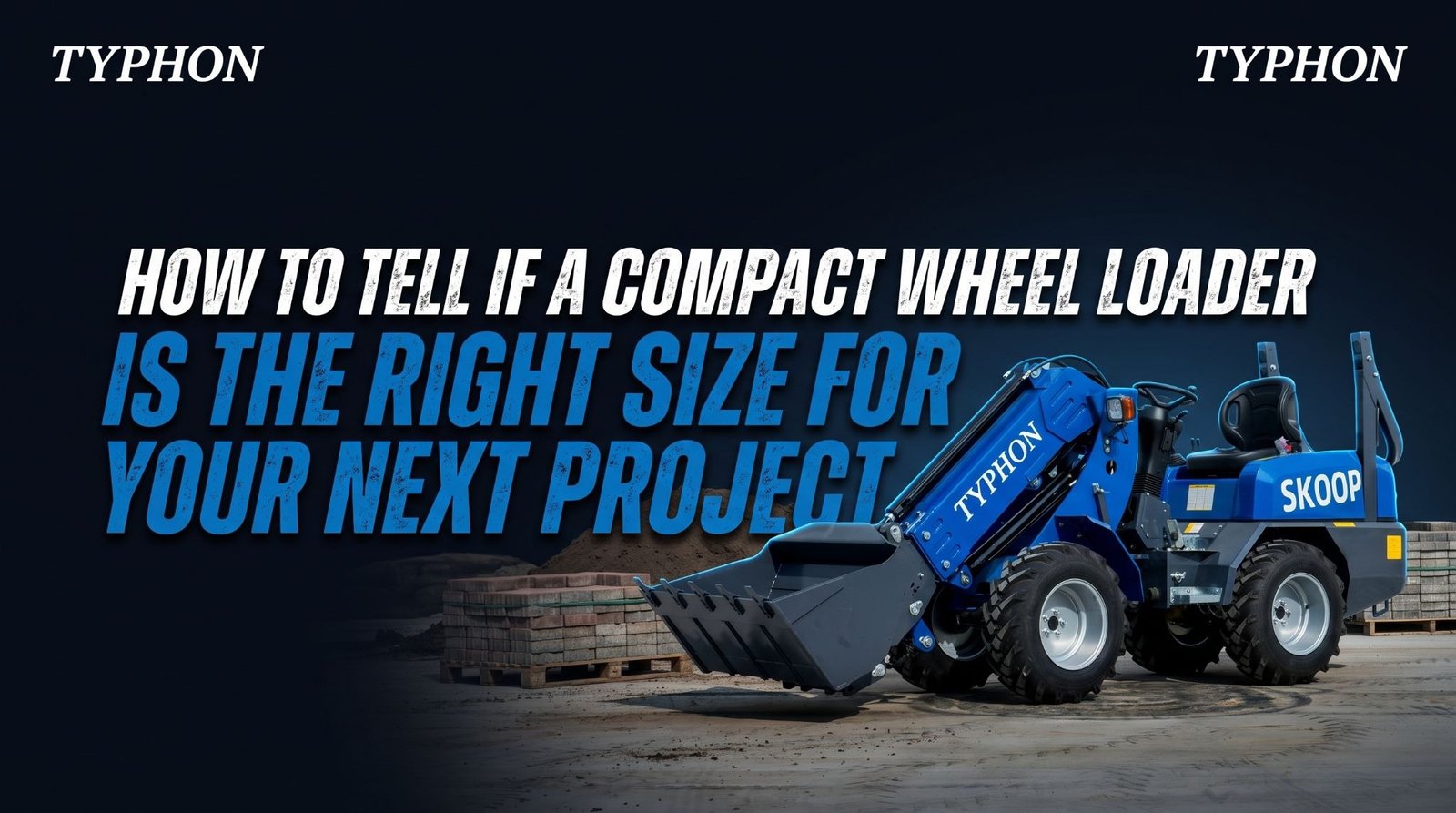
How to Tell If a Compact Wheel Loader Is the Right Size for Your Next Project
A site supervisor books a compact wheel loader for a landscaping build, picks the smallest unit on the lot to trim the daily rate, and figures a little machine will breeze through moving soil, gravel, and pallets of stone. By midweek the loader is straining to lift a single pallet of pavers, tipping forward on the bucket, and crawling back and forth on loads a bigger machine would carry in half the trips. His crew loses hours to a unit that can’t keep pace, and the rental he chose to save money ends up costing two extra days of labor. Nothing about the loader was broken. It was simply undersized for the work it was asked to do, and figuring out the right size beforehand would have saved the whole schedule.
Sizing a compact wheel loader correctly comes down to matching the machine to your loads, your access, your ground, and the tools you plan to run. Pick one too small and it strains, stalls, and multiplies your trips; reach for one too large and you waste fuel, fight tight spaces, and pay for capacity the job never needs. This guide walks through the factors that reveal the right fit:
- Why getting the size right shapes the whole project
- How to measure your real load and lift demands
- Matching machine width to your site’s access
- Where engine power and hydraulic flow come into play
- Choosing between tracks and wheels for your ground
- Confirming the model before you rent or buy
Here’s how to judge the fit with confidence.
Why the Fit Shapes Everything Else
Sizing sits at the root of nearly every problem a wrong machine creates, so treat it as the first decision rather than an afterthought. A loader that matches your work moves material efficiently, fits the space, and finishes on schedule, while one that misses in either direction quietly drains time and money across the whole job. Getting this right up front prevents the cascade of delays a poor fit sets off.
Undersized machines cost you in trips and strain. When a loader can’t lift a full load or carry a proper bucket, your crew makes twice the passes, the hydraulics work harder than they should, and the unit wears faster under loads it wasn’t built for. Small on the rate sheet often means expensive on the clock.
Oversized machines waste money in different ways. Paying for capacity you never use burns extra fuel, demands a bigger trailer, and struggles to maneuver on tight sites where a compact unit would flow. Right-sizing beats overbuying whenever the goal is a job that runs clean.
Key takeaway: Machine size drives your project’s efficiency, cost, and schedule, so decide it deliberately. Match the loader to the work rather than to the lowest rate, and you sidestep the trips, strain, and waste a poor fit creates.
Sizing Up Your Load and Lift Demands
Load weight tells you more about the machine you need than any other single number, so start by naming the heaviest thing you’ll routinely lift. Pallets of pavers, buckets of wet soil, or bundles of block each carry a real weight, and the loader’s rated operating capacity has to clear that figure with margin to spare. A machine rated right at your load edge strains and tips; one rated comfortably above it works steadily.
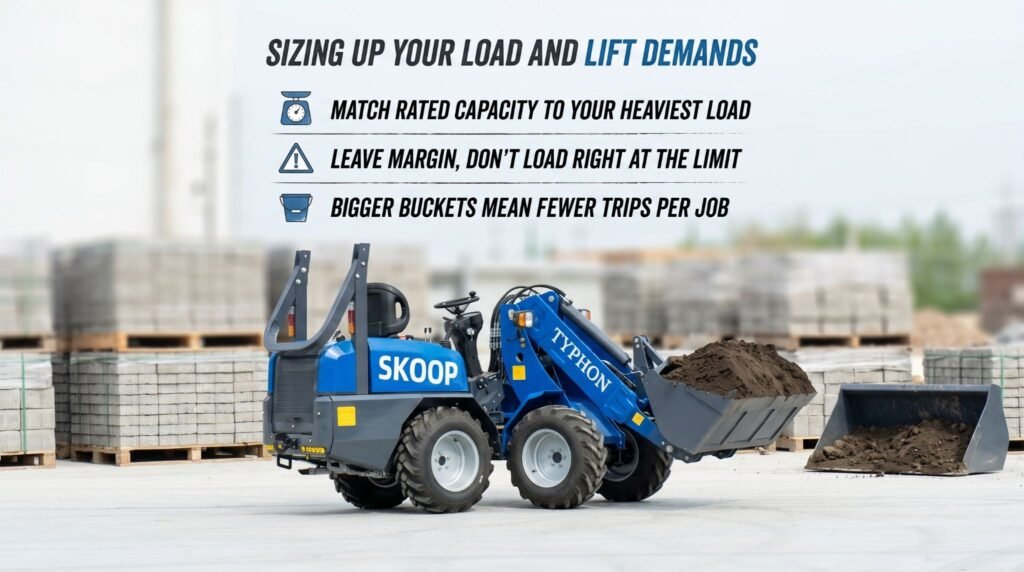
Bucket capacity shapes how fast you move volume. A larger bucket carries more material per pass, so matching bucket size to both your material and the machine’s lift capacity cuts the number of trips a big job demands. Consider a crew moving a large pile of gravel: a properly sized bucket clears it in a fraction of the passes a small one needs.
Lift height and reach round out the demand. Confirm the loader raises its load high enough to clear truck sides or stack material where you need it, since a unit that lifts plenty of weight but not high enough still leaves you short. What this means: weigh your heaviest routine load, match the rated capacity and bucket size to it with margin, and confirm the lift height reaches your real dump points before you settle on a size.
Measuring Access Against the Machine’s Footprint
Site access decides whether a loader even reaches the work, and it’s the check rushed bookings skip most. Measure your tightest gate, gateway, driveway, and any passage between structures, then compare those numbers against the machine’s overall width before anything else. A loader too wide to reach the job digs and lifts nothing at all.
The turning room matters as much as the entrance. Compact wheel loaders need space to swing and reposition, so a unit that squeezes through the gate but can’t maneuver once inside creates the same bottleneck as one that never fits. Picture the machine working, not just arriving, when you judge the footprint.
Overhead and surface clearances deserve a look too. Low branches, doorways, and eaves cap the machine’s height, while soft or finished ground shapes where a heavier unit can safely travel. Scouting the full route and work area beats discovering an obstacle with the loader already on site.
Key takeaway: Measure your tightest access point and your working room before you choose a size, then confirm the machine’s width and turning radius clear both. A compact loader that fits the space keeps the job moving where an oversized one stalls at the gate.
Where Engine Power and Flow Factor In
Engine power governs how hard a loader pushes and how well it holds pace under load, so match the horsepower to your material and task. Light landscaping and loading suit a modest engine, while digging into dense fill, climbing grades, or working heavy material all reward more power that won’t bog down mid-pass. A machine short on power labors through work a stronger unit handles smoothly.
Hydraulic flow decides which attachments the loader can actually run. Powered tools like augers, sweepers, grapples, and mulchers draw on the auxiliary hydraulics, and each needs a certain flow rate to perform, so confirm the machine feeds your thirstiest tool before you rely on it. A tool starved of flow chatters and stalls instead of earning its rental.
Matching power and flow to your attachment plan protects your versatility. If your project leans on several powered tools, a loader with the output to drive them turns one machine into a full kit, while a unit short on flow leaves those attachments idle. What this means: size the engine to your heaviest material and the hydraulic flow to your most demanding attachment, and the loader keeps pace instead of fighting the work.
Reading Your Ground: Tracks or Wheels
Ground conditions steer the choice between a wheeled loader and a tracked one, so read the surfaces you’ll cross most. Wheeled machines roll fast on firm, paved, or compacted ground, cost less to run, and wear slower on hard surfaces, making them the practical pick for solid sites. Speed and efficiency on firm ground favor wheels every time.
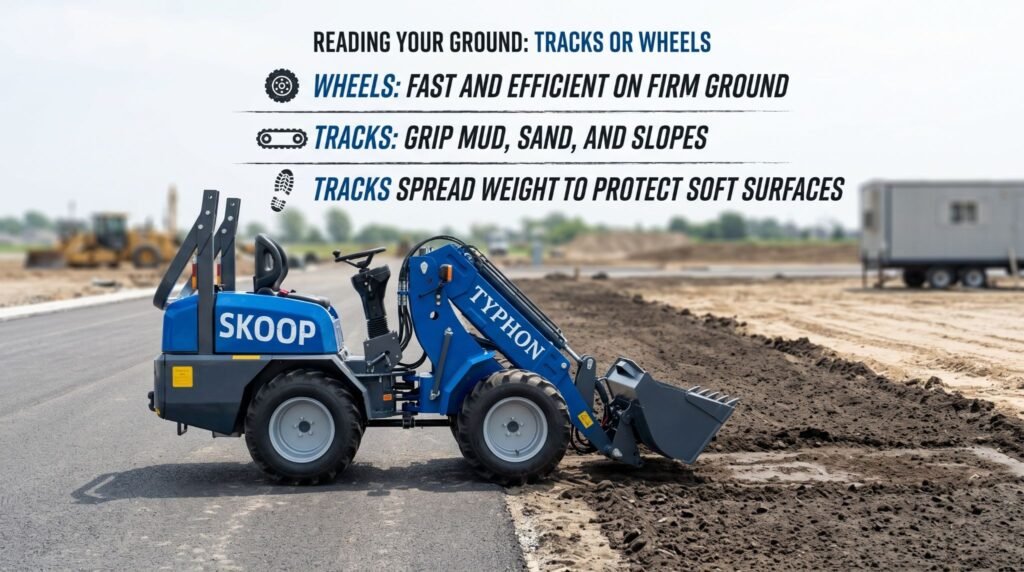
Soft and uneven terrain flips the advantage toward tracks. Tracked loaders spread their weight across a larger footprint, which grips mud, sand, and slopes without sinking and spares soft or finished surfaces from rutting. Working over wet lawns, loose fill, or graded ground you can’t afford to tear up points straight at a tracked machine.
Mixed sites call for an honest look at where the loader spends most of its time. A unit that splits days between paved lots and soft yards forces a trade-off, since tracks wear faster on pavement while wheels struggle in mud, so the dominant surface should settle the decision. Key takeaway: match the drive type to the ground you cross most, choosing wheels for firm, paved work and tracks for soft, uneven, or turf-sensitive sites, and let your most common surface break any tie.
Locking In the Model Before You Commit
Verification is the step that turns a good estimate into a confident choice, so confirm the machine against your job before you sign anything. Line up the rated operating capacity, bucket size, lift height, width, engine power, and hydraulic flow against the demands you mapped out, and check that each one clears your requirement with room to spare. A quick side-by-side beats discovering a shortfall on delivery day.
Supplier guidance sharpens the final call. Describe your loads, your access, your ground, and your attachment plan to the equipment specialist, and let them confirm the model suits every one, since a good supplier steers you away from both undersized and oversized units. Asking direct questions about capacity, flow, and fit protects you from a mismatch.
Rent-versus-buy shapes the decision too. Steady, year-round work often justifies owning the right-sized loader, while occasional or varied projects favor renting the exact size each job needs without owning more machine than most jobs require. What this means: match every key spec to your mapped demands, lean on your supplier to confirm the fit, and weigh how often you’ll use the machine before you rent or buy the model you’ve chosen.
Conclusion
Telling whether a compact wheel loader is the right size for your project comes down to matching the machine to the work rather than to the rate sheet. Start by weighing your heaviest routine load against the rated operating capacity and bucket size, then measure your tightest access and working room against the machine’s width and turning radius. Match the engine power to your material and the hydraulic flow to your most demanding attachment, and choose tracks or wheels based on the ground you cross most. Before you commit, line up every key spec against your mapped demands, lean on a trusted supplier to confirm the fit, and weigh how often the machine will actually earn its keep. Picture your heaviest load, your tightest gate, and your roughest ground, and the right size becomes clear. When you’re ready to put a dependable, well-matched compact wheel loader to work, reach out to a trusted equipment specialist who can pair a reliable machine with the results your projects depend on.
Frequently Asked Questions
What size compact wheel loader do I need?
It depends on your heaviest routine load, your site access, and your ground conditions. Confirm the rated operating capacity clears your heaviest lift with margin to spare, match the bucket size to your material and volume, and measure your tightest gate against the machine’s width. Then factor in the engine power your material demands and the hydraulic flow your attachments require. Sizing the loader to those real numbers, rather than to the lowest daily rate, keeps the job efficient.
How do I know if a wheel loader is too small for my project?
Watch for the telltale strain. A loader that tips forward under a full load, can’t clear your heaviest pallet or bucket, or forces your crew into twice the trips is undersized for the work. Straining hydraulics and slow cycle times are early warnings too. Check the rated operating capacity against your heaviest routine load before booking, and choose a machine rated comfortably above that figure so it works steadily rather than laboring at its limit.
Should I choose a tracked or wheeled compact loader?
Match the drive type to the ground you cross most. Wheeled loaders move fast on firm, paved, or compacted surfaces, cost less to run, and wear slower on hard ground. Tracked loaders spread their weight to grip mud, sand, and slopes without sinking, and they spare soft or finished surfaces from rutting. For mixed sites, let the surface where the machine spends most of its time settle the decision, since tracks wear faster on pavement and wheels struggle in soft ground.