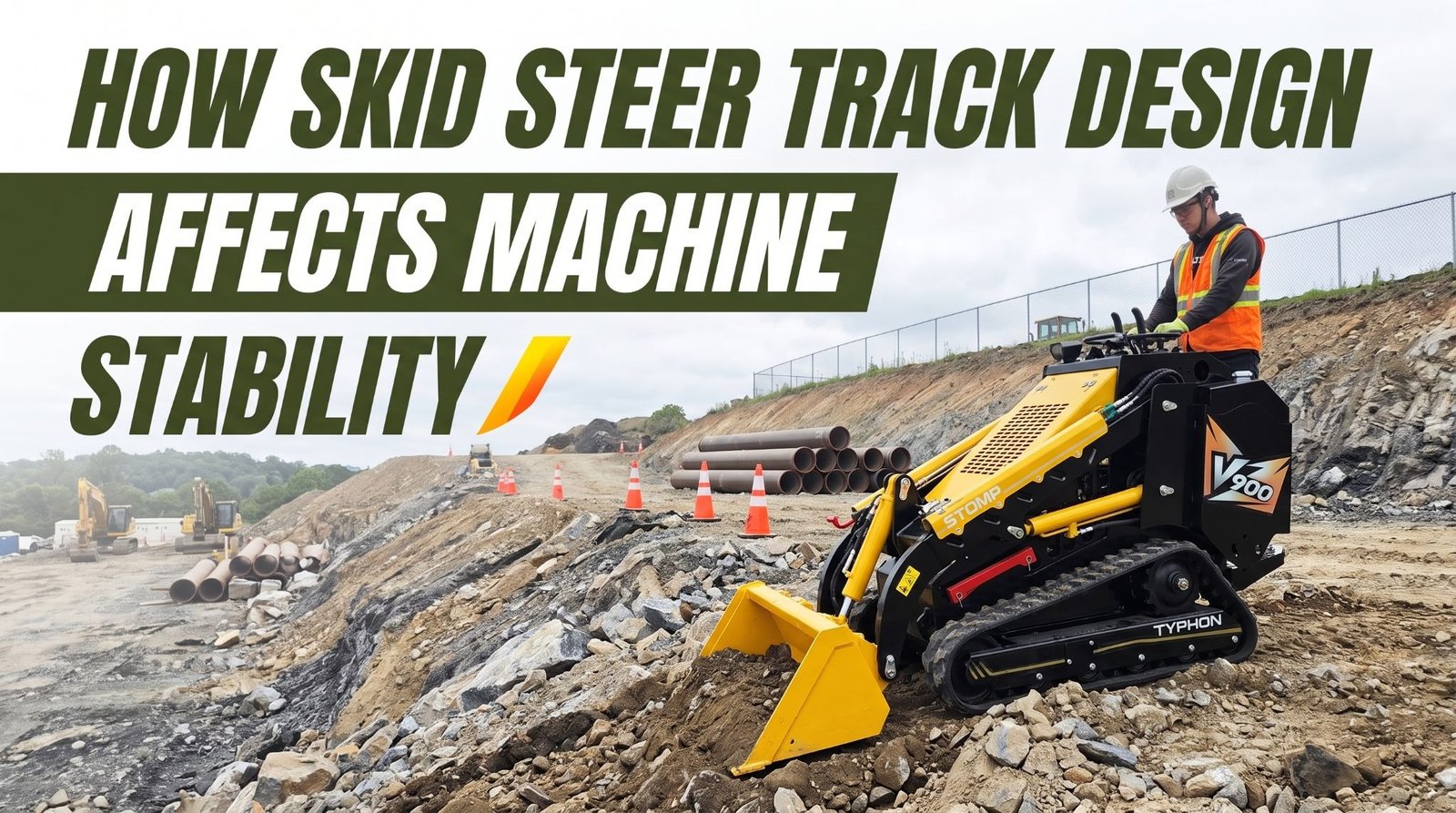
How Skid Steer Track Design Affects Machine Stability
Stability decides whether a skid steer finishes the job or ends the day tipped on its side. Most buyers judge a tracked machine by its rated operating capacity and horsepower, treating the tracks as little more than the parts that touch the ground. That view overlooks a hard truth: the design of those tracks governs how steady the machine stays while it lifts, grades, and works across uneven terrain.
Track design involves several factors, including width, length, tread pattern, construction material, and total contact area. Each one affects machine stability and ground performance in a different way. This post explains how these features work together, how track designs perform on soft ground, hard surfaces, and side slopes, and how to choose a track configuration that fits the conditions you actually face. By understanding these specifications, you can read a track spec sheet more effectively and make a better decision for your application.
Ground Pressure and the Foundation of Stability
Everything about tracked stability begins with how the machine’s weight meets the ground. A skid steer with tracks spreads its operating weight across a large, continuous footprint rather than four smaller tire contact patches. That footprint determines ground pressure, which describes how much weight the machine places on each square inch of surface. Ground pressure is one of the key factors affecting how stable a tracked skid steer feels and performs on different types of terrain.
Low ground pressure keeps the machine riding on top of soft surfaces instead of sinking into them. When a track sinks unevenly, the machine tilts, and a tilting machine loses the level, predictable base every lift and grade depends on. Distribute that same weight over a wider, longer track, and the pressure per square inch drops, so the machine floats across mud, sand, and loose fill that would swallow a tire.
The connection to stability is direct. A machine that stays level on soft ground keeps its center of gravity where the operator expects it, and a predictable center of gravity is the essence of stability. Sink one corner into wet clay, and that predictability vanishes in an instant.
Takeaway: low ground pressure keeps the machine level and its center of gravity steady, which is the foundation every other stability factor builds on.
Why Wider Tracks Resist Tipping Sideways
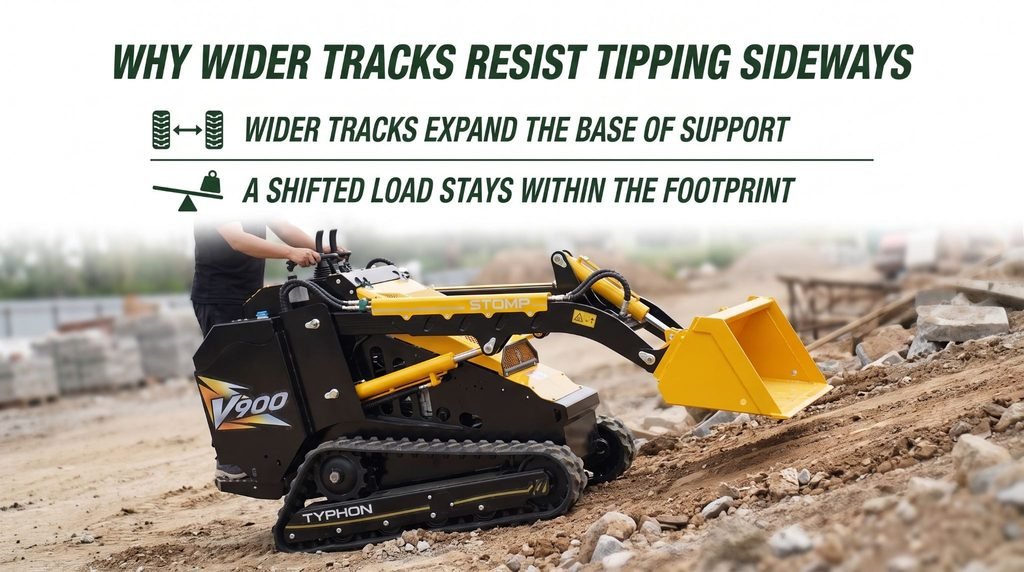
Lateral stability, or resistance to tipping from side to side, is strongly influenced by track width and the distance between the two tracks. Think of the machine’s footprint as its base of support. A wider footprint gives the machine more resistance to side-to-side tipping because the center of gravity can move farther before reaching the edge of the support area. This can improve stability when carrying loads, working across uneven ground, or operating on side slopes.
Consider a loaded bucket held out to one side during a grading pass, or a machine crossing a slope with weight shifted downhill. On a narrow track, the center of gravity sits close to the edge of the support base, so a modest shift can carry it past the point of no return. Widen the stance, and that same shift stays comfortably inside the machine’s footprint, giving the operator room to work without fighting the machine’s balance.
Width earns its keep most clearly on side slopes and during offset loads, where lateral forces do their worst. A wider track turns a nerve-wracking traverse into a controlled one, because the geometry works in the operator’s favor rather than against it.
Takeaway: wider tracks and a broader stance push the tipping point farther out, giving the machine real margin against sideways roll.
Track Length, Contact Area, and Fore-and-Aft Balance
Length does for front-to-back stability what width does for side-to-side. A longer track puts more rubber on the ground ahead of and behind the machine’s center of gravity, which steadies it precisely when the load tries to pitch it forward or rock it back. Lift a heavy load high on the arms, and a longer track resists the forward pitch that a short footprint can’t hold.
The two dimensions combine to determine contact surface area, which is the total area of track in contact with the ground. Greater contact area reduces ground pressure and provides a wider base of support, allowing track length and width to work together rather than independently. A longer, wider track can improve stability and ride quality, while a shorter, narrower track concentrates the machine’s weight over a smaller area and provides less support on uneven or sloped ground.
There is a practical balance to strike, though. A very long track improves fore-and-aft stability but can make the machine slower to turn and harder to maneuver in tight quarters. The goal isn’t the largest footprint possible but the footprint matched to the work, where stability and agility both stay within reach.
Takeaway: longer tracks steady the machine front to back and, combined with width, build the total contact area that anchors overall stability.
Tread Pattern, Grip, and Side-Slope Performance
Contact area holds the machine up, but the tread pattern decides whether it holds its line. The lugs and grooves molded into a track’s surface bite into the ground to generate traction, and traction is what keeps the machine tracking straight instead of sliding sideways. On level, dry ground the difference is subtle; on a wet slope, it’s everything.
Aggressive, deep-lug treads dig into mud, loose soil, and snow, delivering the grip that stops a machine from slipping downhill on a side-slope traverse. A machine that slides on a slope is a machine losing control of its own center of gravity, so tread that prevents that slide is doing real stability work, not just moving the machine forward. Smoother, block-style treads, by contrast, suit hard and finished surfaces where deep lugs would tear the ground and offer little benefit.
Side-slope performance is where tread pattern becomes especially important. When a tracked skid steer crosses a grassy or muddy incline, worn or shallow tread can reduce traction and allow the machine to drift toward the downhill side, even with careful steering. Fresh, properly designed tread provides better grip and helps the machine maintain its intended path and stability on sloped terrain.
Takeaway: the right tread pattern converts contact area into genuine grip, and grip is what keeps a machine from sliding into an unstable position on slopes and soft ground.
Rubber Versus Steel: How Construction Shapes Stability
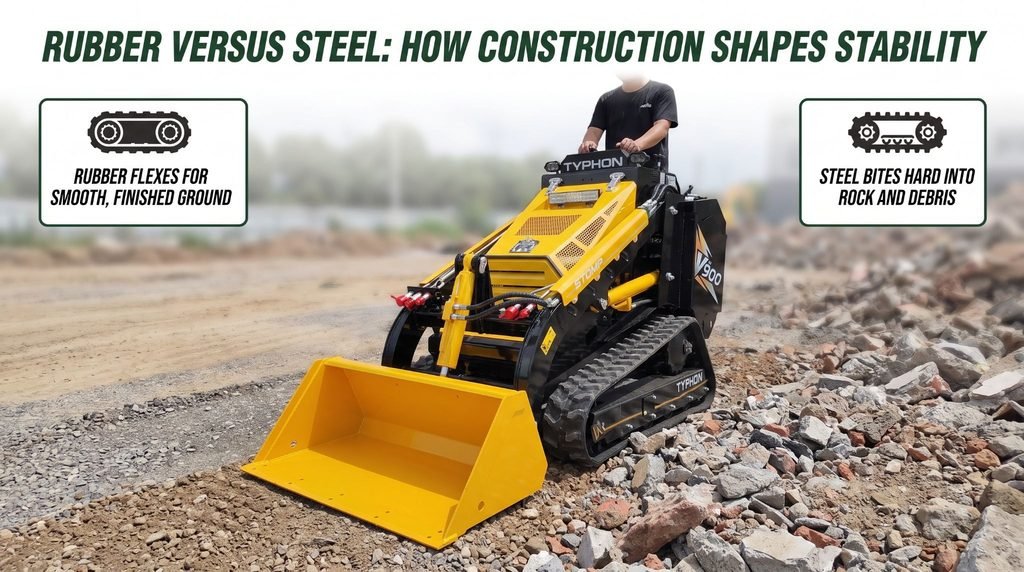
Rubber tracks flex to conform to the ground, spreading contact evenly and cushioning the machine over bumps and debris. That compliance keeps more of the track in contact with uneven surfaces, which steadies the ride and suits sensitive or finished surfaces the machine can’t afford to damage. Most skid steers built for mixed and improved-ground work ride on rubber for exactly these reasons.
Steel tracks, common on compact track loaders built for the harshest duty, trade some of that compliance for durability and bite. Their rigid grousers dig hard into rock, frozen ground, and demolition debris, delivering aggressive traction where rubber would wear quickly or slip. On extreme terrain, that unyielding grip translates into a firmer, more secure footing than rubber can provide.
Neither material is universally more stable; each is more stable in its element. Rubber excels on varied and delicate ground where even, flexible contact matters most, while steel excels on brutal terrain where hard bite and toughness win out. Choosing against the terrain undercuts stability no matter how well the rest of the track is sized.
Stability Under Load: Lifting, Grading, and Slope Work
Track design proves its worth the moment real work stacks forces onto the machine. During lifting, raising a load shifts the center of gravity up and forward, and a long, wide, low-pressure track is what keeps that rising load from pitching the machine over its nose. The larger the stable base beneath the load, the more confidently the operator can lift and place at height.
Grading tells a similar story from a different angle. Pushing material with an offset or angled load throws side forces into the machine, and a wide stance with solid tread resists both the sideways push and the tendency to drift off the intended grade. A machine that holds its footing holds its line, and a machine that holds its line produces a flat, accurate surface pass after pass.
Slope work combines every demand at once. Crossing or climbing an incline shifts weight toward one edge while gravity pulls the whole machine downhill, so ground pressure, width, length, tread, and material all have to perform together. A well-matched track keeps the machine planted and predictable on grade; a poorly matched one turns routine slope work into a genuine hazard.
Takeaway: lifting, grading, and slope work each load the machine differently, and only a track designed for the toughest of those tasks keeps it stable through all of them.
Conclusion
Track design is the foundation of a skid steer’s stability, traction, and performance because ground pressure affects how evenly the machine stays planted, while track width and length determine its support base and resistance to tipping or pitching. The tread pattern provides the grip needed to prevent sliding on slopes and soft ground, while rubber tracks generally suit mixed or sensitive surfaces and steel tracks handle rock, frost, and heavy debris more effectively. Rather than choosing tracks based only on capacity ratings, match the design to your actual terrain, lifting demands, slope exposure, and daily tasks so the machine remains stable, controlled, and confident across the hardest conditions you expect to encounter.
Frequently Asked Questions
Do wider tracks always make a skid steer more stable?
Wider tracks can improve lateral stability by increasing the machine’s base of support and reducing ground pressure. This can help resist sideways tipping and reduce sinking on soft ground. However, wider tracks are not always better for every application. An oversized track width can make the machine less maneuverable in tight spaces and may provide little benefit when working on firm, level ground. The best track width is one that matches the terrain and tasks, providing enough support for slopes and soft ground without limiting the maneuverability needed on the jobsite.
How does tread pattern affect stability on slopes?
Tread pattern controls grip, and grip is what keeps a machine from sliding downhill during a side-slope traverse. Deep, aggressive lugs bite into mud, grass, and loose soil, holding the machine on its intended line so its center of gravity stays where the operator expects. Worn or shallow tread lets the machine drift toward the downhill edge, which pushes it toward an unstable position. On any regular slope work, fresh tread suited to your ground is essential for keeping the machine planted and under control.
Are rubber or steel tracks more stable?
Neither track material is universally more stable because each performs better under different conditions. Rubber tracks can flex and conform to uneven surfaces, helping distribute contact more evenly and providing a smoother ride on mixed, sensitive, or finished ground. Steel tracks offer stronger traction and greater durability on rock, frozen ground, and demolition debris, where their rigid grousers can provide a firmer grip. The right choice depends on the terrain, with rubber better suited to varied and sensitive surfaces and steel better suited to harsh, abrasive conditions.