Electrification & New Tech in Wheel Loaders: A Comprehensive Guide
The roar of diesel engines has long been synonymous with heavy machinery, a powerful soundtrack to construction sites, quarries, and material handling operations worldwide. For decades, wheel loaders, those indispensable workhorses of the industry, have relied on conventional fossil fuels to move mountains of earth, aggregate, and debris. However, a quiet revolution is underway, one that promises to redefine the very nature of these powerful machines. We are standing at the precipice of a new era, where electrification and cutting-edge technology are transforming wheel loaders from mere mechanical beasts into intelligent, environmentally conscious, and highly efficient partners.
Imagine a construction site where the air is cleaner, the noise levels are dramatically reduced, and operators work with greater precision and comfort. This isn’t a futuristic fantasy; it’s the tangible reality being shaped by advancements in electric powertrains, advanced telematics, automation, and artificial intelligence within the wheel loader sector. This shift isn’t just about reducing emissions; it’s about unlocking unprecedented levels of productivity, safety, and operational cost savings. From compact models designed for urban landscaping to massive machines tackling heavy-duty mining, the integration of electrification and new technologies is poised to revolutionize every facet of wheel loader operation. This guide will delve deep into this exciting transformation, exploring what these innovations entail, the profound benefits they offer, how businesses can embark on this journey, and the best practices for maximizing their potential.
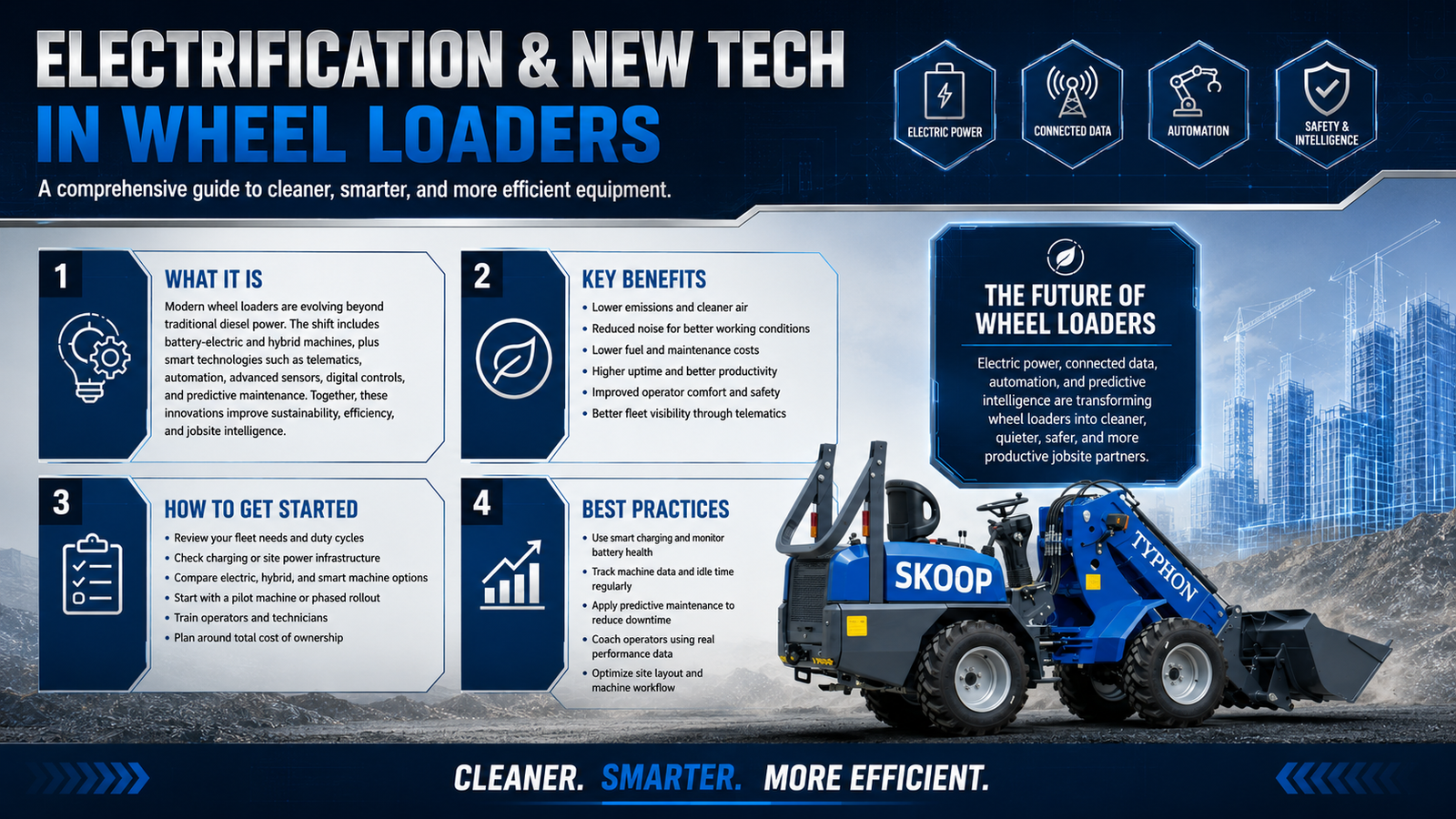
1. What is Electrification & New Tech in Wheel Loaders?
Electrification and new technology in wheel loaders represent a paradigm shift from traditional diesel-powered, human-operated machines to those incorporating electric or hybrid powertrains, advanced digital systems, and varying degrees of automation. This evolution is driven by a confluence of factors, including stringent environmental regulations, rising fuel costs, a demand for increased operational efficiency, and a growing emphasis on worker safety and comfort. It’s not a singular technology but a multifaceted approach to modernizing heavy equipment.
At its core, electrification in wheel loaders primarily refers to replacing or supplementing the internal combustion engine (ICE) with electric motors and battery systems. This can manifest in several forms:
- Battery Electric Wheel Loaders (BEWLs): These are fully electric machines, powered entirely by rechargeable battery packs. They produce zero direct emissions at the point of operation, significantly reduce noise, and often offer instant torque for powerful digging and lifting. Examples include Volvo’s L25 Electric or Caterpillar’s 906, 907, and 908 compact electric wheel loaders.
- Hybrid Wheel Loaders: These machines combine a smaller, more efficient diesel engine with an electric motor and battery system. The electric motor can assist the diesel engine during peak loads, regenerate energy during braking or lowering, and sometimes even power the machine independently for short periods. This approach offers a balance between fuel efficiency and extended operating times, reducing overall fuel consumption and emissions compared to conventional models. Komatsu’s WA475-10 Hybrid is a notable example.
- Plug-in Hybrid Electric Wheel Loaders (PHEWLs): While less common in heavy equipment currently, this concept involves hybrids that can also be charged from an external power source, offering greater flexibility.
Beyond electrification, new technology encompasses a broad spectrum of digital and mechanical innovations designed to enhance performance, safety, and operational intelligence. These include:
- Advanced Telematics and IoT (Internet of Things): These systems collect vast amounts of data from the loader – fuel consumption, idle time, location, diagnostic codes, payload weights, tire pressure, and more. This data is transmitted wirelessly to a central platform, allowing fleet managers to monitor machine health, optimize maintenance schedules, track productivity, and identify areas for improvement in real-time. This provides invaluable insights into operational efficiency and asset utilization.
- Automation and Autonomy: This ranges from semi-automated functions to fully autonomous operation.
- Assistive Technologies: Features like automatic bucket filling, intelligent load weighing systems, and advanced steering aids reduce operator fatigue and improve consistency. For instance, a system might automatically adjust bucket angle and lift height for optimal loading.
- Remote Control Operation: Allows operators to control loaders from a safe distance, ideal for hazardous environments like demolition sites or mines.
- Semi-Autonomous Operation: The machine can perform repetitive tasks, such as loading trucks or stockpiling, with minimal human intervention, guided by pre-programmed routes and sensors.
- Fully Autonomous Operation: The wheel loader operates entirely without human input, navigating, loading, and dumping based on sophisticated sensor arrays (Lidar, radar, cameras), GPS, and AI algorithms. This is particularly prevalent in mining and large-scale quarry operations where controlled environments allow for such deployment.
- Enhanced Operator Interfaces and Ergonomics: Modern cabs are designed with operator comfort and efficiency in mind. Digital displays provide intuitive access to machine data, joystick controls replace traditional levers for finer manipulation, and advanced climate control and suspension systems reduce fatigue. This focus on the human element directly translates to increased productivity and reduced errors.
- Advanced Sensor Technology: High-resolution cameras, proximity sensors, Lidar, and radar systems provide operators (or autonomous systems) with a comprehensive view of the surroundings, enhancing collision avoidance and precision in tasks like material handling or navigating tight spaces.
- Predictive Maintenance: Leveraging data from telematics and onboard sensors, AI algorithms can predict potential equipment failures before they occur. This allows for proactive maintenance, minimizing unplanned downtime and extending the lifespan of components.
- Hydrogen Fuel Cell Technology: While still in earlier stages for heavy equipment, hydrogen fuel cells offer another zero-emission alternative, generating electricity through a chemical reaction between hydrogen and oxygen, with water as the only byproduct. This could offer longer operating times than current battery-electric models for certain applications, with refueling times comparable to diesel.
Together, electrification and these new technologies are not just incremental improvements; they are fundamentally reshaping the capabilities and operational profiles of wheel loaders, paving the way for a more sustainable, efficient, and intelligent future for heavy equipment.

2. Key Benefits
The integration of electrification and new technologies into wheel loaders delivers a compelling array of benefits that extend far beyond mere compliance with environmental regulations. These advantages impact operational costs, productivity, safety, and even the overall working environment, making a strong business case for adoption.
2.1. Environmental and Health Benefits
Perhaps the most immediately recognized advantage is the significant reduction in environmental impact. Electric and hybrid wheel loaders produce zero tailpipe emissions (in the case of BEWLs) or substantially reduced emissions (for hybrids) of greenhouse gases like CO2, as well as harmful pollutants such as NOx, SOx, and particulate matter. This is crucial for operations in urban areas, enclosed spaces like tunnels or warehouses, and sensitive ecosystems where air quality is a primary concern. The shift away from fossil fuels contributes directly to cleaner air and helps companies meet increasingly stringent environmental targets and corporate social responsibility (CSR) goals.
Beyond air quality, noise reduction is a massive benefit. Electric motors operate far more quietly than diesel engines, transforming the work environment. This not only reduces noise pollution for surrounding communities but also significantly improves communication on site, lowers stress levels for operators, and enhances overall safety by making it easier to hear warnings or approaching personnel. This is particularly valuable in residential construction, night work, or indoor industrial applications.
2.2. Operational Cost Savings
While the initial purchase price of electric or technologically advanced loaders might be higher, the long-term operational cost savings are substantial.
- Reduced Fuel Costs: Electricity is generally cheaper and more stable in price than diesel fuel, leading to significant savings over the machine’s lifespan. Hybrid models also consume considerably less fuel.
- Lower Maintenance Costs: Electric powertrains have fewer moving parts than internal combustion engines, eliminating the need for oil changes, fuel filters, and many other routine maintenance tasks associated with diesel engines. This translates to fewer service intervals, reduced labor costs, and lower spare parts expenses. Regenerative braking also reduces wear on conventional brake systems.
- Increased Uptime: With fewer components to fail and the ability to leverage predictive maintenance through telematics, electric and smart loaders often experience less unplanned downtime. Proactive servicing based on real-time data ensures machines are operational when needed, maximizing productivity.
- Potential for Incentives: Many governments and local authorities offer grants, tax credits, or subsidies for adopting electric and low-emission equipment, further reducing the total cost of ownership.
2.3. Enhanced Productivity and Efficiency
New technologies fundamentally improve how wheel loaders perform their tasks.
- Instant Torque: Electric motors deliver maximum torque from zero RPM, providing immediate and powerful digging and lifting capabilities. This can translate to faster cycle times and more efficient material handling compared to diesel engines that need to spool up.
- Precision and Control: Advanced hydraulic and electric drive systems, combined with sophisticated controls and operator assistance features (like automatic bucket filling or intelligent load weighing), allow for greater precision in operations. This reduces spillage, optimizes loads, and minimizes rework.
- Data-Driven Optimization: Telematics and IoT connectivity provide invaluable data on machine performance, operator behavior, and site conditions. This data can be analyzed to identify bottlenecks, optimize routes, improve loading techniques, and fine-tune operational strategies for maximum efficiency. For example, identifying excessive idling times can lead to policy changes that save fuel and reduce wear.
- Automation for Repetitive Tasks: For tasks like truck loading or stockpiling, semi-autonomous features can ensure consistent, optimized performance, reducing human error and fatigue, and allowing operators to focus on more complex tasks or oversee multiple machines.
2.4. Improved Safety and Operator Comfort
Safety is paramount in heavy equipment operation, and new technologies contribute significantly.
- Reduced Noise and Vibrations: Electric machines are much quieter and produce fewer vibrations, creating a more comfortable and less fatiguing environment for operators. This reduces the risk of long-term health issues and improves alertness.
- Enhanced Visibility and Awareness: Advanced sensor systems (cameras, radar, Lidar) provide operators with 360-degree views and proximity alerts, significantly reducing blind spots and the risk of collisions with personnel or other equipment. Remote control options remove operators from hazardous zones entirely.
- Ergonomic Cab Design: Modern loaders feature ergonomically designed cabs with intuitive digital displays, advanced climate control, and comfortable seating, all contributing to reduced operator fatigue and increased focus.
- Assistive Technologies: Features like automatic braking, stability control, and intelligent load management systems actively help prevent accidents and ensure safe operation, even for less experienced operators.
2.5. Attracting and Retaining Talent
In an industry facing skilled labor shortages, offering modern, technologically advanced, and environmentally friendly equipment can be a significant draw. Operators are increasingly looking for machines that are comfortable, safe, and equipped with the latest technology. Working with cutting-edge electric and smart loaders can boost morale, improve job satisfaction, and help companies attract a younger, tech-savvy workforce, positioning them as forward-thinking employers.
In summary, the benefits of electrification and new tech in wheel loaders create a powerful virtuous cycle: environmental responsibility leads to cost savings, which fuels productivity gains, all while enhancing safety and attracting top talent. This makes a compelling case for businesses to explore and adopt these transformative innovations.
3. How to Get Started
Embarking on the journey of adopting electrified and technologically advanced wheel loaders requires careful planning and a strategic approach. It’s not simply about purchasing new equipment; it’s about integrating new systems, training personnel, and adapting operational workflows. Here’s a practical guide on how to get started.
3.1. Assess Your Current Needs and Operations
Before making any investment, a thorough assessment of your existing operations is crucial.
- Analyze Your Fleet: What types of wheel loaders do you currently operate? What are their typical duty cycles (e.g., continuous heavy loading, intermittent light work, long travel distances)? What are their average operating hours per day/shift?
- Evaluate Your Site Infrastructure: Do you have access to reliable electrical power? What is the capacity of your grid connection? Where would charging stations be located? For autonomous solutions, is your site suitable for geofencing and consistent GPS signal?
- Identify Key Pain Points: Are you struggling with high fuel costs, excessive noise complaints, operator fatigue, or frequent unplanned downtime? Pinpointing these issues will help you prioritize which technologies offer the most immediate and impactful solutions.
- Understand Your Environmental Goals: Are there specific emissions reduction targets you need to meet, either regulatory or internal CSR objectives?
- Budgetary Considerations: What is your budget for capital expenditure (CAPEX) and operational expenditure (OPEX) for new equipment? Consider the total cost of ownership (TCO) rather than just the upfront price.
3.2. Research Available Technologies and Manufacturers
The market for electrified and smart wheel loaders is rapidly evolving. Dedicate time to research what’s available.
- Explore Different Electrification Options: Consider battery-electric for shorter, intense shifts or indoor work, and hybrids for longer shifts or applications where charging infrastructure is still developing. Look into hydrogen fuel cell developments for future considerations.
- Investigate New Tech Features: Which telematics systems offer the most comprehensive data? What level of automation (assistive, semi-autonomous, fully autonomous) is relevant to your specific tasks? Are there advanced safety features that align with your risk management strategy?
- Compare Manufacturers: Major players like Caterpillar, Volvo, Komatsu, John Deere, Liebherr, and others are all investing heavily in this space. Each may offer different strengths, battery chemistries, charging solutions, and technology packages. Look at their track record, support networks, and future development plans.
- Case Studies and Pilot Programs: Look for case studies from companies with similar operations that have already adopted these technologies. Some manufacturers offer pilot programs or trials that could allow you to test equipment before a full commitment.
3.3. Develop a Phased Implementation Plan
A gradual, phased approach is often the most successful way to integrate new technologies.
- Start Small (Pilot Project): Consider purchasing one or two electric or smart loaders for a specific application or site. This allows you to gain hands-on experience, identify challenges, and refine your processes without a massive initial investment. For example, replace a diesel loader used for indoor material handling with a BEWL.
- Infrastructure Development: Simultaneously plan and install the necessary charging infrastructure (for electric models) or network connectivity (for advanced telematics/automation). This might involve upgrading electrical panels, installing fast chargers, or setting up Wi-Fi/cellular hotspots.
- Operator and Technician Training: This is critical. Your operators will need training on how to efficiently operate electric machines, understand new digital interfaces, and utilize assistive technologies. Your maintenance technicians will require specialized training on high-voltage systems, battery management, and diagnostic software. Many manufacturers offer comprehensive training programs.
- Data Integration and Analysis: Plan how you will integrate telematics data into your existing fleet management systems. Who will be responsible for analyzing the data, and how will insights be translated into actionable improvements?
- Scalability: Design your pilot project and infrastructure with future expansion in mind. How easily can you add more electric loaders or expand your automation capabilities?
3.4. Engage Stakeholders and Build Internal Support
Successful adoption requires buy-in from all levels of your organization.
- Management Buy-in: Present a clear business case to leadership, highlighting the ROI, environmental benefits, and competitive advantages.
- Operator Involvement: Involve operators early in the process. Their feedback on machine performance, comfort, and usability is invaluable. Address their concerns about new technology and emphasize the benefits to their daily work.
- Maintenance Team Collaboration: Work closely with your maintenance staff to understand their training needs and ensure they are equipped to service the new machinery.
- Safety Team Consultation: Ensure that all safety protocols are updated to account for new hazards (e.g., high-voltage systems) and new safety features.
3.5. Consider Financing and Support Options
The initial investment can be significant, so explore various financing models.
- Leasing vs. Buying: Evaluate whether leasing offers more flexibility and lower upfront costs, especially for rapidly evolving technology.
- Government Incentives: Research local, regional, and national incentives for clean energy equipment.
- Manufacturer Support: Understand the warranty, service agreements, and technical support offered by manufacturers. Long-term support is crucial for new technologies.
By systematically addressing these steps, businesses can confidently navigate the transition to electrified and technologically advanced wheel loaders, unlocking their full potential for efficiency, sustainability, and profitability.

4. Best Practices
Maximizing the benefits of electrification and new technology in wheel loaders goes beyond simply acquiring the equipment. It requires a strategic approach to operation, maintenance, and continuous improvement. Adopting best practices ensures that your investment yields the highest possible returns in terms of efficiency, sustainability, and safety.
4.1. Optimize Charging and Power Management (for Electric/Hybrid)
For electric and hybrid wheel loaders, effective power management is paramount to maximizing uptime and battery life.
- Strategic Charging Infrastructure Placement: Install charging stations in locations that minimize travel time to and from the work area. Consider both fast chargers for quick top-ups during breaks and slower chargers for overnight or end-of-shift charging.
- Smart Charging Schedules: Utilize off-peak electricity rates where available to reduce operational costs. Implement smart charging systems that can manage power distribution across multiple machines, preventing grid overload and optimizing charging times.
- Opportunistic Charging: Encourage operators to plug in during lunch breaks, shift changes, or other idle periods, even for short durations. “Opportunity charging” can significantly extend operational hours.
- Battery Health Monitoring: Leverage telematics data to monitor battery state of charge, temperature, and overall health. Avoid consistently deep discharging or overcharging, as this can degrade battery life over time. Follow manufacturer recommendations for optimal battery care.
- Energy Regeneration: Train operators to utilize regenerative braking and hydraulic energy recovery systems effectively, which convert kinetic energy back into electrical energy, extending battery range.
4.2. Leverage Telematics and Data Analytics for Continuous Improvement
The data generated by modern wheel loaders is a goldmine for optimization.
- Regular Data Review: Establish a routine for reviewing telematics data (e.g., daily, weekly, monthly). Look for trends in fuel consumption, idle time, payload accuracy, cycle times, and fault codes.
- Identify Inefficiencies: Use data to pinpoint areas of inefficiency. For example, excessive idling can be addressed through operator training or automated shutdown features. Inconsistent loading patterns can be improved with operator assistance systems.
- Predictive Maintenance Implementation: Move from reactive to proactive maintenance. Analyze diagnostic data to predict potential component failures before they occur, scheduling maintenance during planned downtime and preventing costly breakdowns.
- Operator Performance Coaching: Use data to provide constructive feedback to operators, highlighting areas where they can improve efficiency (e.g., smoother acceleration, optimal bucket fill factors). This isn’t about micromanagement but about empowering operators to be more productive.
- Site Optimization: Analyze machine movement patterns and cycle times to optimize site layouts, haul routes, and material flow, reducing travel distances and improving overall workflow.
4.3. Comprehensive Operator Training and Skill Development
New technologies require new skills. Investment in training is non-negotiable.
- Initial Certification and Onboarding: Ensure all operators receive thorough training on the specific electric and tech-enabled features of the new loaders. This includes understanding new controls, digital interfaces, safety protocols for electric machines, and how to effectively use assistive technologies.
- Continuous Education: Technology evolves, and so should your training. Provide ongoing training refreshers and updates as new software or features are introduced.
- Focus on Efficiency Techniques: Train operators on techniques specific to electric machines, such as smooth operation to conserve battery power, optimal use of regenerative braking, and efficient bucket loading strategies that leverage instant torque.
- Safety Protocols for Electrified Equipment: Emphasize safety procedures related to high-voltage systems, charging, and emergency shutdown protocols for electric machines.
- Feedback Loop: Create a system for operators to provide feedback on the new technology. Their insights from the field are crucial for identifying areas for improvement and ensuring user acceptance.
4.4. Proactive Maintenance and Specialized Servicing
While electric machines have fewer moving parts, they require specialized maintenance.
- Specialized Technician Training: Ensure your maintenance team is trained and certified to work on high-voltage electrical systems, battery packs, and complex electronic components. This often requires manufacturer-specific training.
- Diagnostic Tools and Software: Invest in the necessary diagnostic tools and software provided by the manufacturer to effectively troubleshoot and maintain advanced systems.
- Regular Software Updates: Just like your smartphone, smart loaders require regular software updates to improve performance, fix bugs, and add new features. Implement a schedule for these updates.
- Preventative Maintenance Schedules: Adhere strictly to manufacturer-recommended preventative maintenance schedules, which may differ significantly from diesel machines. Pay close attention to battery cooling systems, electrical connections, and sensor calibration.
- Component Lifespan Management: Use telematics data to monitor the health and expected lifespan of key components, especially battery packs, and plan for their eventual replacement or refurbishment.
4.5. Integration with Overall Fleet Management Systems
For multi-machine operations, integrating new tech loaders into a holistic fleet management strategy is key.
- Unified Data Platforms: Aim for a unified platform that can aggregate data from both your traditional and new-tech loaders, providing a single pane of glass for fleet overview.
- Resource Allocation: Use data to make informed decisions about which machines are best suited for specific tasks, optimizing the deployment of electric, hybrid, and diesel loaders based on their strengths and limitations.
- Workflow Adaptations: Adjust your operational workflows to leverage the unique capabilities of electric and automated loaders. For example, if you have autonomous loaders, plan their routes and tasks to maximize their efficiency within a controlled environment.
- Supplier Partnerships: Develop strong relationships with equipment manufacturers and technology providers. Their expertise and support are invaluable as you navigate the complexities of new technologies.
By diligently applying these best practices, businesses can not only successfully integrate electrified and technologically advanced wheel loaders but also unlock their full potential to drive unprecedented levels of efficiency, sustainability, and operational excellence.
5. Frequently Asked Questions
The transition to electrification and new technology in wheel loaders often brings a host of questions. Here, we address some of the most common inquiries to provide clarity and confidence in this evolving landscape.
5.1. What exactly is “Electrification & New Tech in Wheel Loaders”?
“Electrification & New Tech in Wheel Loaders” refers to the broad trend of replacing or supplementing traditional diesel engines with electric or hybrid powertrains, alongside the integration of advanced digital and mechanical systems. Electrification primarily involves using battery-electric (fully electric) or hybrid (diesel-electric combination) power sources, leading to reduced or zero emissions and lower noise. New tech encompasses a wide range of innovations like advanced telematics (data monitoring), automation (from assistive features to full autonomy), enhanced operator interfaces, sophisticated sensor technology for safety, and predictive maintenance capabilities. Together, these advancements aim to make wheel loaders more efficient, sustainable, safer, and intelligent.
5.2. How does an electric wheel loader work compared to a diesel one?
A traditional diesel wheel loader uses an internal combustion engine to power its hydraulics and drive systems. Fuel is burned, creating exhaust gases and noise, and mechanical energy is transmitted through a complex drivetrain.
An electric wheel loader, on the other hand, is powered by a large battery pack. This battery supplies electricity to one or more electric motors. These electric motors directly drive the wheels and power the hydraulic system. When the operator needs power, the electric motor provides instant torque, often more efficiently than a diesel engine. Instead of refueling with diesel, the battery is recharged by plugging into an external power source, similar to charging a large electric vehicle. Hybrid models combine a smaller diesel engine with an electric motor and battery, where the electric system can assist the diesel engine during peak loads, or even power the machine independently for short periods, and regenerate energy during braking.
5.3. What are the primary benefits of adopting these new technologies?
The benefits are multi-faceted and impactful:
- Environmental: Significantly reduced or zero tailpipe emissions (CO2, NOx, particulates), contributing to cleaner air and meeting environmental regulations. Also, substantially reduced noise pollution, improving site conditions and community relations.
- Operational Cost Savings: Lower fuel costs (electricity is often cheaper than diesel), reduced maintenance needs (fewer moving parts, no oil changes), and increased uptime due to predictive maintenance.
- Enhanced Productivity: Instant torque from electric motors for faster cycle times, greater precision with advanced controls and assistive technologies, and data-driven optimization through telematics. Automation can also boost consistency and output for repetitive tasks.
- Improved Safety & Operator Comfort: Quieter operation and reduced vibrations lessen operator fatigue. Advanced sensors and cameras enhance visibility and collision avoidance. Ergonomic cabs and remote operation options further improve safety and working conditions.
- Talent Attraction: Modern, tech-advanced, and environmentally friendly equipment can help attract and retain skilled operators in a competitive labor market.
5.4. Are electric wheel loaders as powerful as their diesel counterparts?
Yes, in many cases, electric wheel loaders can match or even exceed the performance of their diesel counterparts, especially in terms of torque and responsiveness. Electric motors deliver maximum torque instantaneously from zero RPM, which is highly advantageous for digging, lifting, and pushing applications. While current battery technology might limit continuous heavy-duty operation duration compared to a full tank of diesel, the raw power and capability are certainly there. Manufacturers are continuously improving battery capacity and charging speeds to extend operational times.
5.5. What about the charging infrastructure and battery life?
Charging Infrastructure: This is a key consideration. You’ll need access to reliable electrical power on your site. Charging solutions range from standard AC chargers (slower, for overnight charging) to high-power DC fast chargers (for quick top-ups during breaks). Many manufacturers offer integrated charging solutions and guidance on infrastructure planning. Grid capacity and power availability at your site will determine the feasibility and speed of charging.
Battery Life: Modern lithium-ion batteries used in heavy equipment are designed for durability and a long service life, typically lasting many thousands of charge cycles and often covered by substantial warranties (e.g., 5-8 years or a certain number of operating hours). Battery degradation does occur over time, similar to a smartphone, but it’s a gradual process. Manufacturers are also exploring second-life applications for batteries and robust recycling programs to address end-of-life concerns.
5.6. Is autonomous operation truly practical for wheel loaders today?
Yes, autonomous operation for wheel loaders is already practical and deployed, particularly in controlled environments such as large-scale mining operations, quarries, and some industrial facilities. In these settings, predefined routes, geofencing, and dedicated infrastructure allow for safe and efficient autonomous material hauling and loading. For more dynamic and unpredictable environments like urban construction sites, full autonomy is still in earlier stages of development, but semi-autonomous features (like automatic bucket filling or collision avoidance) are becoming standard and highly beneficial. Remote control operation is also a practical step towards autonomy, allowing operators to work from a safe distance.
5.7. What is the initial investment cost, and how does it compare to traditional loaders?
The initial purchase price of electric and highly technologically advanced wheel loaders is generally higher than their traditional diesel equivalents. This is primarily due to the cost of battery technology, electric powertrains, and sophisticated sensor and computing systems. However, it’s crucial to consider the Total Cost of Ownership (TCO). When factoring in significantly lower fuel costs, reduced maintenance expenses, potential government incentives, and increased uptime and productivity, the TCO over the machine’s lifespan can often be lower or comparable to that of a diesel loader, making them a financially viable long-term investment.
Conclusion
The landscape of heavy equipment is undergoing a profound transformation, with electrification and new technologies leading the charge. Wheel loaders, those indispensable workhorses of construction and material handling, are at the forefront of this revolution, evolving into smarter, cleaner, and more efficient machines. From the quiet hum of an electric motor to the precision of automated tasks and the invaluable insights gleaned from telematics, the benefits are clear: reduced environmental impact, significant operational cost savings, enhanced productivity, and a safer, more comfortable working environment for operators.
This shift isn’t just about adopting new gadgets; it’s about embracing a future where heavy machinery operates in harmony with its surroundings, driven by intelligence and sustainability. While the journey involves careful planning, strategic investment in infrastructure, and continuous training, the long-term rewards are undeniable. Businesses that proactively embrace these innovations will not only gain a competitive edge but also contribute to a more sustainable and efficient industry for generations to come. The time to explore the potential of these groundbreaking advancements is now.
Learn more here: electric vs diesel wheel loader