A Beginner’s Guide to Operating a Wheel Loader Safely
In the vast landscape of heavy machinery, few pieces of equipment are as versatile and indispensable as the wheel loader. From construction sites and quarries to agricultural operations and waste management facilities, these powerful machines are the workhorses that move mountains of material with surprising agility. Their ability to scoop, lift, and transport heavy loads makes them invaluable for a multitude of tasks, significantly boosting productivity and efficiency. However, with great power comes great responsibility. Operating a wheel loader is not merely about pressing buttons and pulling levers; it’s a skilled profession that demands meticulous attention to safety, a deep understanding of the machine’s capabilities, and an unwavering commitment to best practices.
For beginners and seasoned operators alike, the importance of safety cannot be overstated. A wheel loader, when operated incorrectly, can pose significant risks to the operator, ground personnel, and surrounding property. Accidents can range from minor incidents to catastrophic events, leading to severe injuries, fatalities, and substantial financial losses. This comprehensive guide is designed to equip you with the fundamental knowledge and practical advice necessary to operate a wheel loader safely and effectively. We’ll delve into everything from understanding the machine’s components and pre-operation checks to mastering safe operating techniques and navigating potential hazards. Whether you’re just starting your journey as a heavy equipment operator or looking to refresh your safety knowledge, this guide will serve as your essential companion. Let’s embark on this critical exploration of safe wheel loader operation, ensuring that every scoop, lift, and move is executed with precision and paramount safety.
What is Guide to Operating a Wheel Loader Safely?
The “Guide to Operating a Wheel Loader Safely” is not just a document; it’s a comprehensive framework encompassing the knowledge, procedures, and best practices essential for ensuring the secure and efficient use of a wheel loader. At its core, it’s about minimizing risks, preventing accidents, and protecting lives and property on any job site where these powerful machines are deployed. This guide covers a wide spectrum of topics, ranging from the fundamental mechanics of the machine to advanced operational techniques and emergency protocols. It’s a living document, constantly updated by industry standards, regulatory bodies, and real-world experience, reflecting the evolving nature of heavy equipment technology and safety science.
Understanding this guide means first appreciating the complexity of a wheel loader itself. These machines, characterized by their large front-mounted bucket, articulated steering, and powerful engines, are designed for heavy-duty tasks such as loading trucks, excavating, stockpiling materials, and clearing debris. Their sheer size and weight, combined with their dynamic movements, mean that any misstep in operation can have severe consequences. Therefore, the guide emphasizes a proactive approach to safety, focusing on prevention rather than reaction. It starts with the premise that every accident is preventable through proper training, diligent adherence to safety protocols, and a culture of awareness.
A key component of this guide is the emphasis on operator training and certification. Before anyone even steps into the cab, they must undergo rigorous training that covers both theoretical knowledge and practical skills. This includes understanding the machine’s controls, its operational limits, stability factors, and the specific hazards associated with different work environments. Certification ensures that an operator has demonstrated competency and is legally authorized to operate the equipment. This isn’t a one-time event; continuous learning and refresher courses are vital to keep operators updated on new technologies, safety regulations, and best practices.
Furthermore, the guide delves into the anatomy of a wheel loader, explaining the function of each component and its role in safe operation. This includes understanding the engine, hydraulic systems, braking mechanisms, tires, and the various attachments that can be used. Knowledge of these components is crucial for conducting thorough pre-operation inspections, identifying potential mechanical failures before they lead to accidents, and performing basic maintenance. For instance, knowing the importance of tire pressure for stability or the function of the articulation joint for steering is fundamental to safe operation.
Another critical aspect covered is site-specific safety planning. Every job site presents unique challenges, whether it’s uneven terrain, confined spaces, proximity to other machinery or personnel, or environmental factors like weather. The guide stresses the importance of conducting thorough site assessments, identifying potential hazards, and developing a specific safety plan for wheel loader operations. This includes establishing clear communication protocols, designating safe zones for ground personnel, implementing traffic management plans, and ensuring adequate lighting and visibility.
Finally, the guide addresses emergency procedures and incident response. Despite all precautions, accidents can still occur. Therefore, operators must be trained on how to respond effectively in emergencies, including machine rollovers, fires, or mechanical failures. This involves knowing how to safely shut down the machine, evacuate, administer first aid if trained, and communicate with emergency services. Understanding the “Guide to Operating a Wheel Loader Safely” is thus about cultivating a holistic safety mindset, where every decision and action is weighed against its potential impact on safety and efficiency. It transforms a potentially dangerous piece of equipment into a powerful tool that, when handled correctly, can achieve remarkable feats while safeguarding everyone involved. For more detailed insights, you might refer to a comprehensive [Guide to Operating a Wheel Loader Safely resource].
Understanding Wheel Loader Mechanics and Controls
To truly operate a wheel loader safely, one must first grasp its fundamental mechanics and control systems. This isn’t just about knowing what a lever does, but understanding why it does it and how it impacts the machine’s behavior. A wheel loader is essentially a complex system of hydraulic, mechanical, and electrical components working in concert.
At its heart is the engine, providing the power for propulsion and the hydraulic system. The hydraulic system is arguably the most critical for operational tasks, as it powers the lift arms, bucket tilt, and often the steering. Understanding hydraulic pressure, fluid levels, and the potential for leaks is paramount. The transmission system, whether hydrostatic or conventional, dictates how power is delivered to the wheels, affecting speed and torque.
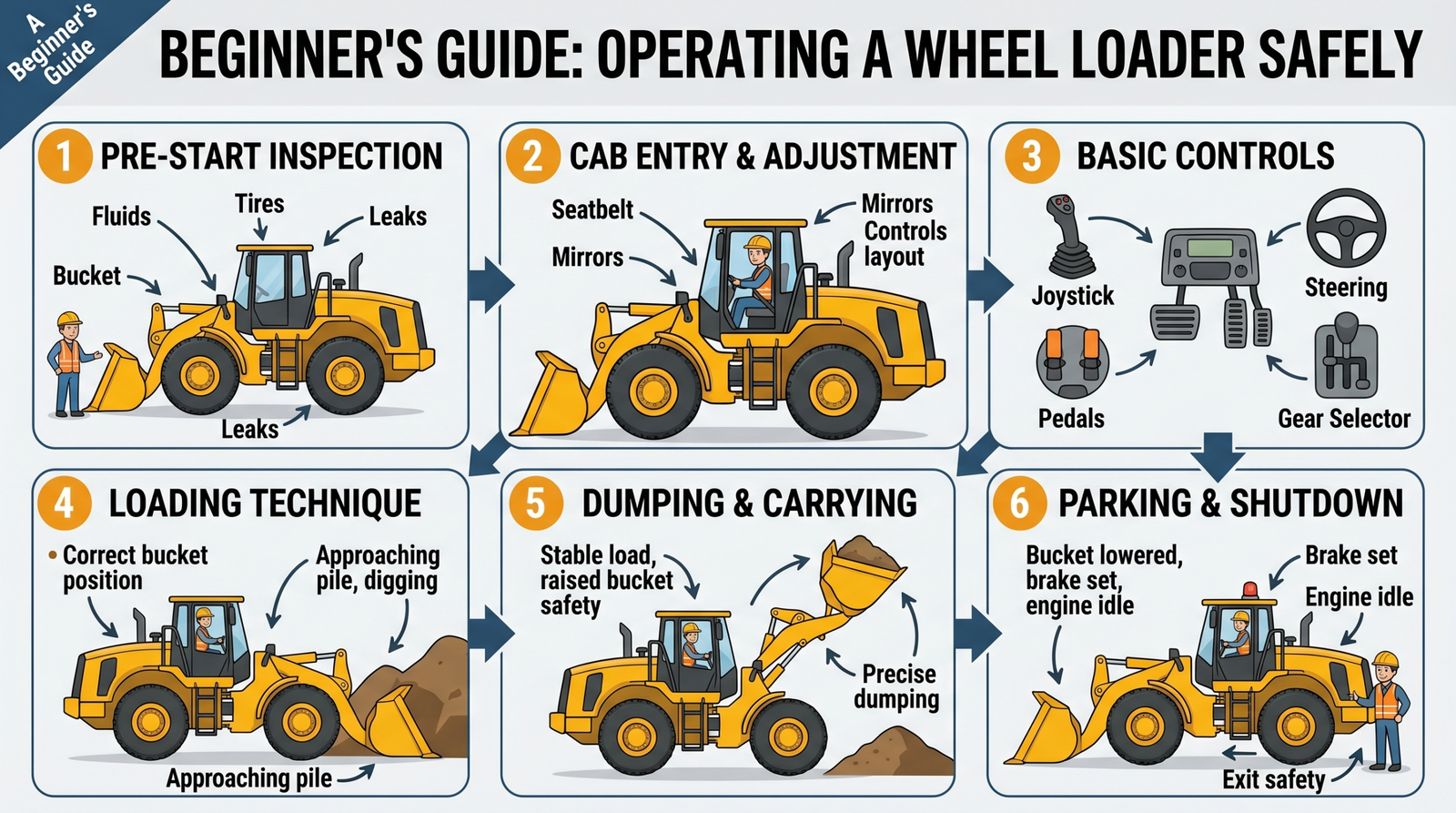
Controls within the cab are designed for ergonomic efficiency but require precise understanding. These typically include:
- Steering Wheel/Joystick: For articulated steering, which means the machine bends in the middle. This is different from conventional steering and requires practice to master, especially in tight spaces.
- Gear Selector: For forward, neutral, and reverse, often with multiple speed ranges.
- Accelerator and Brake Pedals: Standard for propulsion and stopping.
- Hydraulic Levers/Joysticks: Control the lift arms (raising/lowering) and bucket (tilting forward/backward). Modern loaders often feature sophisticated electronic controls that allow for fine adjustments and even automated functions.
- Parking Brake: An essential safety feature that must always be engaged when the machine is stationary.
- Auxiliary Controls: For various attachments or additional functions like differential lock.
Familiarity with these controls, their responsiveness, and their interaction with the machine’s movements is the bedrock of safe operation. Operators must develop a feel for the machine, understanding how different inputs translate into real-world actions, especially when carrying heavy loads or working on uneven terrain.
Key Safety Features of Modern Wheel Loaders
Modern wheel loaders are equipped with a host of safety features designed to protect the operator and those around the machine. Knowing and utilizing these features is non-negotiable for safe operation.
- ROPS/FOPS Cab: Roll-Over Protective Structures and Falling Object Protective Structures are standard. These robust cabs are designed to protect the operator in the event of a rollover or if objects fall onto the cab. Regular inspection for damage is crucial.
- Seatbelts: Always wear your seatbelt. In the event of a tip-over, a seatbelt can be the difference between minor injury and severe trauma or fatality.
- Visibility Aids: Modern loaders often include multiple mirrors, rearview cameras, and even 360-degree camera systems to eliminate blind spots. Understanding and utilizing these aids, along with regular cleaning, is vital.
- Warning Systems: Audible alarms (e.g., reverse alarms), flashing lights, and dashboard warning indicators alert the operator to potential issues like low fluid levels, overheating, or system malfunctions.
- Emergency Stop Buttons: Located both inside and sometimes outside the cab, these buttons can immediately shut down the engine in an emergency.
- Automatic Parking Brake: Some models automatically engage the parking brake when the engine is turned off or the operator leaves the seat.
- Lockout/Tagout Capabilities: For maintenance, these features prevent accidental startup of the machine.
- Fire Suppression Systems: Especially in high-risk environments, automatic or manual fire suppression systems can prevent small fires from becoming catastrophic.
Operators must not only be aware of these features but also understand how to test them during pre-operation checks and how to use them effectively in an emergency. Relying solely on these features without proper operational technique is a recipe for disaster; they are aids, not substitutes for skilled and safe operation.
Key Benefits
Embracing a comprehensive “Guide to Operating a Wheel Loader Safely” yields a multitude of benefits that extend far beyond merely avoiding accidents. It fosters a culture of professionalism, efficiency, and sustainability, impacting every facet of a construction site, quarry, or industrial operation. These benefits can be categorized into several critical areas, each contributing to a more robust, productive, and responsible work environment.
Firstly, the most immediate and undeniable benefit is enhanced safety and reduced risk of accidents. This is the primary objective of any safety guide. By adhering to established protocols for pre-operation checks, proper operating techniques, load management, and site awareness, operators significantly minimize the chances of rollovers, collisions, falling objects, and other common wheel loader incidents. This directly translates to fewer injuries, reduced fatalities, and a safer working environment for the operator and all personnel on site. The human cost of accidents is immeasurable, and a strong safety guide is the most effective preventative measure.
Secondly, a commitment to safe operation leads to increased operational efficiency and productivity. While it might seem counterintuitive that taking time for safety checks and slower, more deliberate movements could increase efficiency, the opposite is true. Accidents cause costly delays, require investigations, lead to equipment downtime for repairs, and can result in significant legal and financial repercussions. A safely operated machine experiences less wear and tear due to proper handling, reducing maintenance frequency and extending its lifespan. Operators who are well-trained and confident in their safety knowledge can work more effectively, making fewer errors and optimizing their movements, ultimately completing tasks faster and more reliably. This also reduces fuel consumption due to smoother operation and less aggressive maneuvering.
Thirdly, following a robust safety guide contributes to significant cost savings. This benefit is multifaceted. Reduced accidents mean lower insurance premiums, fewer workers’ compensation claims, and avoided legal fees from accident-related lawsuits. Less equipment damage translates to lower repair costs and extended asset life, delaying the need for costly replacements. Furthermore, avoiding downtime due to accidents or equipment breakdowns ensures projects stay on schedule and within budget, preventing penalties for delays and maintaining client satisfaction. The initial investment in comprehensive training and safety equipment pales in comparison to the potential costs of a single major incident.
Fourthly, a strong safety culture, driven by a comprehensive guide, leads to improved morale and retention of skilled operators. When employees feel safe and valued, their job satisfaction increases. Knowing that their employer prioritizes their well-being fosters trust and loyalty. This reduces employee turnover, which is a significant hidden cost for many businesses, involving recruitment, training, and lost productivity. Experienced, safety-conscious operators are invaluable assets, and a commitment to safety helps retain them, building a more stable and experienced workforce.
Fifthly, adherence to safety guidelines ensures compliance with regulatory standards and industry best practices. Regulatory bodies like OSHA (Occupational Safety and Health Administration) in the US, or similar organizations globally, impose strict rules for heavy equipment operation. Non-compliance can result in hefty fines, legal sanctions, and even the suspension of operations. A well-implemented safety guide ensures that a company meets or exceeds these requirements, protecting it from legal liabilities and enhancing its reputation. It also demonstrates a commitment to ethical operations, which can be a significant advantage in securing contracts and attracting business.
Finally, embracing safe operating practices contributes to environmental protection. Accidents involving heavy machinery can lead to spills of fuel, hydraulic fluid, or other hazardous materials, causing environmental damage. Proper maintenance and operation, as outlined in safety guides, minimize the risk of such incidents, ensuring responsible stewardship of the environment. This holistic approach to safety, therefore, isn’t just about preventing harm; it’s about building a more efficient, cost-effective, compliant, and environmentally responsible operation. For those looking to deepen their understanding, exploring various [Guide to Operating a Wheel Loader Safely resources] can provide further insights into these benefits.
Preventing Common Accidents and Hazards
Understanding the “Guide to Operating a Wheel Loader Safely” is fundamentally about preventing common accidents and mitigating inherent hazards. Wheel loaders, while incredibly useful, are also involved in a significant number of workplace incidents if not handled correctly.
One of the most frequent and dangerous types of accidents is rollovers or tip-overs. These can occur due to:
- Operating on slopes: Driving across a steep slope rather than straight up or down.
- Overloading the bucket: Exceeding the machine’s lifting capacity, especially when the bucket is raised.
- Sudden turns at speed: Articulated steering can make the machine unstable during sharp turns.
- Uneven terrain or soft ground: One side of the machine sinking can cause it to tip.
- Driving with the bucket too high: Raises the center of gravity, reducing stability.
Prevention involves understanding load limits, keeping the bucket low when traveling, maintaining appropriate speeds, and assessing ground conditions.
Collisions with other vehicles, structures, or personnel are also common. These often stem from:
- Blind spots: Despite mirrors and cameras, wheel loaders have significant blind spots.
- Lack of communication: Ground personnel and other operators not being aware of the loader’s movements.
- Inadequate site layout: Poor traffic flow or insufficient separation between machines and pedestrians.
- Operator fatigue or distraction: Reduced awareness of surroundings.
Mitigation strategies include establishing clear communication protocols (e.g., two-way radios, hand signals), implementing robust traffic management plans, using spotters when visibility is limited, and ensuring operators are well-rested.
Being struck by moving parts or falling objects is another hazard. This can happen when:
- Ground personnel are too close: Especially when the bucket is being raised, lowered, or dumped.
- Material spills from the bucket: If overloaded or tilted incorrectly.
- Maintenance is performed unsafely: Without proper lockout/tagout procedures.
Strict adherence to exclusion zones, proper loading techniques, and never working under a raised bucket without appropriate safety measures are critical.
Entrapment or crushing injuries can occur, particularly with the articulation joint. When the machine turns, the front and rear sections pivot, creating a pinch point. Operators and ground personnel must always be aware of this danger zone and never place themselves or others in its path.
Finally, electrical hazards, fires, and hydraulic fluid injection injuries are also potential risks. Checking for damaged electrical wiring, ensuring proper fueling procedures, and understanding the dangers of high-pressure hydraulic leaks are all part of a comprehensive safety approach. By systematically addressing these common accident types, operators can significantly enhance safety on the job site.
Maximizing Equipment Lifespan and Performance
Beyond safety, adhering to a comprehensive operating guide also plays a crucial role in maximizing the lifespan and performance of a wheel loader. These machines are significant investments, and proper operation and maintenance ensure that they deliver their full value over time.
Reduced Wear and Tear: Smooth and controlled operation, as taught in safety guides, minimizes stress on the machine’s components. Aggressive driving, sudden braking, rapid changes in direction, and overloading the bucket all put undue strain on the engine, transmission, hydraulic system, tires, and chassis. Operators trained in safe techniques learn to:
- Load efficiently: Avoiding ramming into stockpiles, which can damage the bucket and lift arms.
- Travel smoothly: Minimizing sudden acceleration and deceleration.
- Turn gradually: Reducing stress on the articulation joint and tires.
- Operate within load limits: Preventing strain on the hydraulic system and frame.
This gentle yet effective approach extends the life of critical components, reducing the frequency and cost of repairs.
Optimized Fuel Efficiency: Safe operating practices often align with fuel-efficient practices. Smooth acceleration, maintaining consistent speeds, avoiding unnecessary idling, and efficient loading cycles all contribute to lower fuel consumption. Aggressive operation burns more fuel and puts more stress on the engine. A well-trained operator understands how to get the most work done with the least amount of fuel, which is a significant operational cost.
Proactive Maintenance and Troubleshooting: A key part of safe operation is the daily pre-operation inspection. This routine check allows operators to identify minor issues before they escalate into major breakdowns. Checking fluid levels, tire pressure, hydraulic hoses, lights, and warning indicators can catch problems early. For example, a small hydraulic leak identified during a pre-check is much easier and cheaper to fix than a catastrophic hose failure mid-operation. Operators are often the first line of defense in identifying potential mechanical problems, and their adherence to inspection protocols is vital for proactive maintenance.
Consistent Performance: Machines that are operated safely and maintained regularly perform more consistently. They are less prone to unexpected breakdowns, which can derail project schedules and lead to costly downtime. Reliable performance means projects can stay on track, and the machine is always ready to tackle the next task.
By integrating safe operating principles into daily routines, businesses not only protect their personnel but also safeguard their substantial investment in heavy equipment, ensuring long-term reliability and peak performance.
How to Get Started
Embarking on the journey of operating a wheel loader safely is a structured process that requires dedication, comprehensive training, and a commitment to continuous learning. It’s not a skill that can be acquired overnight or through casual observation. For anyone looking to get started, a clear pathway, beginning with foundational knowledge and progressing to practical application, is essential. This section outlines the critical steps and considerations for aspiring wheel loader operators.
The very first step is formal training and certification. This is non-negotiable. Operating heavy machinery without proper training is not only extremely dangerous but also often illegal. Look for accredited training programs offered by vocational schools, equipment manufacturers, or specialized heavy equipment training centers. These programs typically combine classroom instruction with extensive hands-on experience. Classroom sessions will cover theoretical aspects such as machine mechanics, safety regulations (e.g., OSHA standards), site safety protocols, load charts, and emergency procedures. The practical component involves learning to operate the machine under the direct supervision of experienced instructors, starting with basic maneuvers and progressing to more complex tasks like loading, dumping, and navigating various terrains. Upon successful completion, operators receive certification, which demonstrates their competency and often fulfills regulatory requirements.
Secondly, understanding the specific machine and its manual is paramount. While general operating principles apply across all wheel loaders, each make and model has its unique characteristics, controls, and operational limits. Before operating any new machine, thoroughly read its operator’s manual. This document is a treasure trove of information, detailing everything from daily maintenance checks and lubrication points to specific safety warnings, lifting capacities, and recommended operating procedures. Familiarize yourself with the control layout, dashboard indicators, and emergency shutdown procedures specific to that particular loader. Never assume that because you’ve operated one loader, you know how to operate them all.
Thirdly, conducting thorough pre-operation inspections (walk-arounds) is a critical daily ritual. Before starting the engine, an operator must perform a systematic check of the entire machine. This involves inspecting tires for proper inflation and damage, checking fluid levels (engine oil, hydraulic fluid, coolant, fuel), examining hoses and belts for wear or leaks, ensuring all lights and warning devices are functional, checking the condition of the bucket and attachments, and verifying that all safety guards and access panels are in place. This walk-around is not a formality; it’s a vital safety measure that can identify potential mechanical failures before they lead to accidents or costly downtime. Any issues found must be reported and addressed before operation commences.
Fourthly, familiarization with the job site and its specific hazards is crucial. Every work environment is unique, presenting its own set of challenges. Before beginning work, operators must conduct a site assessment. This includes identifying potential obstacles (power lines, trenches, uneven ground, buried utilities), understanding traffic flow patterns, locating designated safe zones for ground personnel, and being aware of environmental factors like weather conditions (rain, snow, ice) that could affect traction and stability. Communication with site supervisors and other personnel is key to understanding the day’s tasks, potential risks, and emergency plans. Never operate a wheel loader in an unfamiliar area without a proper site briefing.
Finally, developing foundational operating skills in a controlled environment is essential for beginners. Start with basic maneuvers in an open, flat area free of obstacles. Practice starting and stopping smoothly, steering, lifting and lowering the bucket, and tilting it. Gradually introduce more complex tasks like scooping material, loading a truck, and navigating gentle slopes. Focus on smooth, deliberate movements rather than speed. Speed comes with experience and confidence, but precision and control are the hallmarks of a safe operator. Always keep the bucket low when traveling, maintain a safe distance from other equipment and personnel, and continuously scan your surroundings. Remember, proficiency is built through consistent practice and a steadfast commitment to the principles outlined in the [Guide to Operating a Wheel Loader Safely guide].
Pre-Operation Checks and Inspections
The importance of pre-operation checks, often referred to as a “walk-around inspection,” cannot be overstated. This systematic routine is the first line of defense against accidents and mechanical failures. It’s not just a recommendation; it’s a mandatory safety procedure that every operator must perform before starting a wheel loader.
Exterior Inspection:
- Tires: Check for proper inflation (use a gauge), cuts, bulges, or embedded objects. Ensure lug nuts are tight. Under-inflated tires can affect stability and fuel efficiency.
- Undercarriage: Look for leaks (oil, hydraulic fluid, coolant), loose bolts, or damaged components.
- Articulation Joint: Inspect for excessive play, cracks, or leaks. This is a critical safety point.
- Bucket and Attachments: Check for cracks, bent teeth, loose pins, or excessive wear. Ensure quick couplers are securely engaged if applicable.
- Lift Arms and Cylinders: Look for cracks, bends, leaks, or damage to hydraulic hoses.
- Lights and Mirrors: Ensure all headlights, taillights, turn signals, and warning lights are clean and functional. Adjust mirrors for optimal visibility.
- Windows and Wipers: Clean all windows for clear visibility. Check wiper blades for effectiveness.
- Safety Guards and Access Panels: Verify all guards are in place and secure.
- Fire Extinguisher: Ensure it’s charged, accessible, and the pin is in place.
- Steps and Handrails: Check for cleanliness and damage to prevent slips and falls.
Engine Compartment Check:
- Fluid Levels: Check engine oil, hydraulic fluid, coolant, and brake fluid levels. Top up if necessary.
- Belts and Hoses: Inspect for cracks, fraying, or leaks.
- Air Filters: Check for excessive dirt or damage.
- Battery: Ensure terminals are clean and connections are tight.
- General Cleanliness: Remove any debris that could pose a fire hazard.
Cab Interior Check:
- Seatbelt: Inspect for damage and ensure it latches securely.
- Controls: Test all levers, pedals, and switches for proper function and freedom of movement.
- Dashboard Indicators: Ensure all warning lights illuminate upon startup and extinguish as appropriate.
- Horn and Backup Alarm: Test for functionality.
- Emergency Stop Button: Verify it’s accessible and functional.
- Cleanliness: Remove any loose items that could interfere with controls.
Any defects or issues identified during this inspection must be reported to a supervisor and addressed before the machine is put into operation. Never operate a wheel loader with known safety defects. This diligent approach not only prevents accidents but also contributes significantly to the longevity and reliability of the equipment.
Understanding Load Limits and Stability
Operating a wheel loader safely hinges critically on a thorough understanding of its load limits and stability characteristics. Exceeding these limits is a primary cause of rollovers, structural damage, and loss of control.
Load Limits: Every wheel loader has a specified rated operating capacity (ROC) or safe operating load (SOL). This is the maximum weight the machine can safely lift and carry under specific conditions. This capacity is typically found in the operator’s manual and on a data plate on the machine itself. It’s crucial to understand that the ROC is not a fixed number; it varies based on:
- Attachment: The type and weight of the bucket or other attachment.
- Load Center: How far the load extends from the front of the bucket. A load held further out reduces stability.
- Machine Configuration: Whether it’s equipped with counterweights.
- Ground Conditions: Soft, uneven, or sloped terrain significantly reduces effective capacity.
- Lift Height: The higher the load is lifted, the less stable the machine becomes.
Never exceed the manufacturer’s rated capacity. It’s always safer to operate well within these limits. Overloading stresses hydraulic components, the frame, and tires, leading to premature wear and catastrophic failure.
Stability: A wheel loader’s stability is its ability to resist tipping over. This is influenced by its center of gravity (CG). When a load is added or lifted, the machine’s CG shifts.
- Bucket Position: Keeping the bucket low and close to the machine when traveling significantly lowers the CG, enhancing stability. Raising the bucket, especially with a heavy load, dramatically raises the CG and increases the risk of tipping.
- Articulation: When turning, the machine’s articulated frame shifts the CG laterally. Sharp turns, especially at speed or with a raised load, can easily lead to a rollover.
- Ground Conditions: Operating on slopes, uneven ground, or soft surfaces reduces the machine’s effective stability. Always drive straight up and down slopes, not across them. Avoid soft edges or drop-offs.
- Dynamic Forces: Sudden braking, acceleration, or turning can create dynamic forces that temporarily shift the CG, potentially causing a loss of stability. Smooth, controlled movements are essential.
Operators must develop a keen “feel” for the machine’s stability, constantly assessing the load, ground conditions, and bucket position. When in doubt, err on the side of caution. If a load feels too heavy or unstable, it likely is. Reduce the load or seek assistance. Understanding and respecting these limits is fundamental to safe and effective wheel loader operation.
Best Practices
Operating a wheel loader safely is an ongoing commitment that extends beyond initial training and pre-operation checks. It involves consistently applying a set of best practices that enhance safety, improve efficiency, and prolong the life of the equipment. These practices are born from years of industry experience and are designed to address the dynamic challenges encountered on various job sites. Adopting these habits will transform an operator from merely competent to truly exemplary.
One of the most crucial best practices is maintaining three points of contact when entering or exiting the cab. This simple rule, often overlooked, is vital for preventing slips and falls, which are a common cause of injury around heavy equipment. Always face the machine, use both hands on the grab handles, and ensure at least one foot is firmly on a step at all times. Never jump off the machine, regardless of how short the distance seems. This practice should be ingrained until it becomes second nature.
Another fundamental best practice is always wearing appropriate Personal Protective Equipment (PPE). This typically includes a hard hat, safety glasses, high-visibility clothing, steel-toed boots, and hearing protection. The specific PPE required may vary depending on the job site and task, but operators should always be prepared. PPE acts as the last line of defense against potential hazards, and its consistent use is a hallmark of a safety-conscious professional.
Effective communication is paramount on any job site involving heavy machinery. This means utilizing two-way radios, hand signals, or other designated communication methods to coordinate movements with ground personnel, truck drivers, and other equipment operators. Never assume others see you or know your intentions. Establish eye contact, use clear signals, and confirm understanding before proceeding with any maneuver, especially in congested areas or when visibility is limited. A backup alarm and horn are essential, but they are supplements to, not substitutes for, direct communication.
Maintaining situational awareness at all times is perhaps the most critical mental best practice. This involves constantly scanning the work area, not just directly in front of the machine, but also to the sides and rear. Be aware of ground personnel, other vehicles, obstacles, overhead power lines, and changes in ground conditions. Anticipate potential hazards and plan your movements accordingly. Avoid distractions inside the cab, such as mobile phones or excessive noise, that could detract from your focus. A vigilant operator is a safe operator.
Operating smoothly and deliberately is key to both safety and efficiency. Avoid sudden starts, stops, or turns. Aggressive operation puts undue stress on the machine, increases fuel consumption, and significantly raises the risk of losing control or tipping over. Smooth movements allow for better control, reduce the risk of spilling material, and minimize wear and tear on components. When loading, approach the material squarely, fill the bucket efficiently, and then back away and travel smoothly to the dump point, keeping the bucket low for stability.
Finally, never operating under the influence of drugs or alcohol is an absolute and non-negotiable rule. Impaired judgment, slowed reaction times, and reduced coordination are direct consequences that can lead to catastrophic accidents. Operators must also be mindful of fatigue and report any symptoms that could impair their ability to operate safely. A well-rested and clear-headed operator is essential for maintaining the high level of concentration and quick decision-making required for safe wheel loader operation. By consistently applying these best practices, operators not only protect themselves and others but also contribute to a more productive and professional work environment. For further reading, an in-depth [Guide to Operating a Wheel Loader Safely guide] often elaborates on these crucial daily habits.
Safe Operating Techniques
Beyond the general best practices, specific techniques are vital for operating a wheel loader safely and efficiently in various scenarios. Mastering these techniques is a hallmark of a skilled operator.
Loading and Dumping:
- Approach: Approach the material pile squarely and at a moderate speed. Avoid ramming the pile, which stresses the machine and wastes fuel.
- Scooping: Lower the bucket to the ground, tilt it slightly forward, and drive into the pile. As the bucket fills, roll it back to prevent spillage. Use the lift arms to maintain traction if the wheels begin to spin.
- Loading Trucks/Hoppers: Position the loader to minimize travel distance and turning. Ensure the truck driver is aware of your approach and is in a safe position. Carefully raise the bucket over the truck bed, ensuring clear overhead clearance. Dump the material smoothly, avoiding sudden jolts that could damage the truck or spill material. Retract the bucket and lower it to a safe travel height before moving.
- Stockpiling: Build piles systematically, working from the base upwards. Avoid creating unstable overhangs.
Traveling and Maneuvering:
- Bucket Position: Always travel with the bucket as low as possible, typically 12-18 inches (30-45 cm) off the ground, and tilted slightly back. This maintains a low center of gravity for maximum stability and provides a clear view.
- Speed: Adjust speed to terrain, load, and visibility. Never exceed a safe speed. Slow down significantly when turning, especially with a load.
- Slopes: Drive straight up and down slopes, never across them, to prevent rollovers. When going downhill with a load, use a lower gear to allow the engine to assist in braking.
- Turns: Anticipate turns and plan your path. Remember articulated steering means the rear wheels follow a different path than the front. Allow ample clearance for the rear of the machine.
- Reverse: Always use mirrors and cameras, and if necessary, a spotter, when backing up. The backup alarm should always be functional.
Working Near Others:
- Exclusion Zones: Establish and respect clear exclusion zones around the wheel loader where ground personnel are not permitted, especially during loading and dumping operations.
- Communication: Maintain constant communication with ground personnel and other equipment operators using radios, hand signals, or designated spotters.
- Eye Contact: Make eye contact with anyone in your vicinity before moving the machine.
- Never Carry Passengers: Unless the machine is specifically designed with a passenger seat and seatbelt, never allow anyone to ride on the machine.
Parking and Shutdown:
- Level Ground: Park on firm, level ground whenever possible.
- Lower Bucket: Always lower the bucket completely to the ground.
- Parking Brake: Engage the parking brake.
- Engine Shutdown: Follow manufacturer’s instructions for proper shutdown sequence.
- Secure Machine: Remove the key, lock the cab, and block the wheels if parking on a slope.
By consistently applying these safe operating techniques, operators can perform their tasks with greater confidence, efficiency, and most importantly, safety.
Emergency Procedures and Hazard Recognition
Even with the most stringent safety measures, emergencies can arise. A well-prepared operator knows how to react calmly and effectively. Hazard recognition, on the other hand, is about proactively identifying and mitigating potential dangers before they escalate.
Emergency Procedures:
- Machine Fire:
- If safe, attempt to drive the machine to an open area away from structures or flammable materials.
- Engage the parking brake, lower the bucket to the ground, and shut down the engine.
- Evacuate the cab immediately, using the three points of contact.
- If the fire is small and contained (e.g., electrical fire), use the onboard fire extinguisher. Do not attempt to fight a large or rapidly spreading fire.
- Call emergency services and your supervisor.
- Rollover/Tip-Over:
- If the machine begins to tip, do not jump out. Stay in the cab, brace yourself, and hold onto the steering wheel or grab handles. The ROPS/FOPS structure is designed to protect you.
- After the machine has settled, carefully assess your situation. If safe, exit the cab and move to a safe distance.
- Call for help immediately.
- Hydraulic Hose Failure/Fluid Leak:
- Safely lower the bucket to the ground and shut down the engine.
- Report the leak immediately. Do not attempt to repair high-pressure hydraulic lines without proper training and safety equipment, as fluid injection injuries are severe.
- Loss of Control (Brakes/Steering):
- If possible, slowly reduce engine speed.
- Attempt to use the parking brake if it’s a separate system.
- Try to steer the machine to a safe, open area.
- If on a slope, try to drive into a bank or soft material to slow down.
- Lower the bucket to the ground to act as an anchor if necessary and safe to do so.
- Shut down the engine.
- Electrical Shock (e.g., contact with power lines):
- Do not exit the cab unless there is an immediate threat of fire or the machine is otherwise compromised.
- Attempt to drive the machine away from the power line.
- If you must exit, jump clear of the machine, landing with both feet together, and shuffle or hop away from the machine to avoid step voltage. Do not touch the machine and the ground simultaneously.
- Call emergency services and ensure the power is de-energized before anyone approaches.
Hazard Recognition: Proactive hazard recognition is about identifying potential dangers before they become emergencies.
- Overhead Hazards: Always look up for power lines, tree branches, or overhead structures, especially when raising the bucket.
- Underfoot Hazards: Watch for uneven terrain, soft spots, trenches, buried utilities, or debris that could cause instability or damage.
- Pinch Points: Be acutely aware of the articulation joint and other moving parts that can crush limbs.
- Blind Spots: Understand the machine’s blind spots and account for them by using mirrors, cameras, and communication.
- Environmental Factors: Recognize how rain, snow, ice, fog, or extreme heat can affect machine performance, visibility, and ground conditions.
- Human Factors: Be aware of other personnel, their proximity, and their movements. Recognize signs of fatigue in yourself and others.
- Material Hazards: Understand the characteristics of the material you are handling (e.g., unstable stockpiles, hazardous materials).
Regular training, emergency drills, and a culture of open communication about potential hazards are crucial for effective emergency preparedness and hazard recognition.
Frequently Asked Questions
Operating a wheel loader safely often brings up a range of questions, particularly for those new to the equipment or seeking to deepen their understanding. Here are some of the most frequently asked questions, providing concise and practical answers based on best safety practices.
What is Guide to Operating a Wheel Loader Safely?
The “Guide to Operating a Wheel Loader Safely” is a comprehensive set of instructions, protocols, and best practices designed to ensure the secure and efficient use of a wheel loader. It covers everything from pre-operation inspections and understanding machine mechanics to safe operating techniques, load management, site-specific hazard recognition, and emergency procedures. Its primary goal is to minimize the risk of accidents, protect operators and ground personnel, prevent equipment damage, and ensure compliance with safety regulations. It serves as a foundational resource for training, certification, and ongoing safe operation.
How does a wheel loader work?
A wheel loader operates using a combination of mechanical, hydraulic, and electrical systems. At its core, an engine provides power for both propulsion (moving the machine) and the hydraulic system. The hydraulic system, using pressurized fluid, powers the lift arms to raise and lower the bucket, and the tilt cylinders to scoop and dump material. The machine typically uses articulated steering, meaning it bends in the middle to turn, rather than having steerable front wheels like a car. Operators control these functions from the cab using a combination of steering wheels or joysticks, foot pedals (accelerator, brake), and hydraulic levers or joysticks. The machine’s weight and robust construction allow it to handle heavy loads, while its wheel configuration provides mobility across various terrains.
What are the benefits of following a safe operating guide?
Following a safe operating guide for a wheel loader offers numerous benefits:
- Enhanced Safety: Significantly reduces the risk of accidents, injuries, and fatalities for operators and ground personnel.
- Increased Efficiency: Prevents costly downtime due to accidents or breakdowns, leading to smoother operations and project completion on schedule.
- Cost Savings: Lowers repair costs, insurance premiums, workers’ compensation claims, and avoids potential legal fees and fines.
- Extended Equipment Lifespan: Proper operation and maintenance reduce wear and tear, prolonging the life of the machine.
- Regulatory Compliance: Ensures adherence to safety standards set by governing bodies (e.g., OSHA), avoiding penalties.
- Improved Morale: Fosters a safer work environment, leading to increased job satisfaction and retention of skilled operators.
- Environmental Protection: Minimizes the risk of spills and other environmental incidents.
What are the most common hazards when operating a wheel loader?
The most common hazards associated with wheel loader operation include:
- Rollovers/Tip-overs: Caused by operating on slopes, overloading, sudden turns, or uneven ground.
- Collisions: With other vehicles, structures, or personnel due to blind spots, lack of communication, or operator distraction.
- Struck-by Incidents: Ground personnel being hit by the machine, moving parts, or falling material from the bucket.
- Entrapment/Crushing: Especially at the articulation joint when the machine turns.
- Falls: When entering or exiting the cab.
- Mechanical Failure: Due to inadequate maintenance or exceeding operational limits.
- Environmental Hazards: Such as power lines, trenches, or unstable ground.
How can I ensure good visibility while operating?
Ensuring good visibility is crucial for safe operation. Key practices include:
- Clean Windows and Mirrors: Regularly clean all glass surfaces and mirrors.
- Adjust Mirrors: Properly adjust all mirrors to minimize blind spots.
- Utilize Technology: Make full use of rearview cameras, 360-degree camera systems, or other electronic visibility aids.
- Keep Bucket Low: Travel with the bucket as low as possible (12-18 inches off the ground) to prevent it from obstructing your view.
- Use Lights: Ensure all working lights are functional, especially in low-light conditions.
- Maintain Awareness: Constantly scan your surroundings, looking for personnel, obstacles, and other equipment.
- Use Spotters: When working in tight spaces or areas with limited visibility, always use a trained spotter.
What is the importance of a pre-operation inspection?
A pre-operation inspection (or walk-around) is critically important because it allows the operator to identify potential mechanical issues or safety defects before starting the machine. This proactive check can prevent breakdowns, costly repairs, and, most importantly, serious accidents. It ensures that all safety features are functional, fluid levels are adequate, tires are properly inflated, and there are no visible signs of damage or leaks. Skipping this vital step significantly increases the risk of unexpected failures during operation.
Can I carry passengers in a wheel loader?
No, generally you should never carry passengers in a wheel loader unless the machine is specifically designed and equipped with a designated passenger seat and seatbelt, which is rare for most standard wheel loaders. The cab is designed for a single operator, and carrying passengers creates a significant safety hazard, putting them at risk of injury from sudden movements, rollovers, or being struck by internal components. Always adhere to manufacturer guidelines and site safety rules regarding passengers.
Conclusion
Operating a wheel loader is a demanding yet rewarding skill, essential to the backbone of countless industries. As we’ve explored throughout this comprehensive guide, the power and versatility of these machines come with an inherent responsibility for safety that cannot be overstated. From the foundational knowledge of machine mechanics and the critical importance of pre-operation checks to the mastery of safe operating techniques and the preparedness for emergencies, every aspect of wheel loader operation demands meticulous attention and an unwavering commitment to best practices.
The “Guide to Operating a Wheel Loader Safely” is more than just a set of rules; it’s a philosophy that prioritizes human life, protects valuable assets, and fosters a productive work environment. By diligently following these guidelines, operators not only safeguard themselves and their colleagues but also contribute to the efficiency, longevity, and overall success of their projects. Remember, safety is not an option; it’s an integral part of every scoop, lift, and move. It’s a continuous journey of learning, vigilance, and adherence to proven methods that transform a powerful machine into a precision tool.
Stay informed, stay vigilant, and always put safety first. Your actions directly impact the well-being of everyone on the job site.