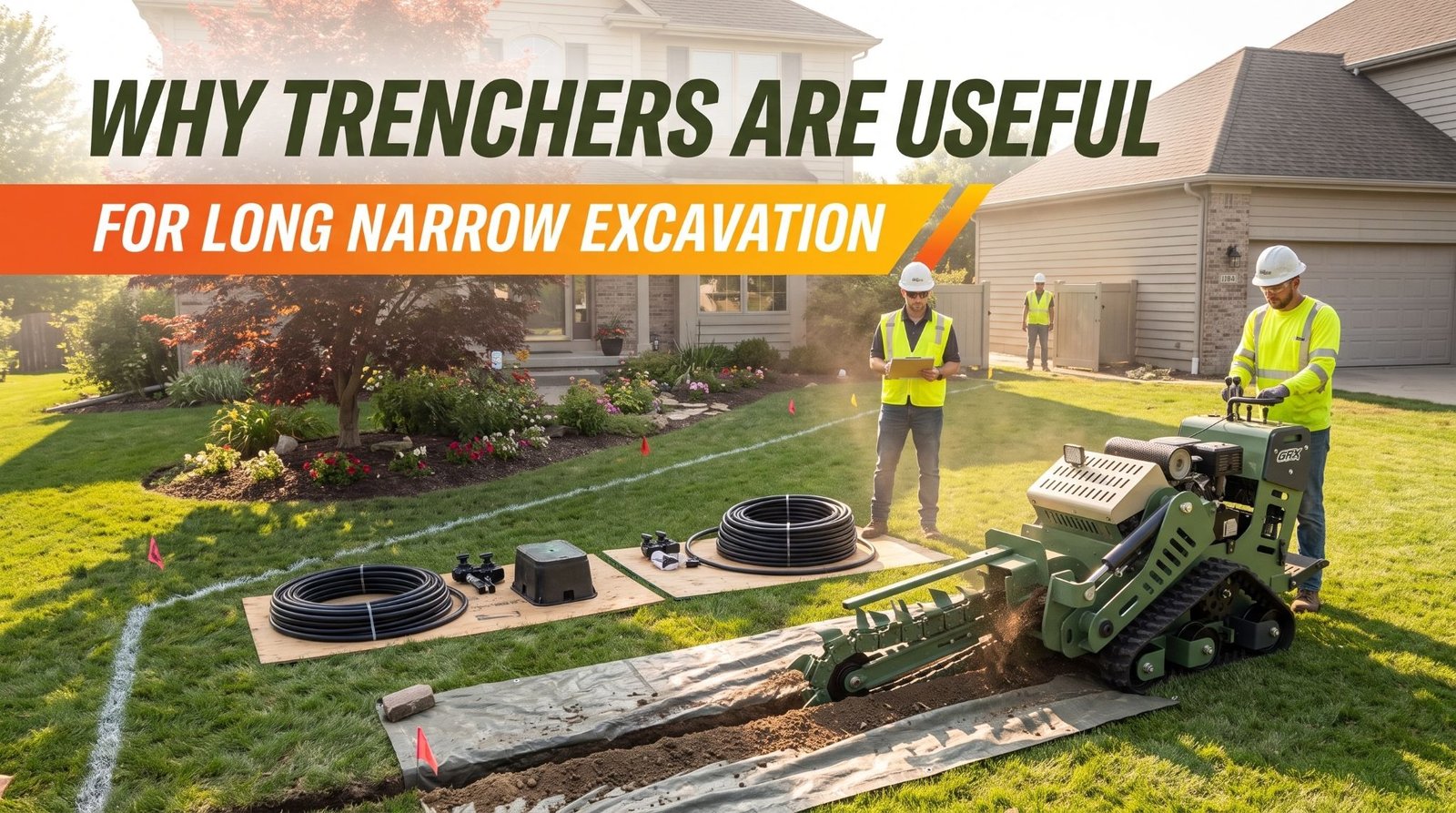
Why Trenchers Are Useful for Long Narrow Excavation
Long irrigation runs and utility installations often require narrow trenches that follow precise routes through lawns, gardens, and other landscaped areas. Using a bucket wider than necessary can remove excess soil, create larger spoil piles, and increase the work required to restore turf and planting beds. Trenchers are designed for this type of excavation, cutting consistent channels while limiting unnecessary disturbance around the installation.
Cutting chain width, boom depth, tooth selection, and machine size all influence trench quality and productivity. Narrow chains reduce the amount of material removed, while suitable cutting teeth help maintain progress through different soil conditions. Compact trenchers can also access restricted areas such as side yards and fenced gardens where larger excavation equipment may struggle to maneuver without damaging surrounding surfaces.
Effective trenching begins with marking the planned route, identifying buried utilities, and selecting equipment suited to the required dimensions and ground conditions. Operators should maintain consistent depth and alignment, inspect the trench as work progresses, and use appropriate hand-digging methods near buried services according to applicable requirements. Managing spoil on tarps, protecting turf and paving, and returning excavated soil carefully can reduce restoration work and help keep irrigation and utility projects on schedule.
Built for Narrow Ground Cutting
A trencher is designed to cut a defined trench into the ground. Most trenchers use a digging chain fitted with teeth that rotate around a boom, while some machines use a cutting wheel or a similar system. As the chain moves, its teeth break up the soil and carry it to the surface. A spoil auger then moves the material to the side of the trench, leaving a clean, consistent cut behind the machine.
Trench width is one of the main differences between a trencher and an excavator. A trencher can cut a channel much narrower than the bucket on many excavators. Chain widths commonly range from a few inches for irrigation and low-voltage cable to wider configurations for larger utility lines. An excavator must remove a section of ground at least as wide as its bucket to reach the required depth, while a trencher removes only the soil needed for the installation.
This precision makes trenchers useful for irrigation mainlines and laterals, low-voltage lighting and communication cables, electrical service lines to outbuildings and pumps, and drainage systems that require a consistent channel. Matching the cutting system to the installation is essential. Start with the outside diameter of the pipe or conduit, then account for the clearance, bedding, and separation required by the project specifications. A chain that is too narrow may require a second pass or additional hand trimming, while one that is too wide removes more soil than necessary.
The cutting system also determines the machine’s working depth. The boom’s length and angle control how deeply the chain reaches, so confirm that the trencher can achieve the required depth with enough capacity to accommodate grade changes along the route. Operating at the absolute maximum depth on every pass can reduce control and leave little room for adjustments.
Safety depends on keeping people away from the moving chain. A rotating chain can cause severe injuries in an instant, so everyone must remain clear of the chain, boom, and spoil discharge area while the machine operates. Never step over the boom or reach toward the chain. Stop the machine completely before anyone approaches the cutting area, and check operator presence controls, guards, and emergency stops before each shift.
Key Takeaway: A trencher uses a digging chain or similar cutting system to create a defined trench that can be much narrower than an excavator bucket. Match the cutting width and depth to the installation to remove only the soil required.
Reduce Unnecessary Soil Removal
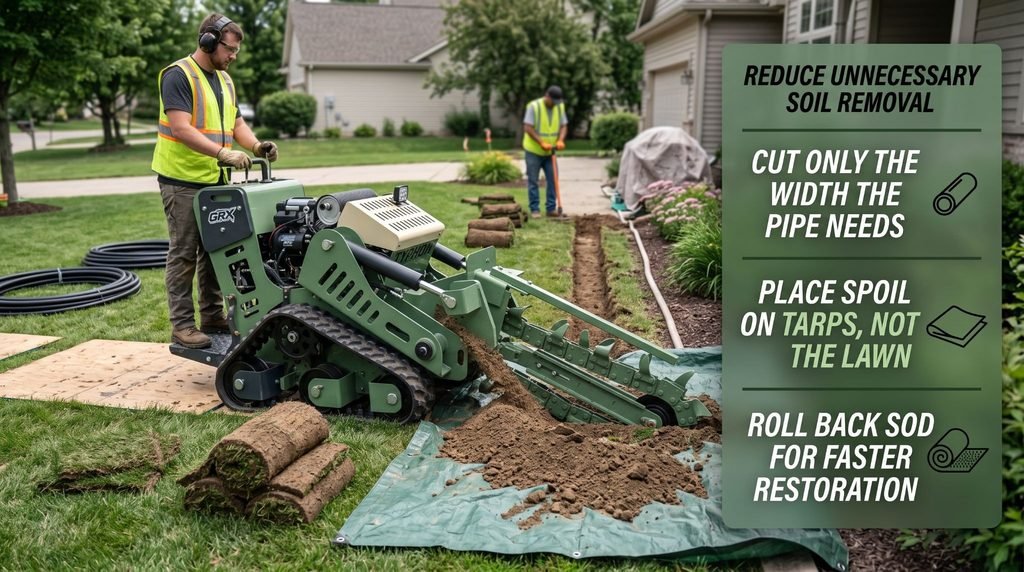
A narrow trench reduces the amount of soil that must be excavated. The difference may seem small over a short section, but it becomes significant across a long installation. At the same depth, a 4-inch-wide trench removes roughly one-third as much soil as a 12-inch-wide trench. Across 1,400 feet of irrigation line, this difference can amount to several cubic yards of material that the crew does not need to dig, move, or replace.
Removing less soil also simplifies spoil management. Smaller piles take up less space beside the trench and are easier to control. They are less likely to spill onto walkways, wash into storm drains during rain, or cover nearby plants. On residential properties, side yards, and narrow spaces between buildings, a smaller spoil pile helps keep the work area organized and accessible.
Backfilling can also take less time because there is less excavated material to return to the trench. Narrow cuts may reduce the amount of imported material required for projects that specify select backfill or sand bedding. Backfill should still be placed and compacted in lifts according to project requirements and applicable guidance. Proper compaction helps prevent the surface from settling into a depression after heavy rain or repeated use.
Limiting soil removal is particularly beneficial during landscape restoration. A narrow cut disturbs less lawn, planting bed, and surrounding surface area, leaving less ground to repair after the installation. Property owners are left with a smaller disturbed area, and contractors can spend less time resodding, replanting, and reseeding.
Careful spoil placement can improve these results further. Tarps or plywood placed beside the trench help keep soil away from the lawn, making it easier to return clean material during backfilling. On established lawns, cutting and rolling the sod before trenching allows it to be replaced after the work is complete. Discharging spoil consistently to one side keeps the opposite side clear for worker access and pipe staging. Nearby flower beds, walkways, and patios may need covers, while spoil piles should be protected before rain to reduce runoff and muddy conditions.
Spoils must remain a safe distance from the trench edge. Material placed too close can slide back into the excavation and add weight to the trench walls. Many safety guidelines call for keeping spoils and materials at least 2 feet from the edge, although the applicable requirements depend on the site and jurisdiction. Mark open trenches with suitable flags or barriers, particularly on residential properties where homeowners, children, or pets may be nearby. Backfill as soon as the installation and required inspections are complete.
Key Takeaway: A narrow trench reduces excavated soil, simplifies spoil management, and limits ground disturbance. Plan spoil placement carefully and protect surrounding surfaces to make backfilling and restoration more efficient.
Consider Ground Conditions
Soil type has a major effect on trenching performance. Loose loam may cut quickly and cleanly, while compacted ground, clay, gravel, and mixed material can create much greater resistance. A trencher that moves quickly through one section of a property may need to slow considerably when the ground changes farther along the route.
Loose loam and sandy soil generally allow fast cutting, but dry sand can fall back into the trench. Installing pipe and backfilling soon after cutting helps keep the trench clear. Moist clay may cut readily but stick to the chain, teeth, and spoil auger, increasing resistance. Dry, hard clay can be much more difficult to penetrate. Compacted ground around driveways, old construction access routes, and heavily used lawns often requires suitable teeth and a slower cutting pace.
Gravel and rock introduce additional challenges because coarse material can accelerate tooth wear and create shock loads on the chain. Large stones may also deflect the cutting system and push the trench away from its intended line. Roots can wrap around the chain and teeth, slowing progress and potentially damaging the equipment. Cutting large tree roots can also harm the tree, so root locations and protection requirements should be assessed before work begins. Mixed ground presents similar difficulties because soil conditions may change repeatedly along a single trench.
Moisture also influences how the machine performs. Very wet soil can pack into the cutting system, reduce traction, and weaken trench walls. Extremely dry soil may become hard and increase cutting resistance. Even the same property can behave differently in spring and late summer, making it important to assess conditions close to the planned start date.
Matching the machine and cutting system to the ground helps improve productivity and reduce wear. Cup teeth generally suit softer soils, while pointed shark teeth are commonly used for compacted ground and hard clay. Carbide-tipped teeth are better suited to abrasive materials such as gravel and rock. Combination chains use different tooth styles for properties with varying ground conditions. Hard or rocky ground may require a more powerful machine, a rock-rated chain, or another excavation method. Follow the manufacturer’s recommendations for chain and tooth configurations, and operate within the machine’s rated limits.
Operating technique should change as ground resistance increases. Reduce ground speed so the chain can cut without bogging down, and pay attention to changes in engine sound and machine vibration. Repeated chain stalls, sparks against stone, or heavy vibration indicate that the operator should slow down further or stop to assess the conditions.
Stop immediately if the chain encounters an unexpected obstruction. Lower the engine to idle, stop the chain, raise the boom clear when safe, and shut down the machine before investigating. Never reach toward the chain or into the trench while the engine is running. Treat an unknown line or cable as potentially energized until the utility owner confirms its status.
Key Takeaway: Soil type and moisture affect cutting speed, tooth wear, and trench quality. Assess ground conditions along the route, match the cutting system to the material, and stop safely when unexpected resistance or an obstruction occurs.
Maneuverability Matters
Many trenching projects take place in confined spaces surrounded by buildings, fences, landscaping, driveways, roads, and existing structures. Larger equipment may struggle to reach these areas or position itself without disturbing nearby property. A compact trencher can make access and positioning easier when space is limited.
Walk-behind and compact ride-on trenchers can often pass through standard side gates and work along fence lines or near foundations, patios, and planting beds. This access reduces the amount of hand digging needed in tight areas and helps maintain a consistent trench from one end to the other.
Compact machines can also help limit surface damage. Depending on the model and ground conditions, rubber tracks or smaller tires may reduce ground pressure compared with larger equipment. A smaller footprint can also make it easier to turn in confined areas without creating as many ruts or damaging turf. On finished landscapes, reducing this damage can lower restoration costs and minimize disruption to the property.
Precise steering helps the operator follow the planned installation route. Staying on course limits unnecessary ground disturbance and reduces the risk of striking nearby features such as tree roots, sprinkler heads, and existing structures. Accurate positioning also helps keep the trench aligned with the project specifications.
Before bringing a trencher onto the site, measure the narrowest gate and passage along the entire travel route, taking the boom and attachment dimensions into account. Check overhead clearance around eaves, tree limbs, pergolas, and overhead lines. Confirm that there is enough room to turn at the ends of trench runs without striking structures, fences, or plantings. Choose a practical travel path over firm ground, and use plywood or ground protection mats where needed to protect lawns and soft surfaces. When working close to fixed features, consider suitable protection for downspouts, utility meters, and air-conditioning units.
Maneuverability must not come at the expense of safety. Operators using walk-behind machines should maintain a firm grip and stable footing, particularly on slopes and uneven ground. Follow the manufacturer’s instructions for slope operation, and avoid traveling across a slope unless the machine is specifically approved for that operation. Keep the machine away from trench edges, retaining walls, and drop-offs. Use a spotter when visibility is limited in tight spaces, and keep homeowners, children, and pets outside the work area.
Key Takeaway: A compact trencher can improve access around buildings, fences, landscaping, and roads while helping limit surface damage. Measure passage widths, overhead clearances, and turning space before mobilizing, then follow the planned route safely.
Plan the Trench Before Cutting
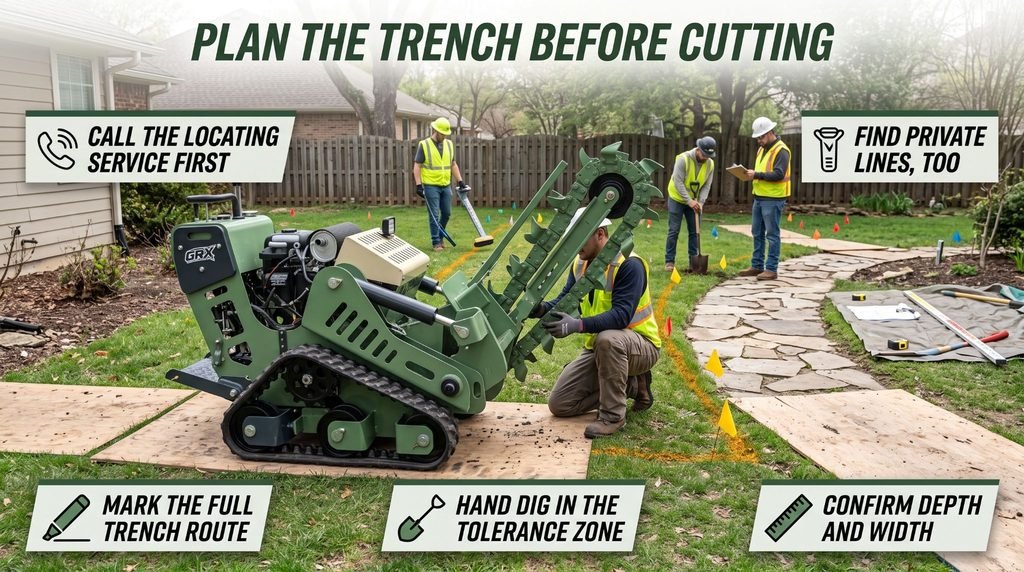
Successful trenching begins before the cutting chain enters the ground. A clear plan helps keep the work accurate, safe, and consistent with project requirements. Skipping preparation can lead to unnecessary corrections, damaged utilities, rework, and delays.
Walk the property and mark the complete trench route with suitable paint and flags. Include turns, valve boxes, connection points, and crossings, and choose the straightest practical path where site conditions permit. Fewer turns can simplify cutting and help maintain a consistent trench line.
Confirm the required depth and width using project specifications, pipe or conduit manufacturer guidelines, and applicable local codes. Irrigation mains, lateral lines, electrical conduit, and drainage systems may have different installation requirements. Measure depth from the finished grade, particularly when the surface will be regraded after the installation.
Assess the route for slopes, soft or wet ground, tree roots, rock, hardscape, and existing features that require protection. Identify locations where mechanical trenching may not be suitable and where hand digging or boring will be necessary, such as beneath walkways and driveways.
Before excavation begins, confirm the location of existing utilities and assess the trench for potential hazards. Proper locating procedures and protective measures help prevent utility strikes, service disruptions, and serious injuries.
- Contact Utility Locators: In the United States, call 811 before digging and provide accurate excavation details. Wait for the required notification period and ensure public utility lines are marked before starting work.
- Identify Private Utilities: Public locating services may not cover irrigation systems, landscape lighting, septic components, or other private lines. Review property plans and arrange a private utility locator when necessary.
- Respect Utility Markings: Treat marked locations as approximate and follow the applicable tolerance-zone requirements. Use careful hand digging, vacuum excavation, or another approved method to expose utilities before mechanical excavation near them.
- Respond to Utility Strikes: If the cutting chain contacts an unmarked utility, stop the machine immediately, keep people clear, and follow site emergency procedures. Never continue digging until the hazard has been assessed.
- Follow Trench Protection Requirements: Assess trench depth, soil conditions, and collapse risks before allowing entry. In the United States, trenches 5 feet deep or more generally require a protective system unless excavated entirely in stable rock. A competent person must evaluate conditions, and workers must not enter until required protections are in place.
Before starting the machine, inspect the chain, teeth, sprockets, and chain tension. Confirm that guards, operator presence controls, and emergency stops function correctly, and review the manufacturer’s operating instructions. Check that the planned route, cutting depth, and working area are suitable for the machine and the installation.
Key takeaway: Identify the route, confirm the required depth and width, verify site suitability, and locate every public and private utility before cutting to reduce corrections and keep the work safe and aligned with project requirements.
Conclusion
Trenchers provide precise, efficient excavation for long, narrow runs used in irrigation, electrical, communication, and drainage installations. Their digging chains cut defined trenches with less width than many excavator buckets, helping reduce soil removal, simplify spoil handling, and limit surface restoration. Consistent cutting supports uniform trench dimensions, while compact machine designs can improve access along narrow paths and around lawns or landscaped areas. Performance depends on matching the trencher, chain, and teeth to the soil conditions, moisture, and required trench dimensions. Before work begins, contractors should contact the local utility locating service, identify private lines where necessary, and mark the complete route, including turns, crossings, and connection points. Required trench depth and width should be confirmed from project specifications, while gates, overhead clearance, turning space, and spoil placement should be planned for the site. Inspecting the chain, teeth, tension, guards, and safety controls before operation helps maintain reliable cutting performance. Following the manufacturer’s operating guidance and applicable trench safety requirements further supports accurate excavation and reduces unnecessary disruption to surrounding property. Matching equipment, ground conditions, access, and project requirements helps deliver consistent results and dependable trenching performance.
Frequently Asked Questions
What is a trencher mainly used for?
Trenchers create narrow, continuous trenches for utilities, irrigation, drainage, and landscaping. Their cutting systems, often a rotating digging chain, remove soil in a steady pass to produce consistent trench width and depth. They’re well suited to installing electrical lines, communication cables, water lines, and drainage pipes over long distances, and compact models work well near buildings, fences, and landscaped areas where larger equipment may not fit.
Why use a trencher instead of a bucket?
A trencher is designed to create narrow, continuous cuts, which reduces unnecessary excavation compared with a wider bucket. Excavator buckets may remove more soil than cables or pipes require, creating larger spoil piles and increasing backfill and restoration work. A trencher’s continuous cutting motion also improves efficiency on long runs. Excavators remain better suited to wide or deep excavations and larger pipes.
Can a trencher work in hard soil?
Performance depends on the machine, cutting system, and ground conditions. Compacted soil, dense clay, gravel, and rock can slow cutting and increase wear on chains and teeth. Many trenchers accept different chain and tooth configurations for specific soils, while tougher ground may require a more powerful machine or specialized equipment. Always follow the manufacturer’s operating limits in hard or rocky soil.
Are trenchers useful for landscaping?
Yes. Trenchers are useful for installing irrigation systems, drainage lines, low-voltage lighting cable, and other underground services in landscaped areas. Their narrow cuts limit disturbance to lawns, planting beds, and finished surfaces, which makes restoration easier. Before digging, locate both public and private underground utilities and plan the trench route carefully to protect workers and property.