
SKOOP Master Guide
The complete 8-part digital handbook. Navigate through specifications, daily operations, safety warnings, official TYPHON attachments, and maintenance procedures.
Machine Specs
View detailed dimensional drawings, weight capacities, and engine power outputs.
Safety Warnings
Critical operational safety rules, rollover protocols, and personal protection.
Controls & Dash
Understand joystick inputs, braking mechanics, and digital dashboard icons.
Operating Guide
Step-by-step procedures for safely driving, loading, and handling materials.
Attachments (SKU)
Explore the full TYPHON attachment catalog and hydraulic quick-change guide.
Maintenance
Daily, weekly, and monthly maintenance checklists to keep your loader running.
Shipping & Storage
Proper methods for tying down, towing short distances, and winterizing the machine.
Fluids & Diagnostics
Hydraulic capacities, engine oil grades, and standard mechanical troubleshooting.
01. Machine Specifications
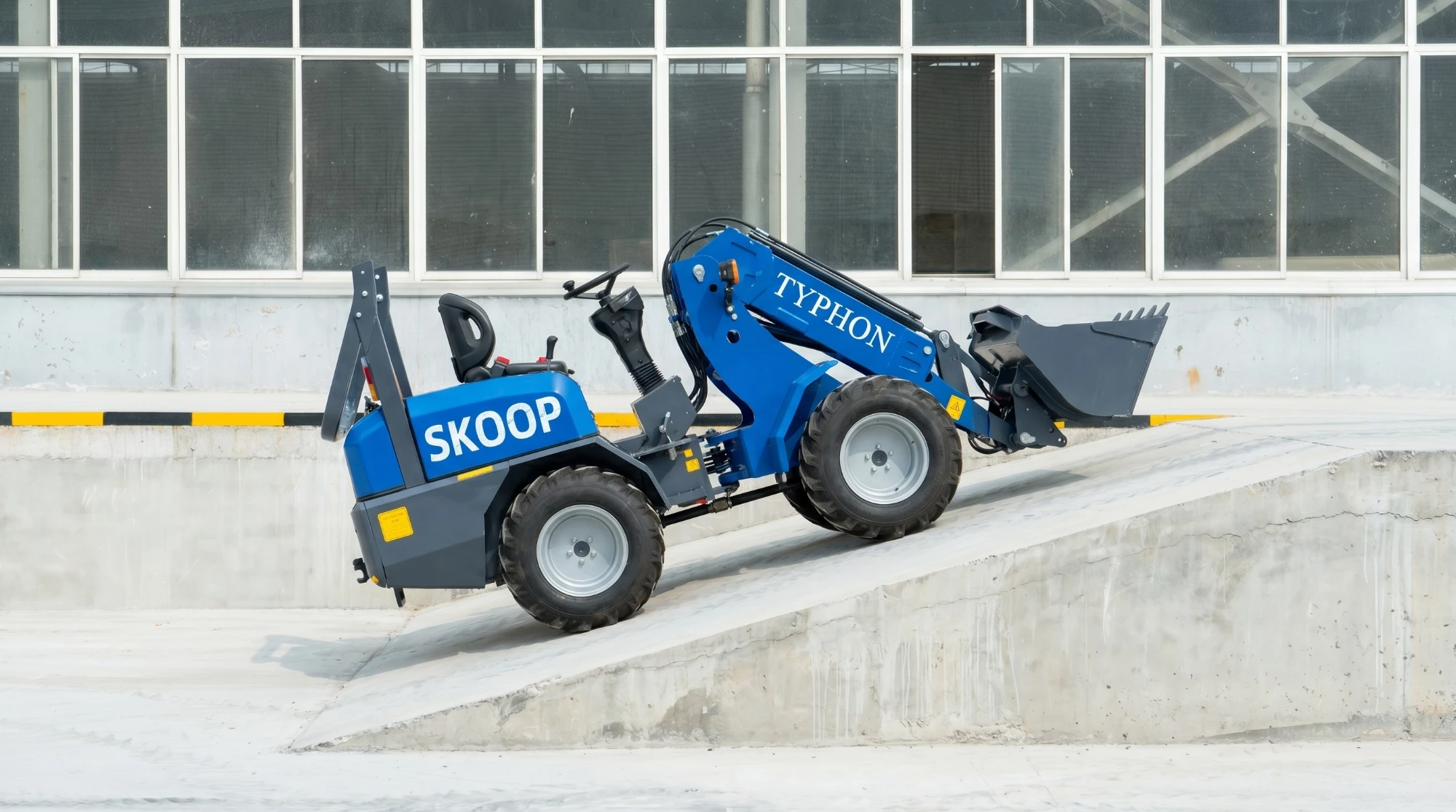
The TYPHON SKOOP Telescopic Wheel Loader is an industrial-grade machine designed for multi-functional loading, lifting, and pulling operations.
Core Dimensions & Weights
- Net Weight: 3,968 lb.
- External Dimensions: 174.4 in (L) × 41.2 in (W) × 97.2 in (H).
- Max Load of Main Boom: 1,764 lb.
- Rated Bucket Capacity: 0.39 cubic yards.
- Maximum Lifting Height: 158.9 in.
- Maximum Unloading Height: 111.2 in.
- Maximum Slope Capacity: 30%.
Powertrain & Hydraulics
- Engine Model: KUBOTA D 1105 (3-cylinder diesel).
- Rated Power & Displacement: 24.4 hp rated power with a 68.5 cu in displacement.
- Transmission: Closed-loop piston pump featuring electric continuously variable transmission.
- Maximum Speed: Up to 7.5 mph.
- Hydraulic System: Maximum flow rate of 11.1 to 22.2 gal/min operating at a system pressure of 2,321 psi.
- Tire Specifications: 10.0×75-15.3.
- Ground Clearance: 9.55 in.
02. General Safety & Warnings
Operator Health & Rules
- All equipment operators must possess qualifications that meet relevant safety requirements and must be at least 18 years old.
- When operating mechanical equipment with moving parts, do not wear clothing that is loose (such as ties, scarves, or unbuttoned hems).
- Before starting the loader, ensure your seatbelt is fastened. Seat belts must be replaced every three years.
- The maximum permissible load and operating temperatures range from -22°F to 113°F.
Operational Restrictions
- It is strictly forbidden to use the loader to transport hazardous materials or to transport personnel.
- No unauthorized modifications, additions, or combinations with non-originating accessories are permitted without written consent from TYPHON.
- Never inspect the battery near an open flame or while charging.
03. Main Components & Dashboard
The control system is designed to perfectly combine ultimate driving comfort with superior performance.
Multi-Function Joystick & Controls
- Joystick: The control handle on the right side provides standard control functionality, operating three gears: Forward, Neutral, and Reverse.
- Braking System: The hydrostatic drive unit acts as the main service brake. The manual drum parking brake handle is connected to the drive shaft via a connecting rod.
- Steering Gear: The steering gear can be adjusted longitudinally. Adjustments should only be made when the loader is stationary!
Dashboard Displays
- LCD Display: Shows working hours (0.0~99999.9h), system voltage, and fuel level (triggers alarm at ≤1/8 capacity).
- Engine Metrics: Engine speed (0~3000rpm) and Water Temperature. If water temperature hits ≥216°F, an intermittent buzzer alarm will sound.
- Warning Icons: Includes alerts for low oil pressure, hydraulic oil over-temperature, and a charging/alternator alarm.
04. Operating Procedures
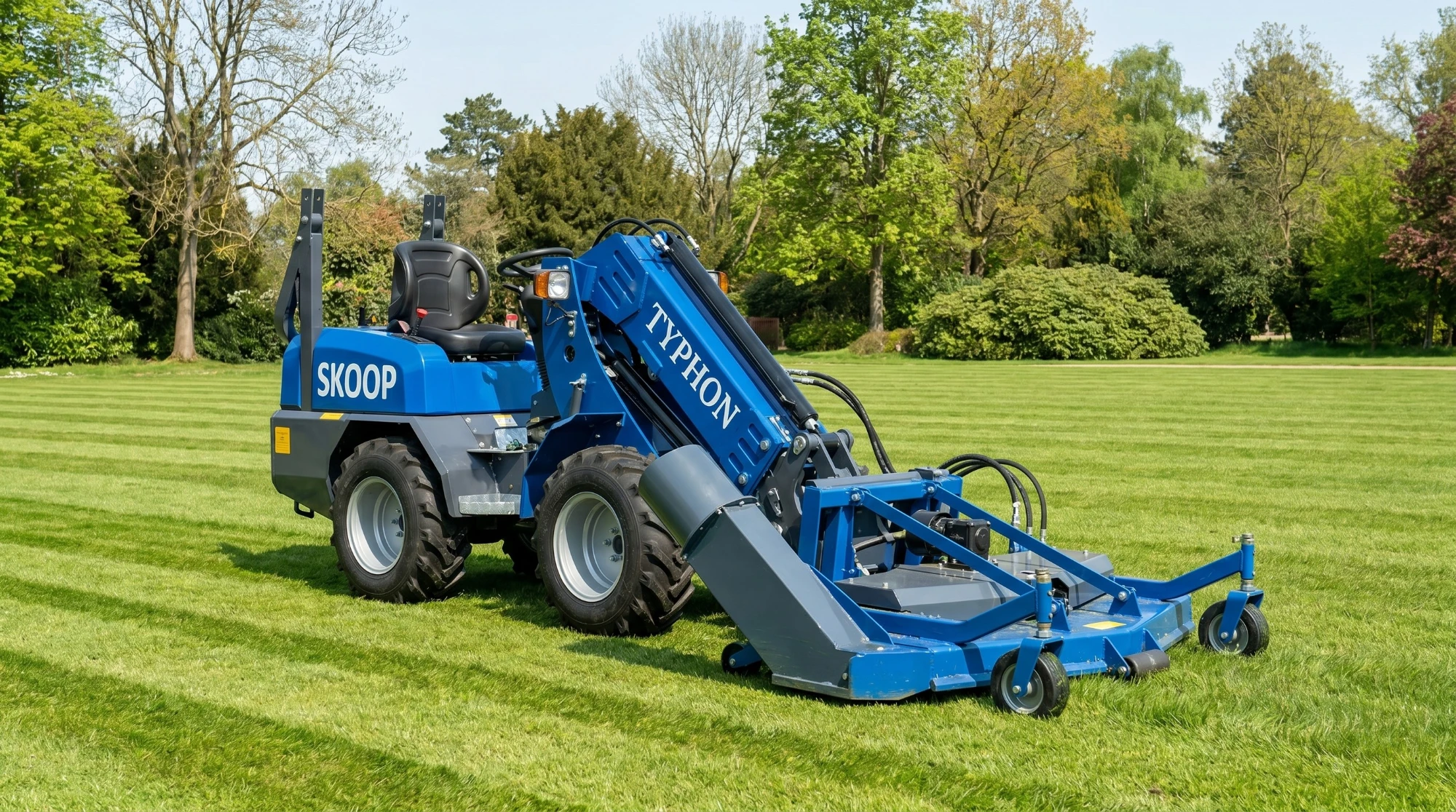
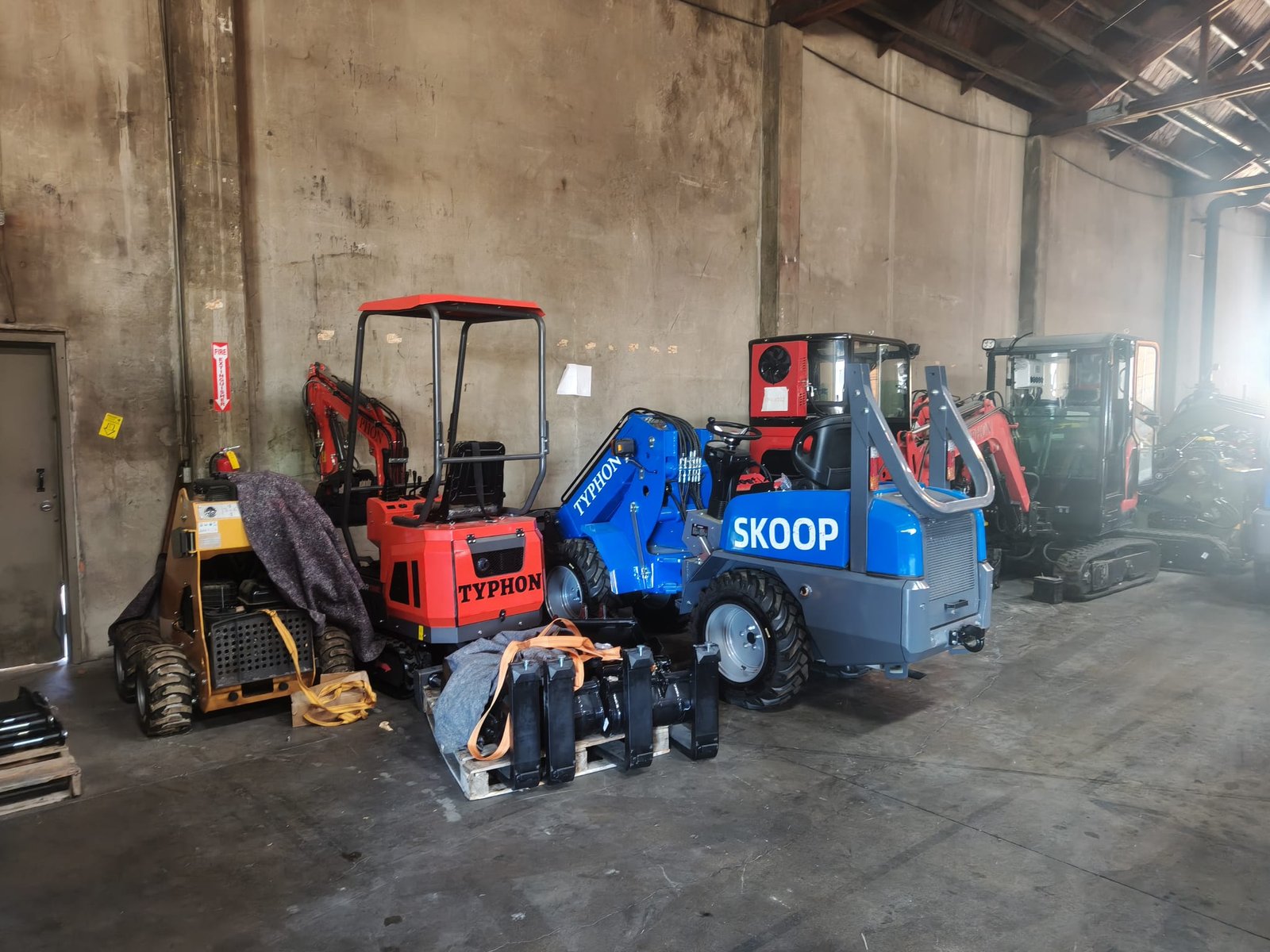
Safe and efficient loading operations depend entirely on the operator. Always remain vigilant and use common sense.
Starting and Driving
- Before starting, adjust the driver's seat and steering wheel, fasten your seatbelt, and confirm the parking brake is engaged.
- Turn the ignition switch to start, lightly press the left micro-motion pedal, release the handbrake, and push the gear lever to the desired direction.
- During emergency braking, immediately release the accelerator pedal and depress the micro pedal.
Loading and Hill Safety
- When carrying a heavy load, reduce your speed. Loading operations should be limited to a maximum speed of 3.1 mph.
- When traveling under load, the bucket should be raised to the transport position (approximately 7.9 in from the ground).
- When driving on a slope (forward or backward), the cargo should always face upwards towards the ascent direction.
- Parking on a ramp is strictly prohibited. If a breakdown occurs, park the loader, engage the handbrake, and place wheel chocks under the tires.
05. Official TYPHON Attachments
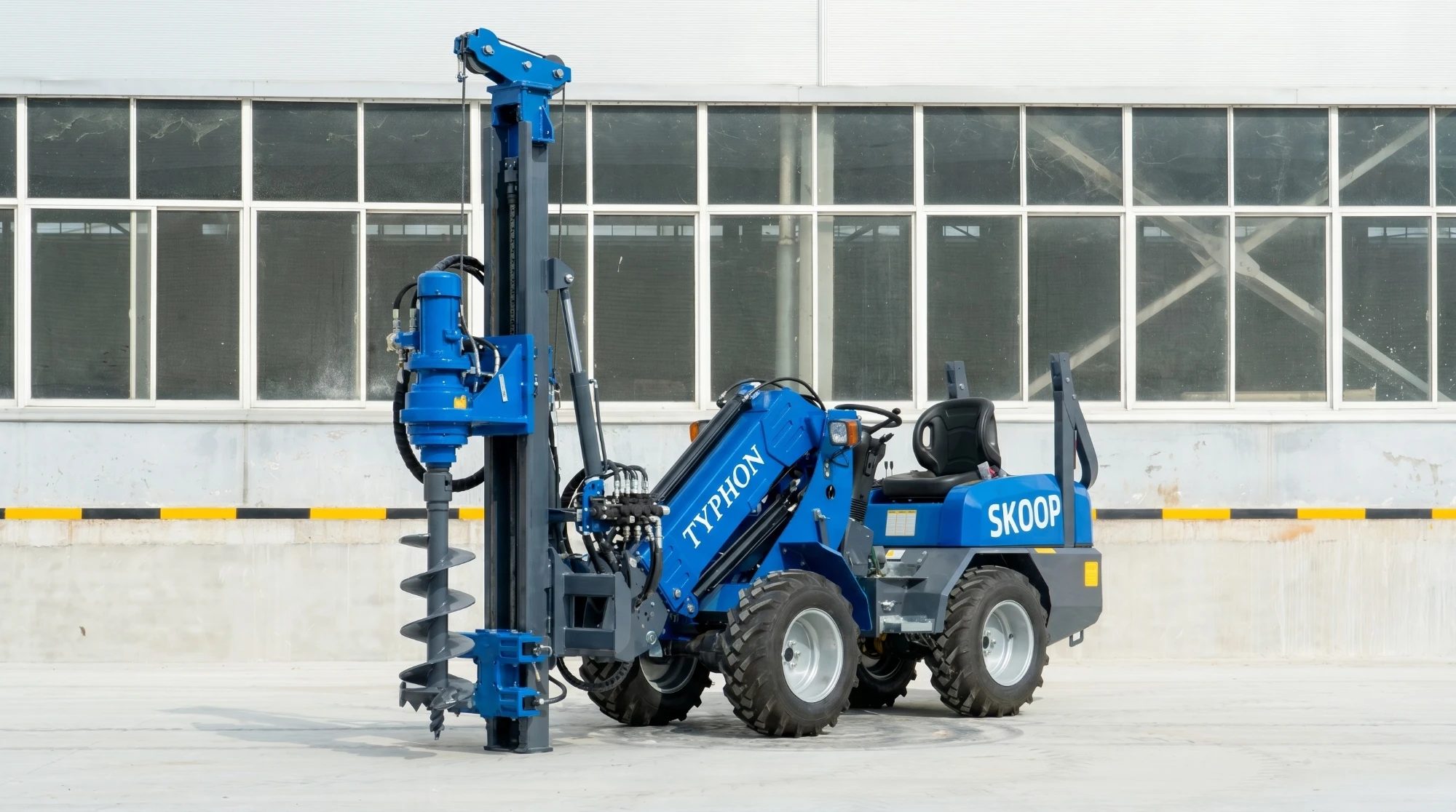
The SKOOP loader features a quick attachment change system controlled by a multi-functional valve. Below is the official TYPHON SKU catalog.
| TYPHON SKU | Attachment Name | Description & Use Case |
|---|---|---|
| TYPH-8006 | 4-in-1 Bucket | Used to scoop and transport materials, and separate materials of different diameters. |
| TYPH-8005 | Hydraulic Fork | Ideal for unloading large materials and short-distance operations. |
| TYPH-8007 | Log Grapple | Used to grab and efficiently transport bundles. |
| TYPH-8009 | Rotary Drilling Rig | Spiral drill used for drilling holes in the ground. |
| TYPH-8012 | Enclosed Sweeper | Facility and yard maintenance sweeping. |
| TYPH-8008 | Dense-type Grass Grapple | Used for loading and unloading hay or fodder. |
| TYPH-8017 | Ditching Machine | Trenching and heavy site preparation. |
| TYPH-8023 | Lawn Mower | Commercial landscaping and weeding applications. |
| TYPH-8013 | Hydraulic Breaker | Heavy-duty demolition and concrete breaking. |
| TYPH-8026 | Reclamation Machine | Rough terrain and land reclamation. |
06. Maintenance Schedule
Routine maintenance must be performed by professionally trained personnel. Ensure the vehicle is securely fastened and parked on level ground before maintenance begins.
Daily Maintenance (Every 10 Hours)
- Clean the air filter.
- Check engine oil level, coolant level, and hydraulic oil level.
- Check tire condition and ensure standard tire pressure is maintained at 43.5 psi.
- Check wheel nuts. The correct torque value for front and rear wheel nuts (M18×15) is 229±33 lb-ft.
- Lubricate all pivot pins and steering cylinder pivot pins.
Weekly Maintenance (30-50 Hours)
- Clean the fuel filter and oil-water separator.
- Check for oil leaks on the front and rear axles and check oil levels.
- Check the tension and condition of the V fan belt.
Major Maintenance (Every 500 Hours or 1 Month)
- Change the engine oil and engine oil filter.
- Change the hydraulic oil and replace the hydraulic return oil filter.
- Change the oil in the transmission gearbox and replace the axle lubricant.
07. Shipping, Towing & Storage
Shipping Procedures
- Disconnect the battery cable.
- Drain the coolant from the radiator and engine cylinder block, and discharge fuel into a dedicated container.
- Secure the front and rear frames with locking plates, and use sturdy ropes to lift the loader at the marked lifting point.
Traction & Towing
- The machine can only tow for short distances. Long-distance towing is prohibited.
- The traction point is located behind the counterweight. Maximum permissible traction force is 4,496 lbf.
- Only rigid traction (traction bars) is permitted, and maximum traction speed must be ≤3.1 mph.
Long-Term Storage
- Machine storage temperature range is -22°F to 122°F.
- The loader should be raised and the axles locked to prevent the tires from contacting the ground.
- Tire pressure needs to be reduced to 15 psi (pounds per square inch).
- Remove the battery and store it separately in a cool, dry place.
08. Fluids & Troubleshooting Diagnostics
System Capacities & Fluid Specifications
- Fuel Tank: 7.9 gal capacity using Diesel fuel (Standard DIN 51601).
- Hydraulic Oil Tank: 7.9 gal capacity using hydraulic oil HLP (ISO VG 46).
- Drive Axle: 1.6 qt capacity using Gear oil SAE 85W 90 GL 5 (Hypoid gears).
- Engine Oil: Follow Engine SAE 15W/40 (for ambient temps 68°F to above 86°F).
Diagnostic Troubleshooting
| Fault / Issue | Potential Cause | Troubleshooting Solution |
|---|---|---|
| Engine cannot start | Fuel tank empty; Fuel filter clog; Starting speed too low. | Refill tank; Replace fuel filter; Check and charge the battery. |
| Engine Overheating | Low coolant; Thermostat stuck; Loose V belt; Dirty hydraulic cooler. | Add coolant; Replace thermostat; Tension V belt; Clean radiator/oil cooler. |
| Vehicle has no driving | Parking brake used; Parking brake switch damaged. | Release handbrake; Replace parking brake switch. |
| Performance Decline | Incorrect fuel type; Left foot pedal stuck; Engine speed too low. | Change fuel type; Inspect and repair pedal; Adjust engine speed. |