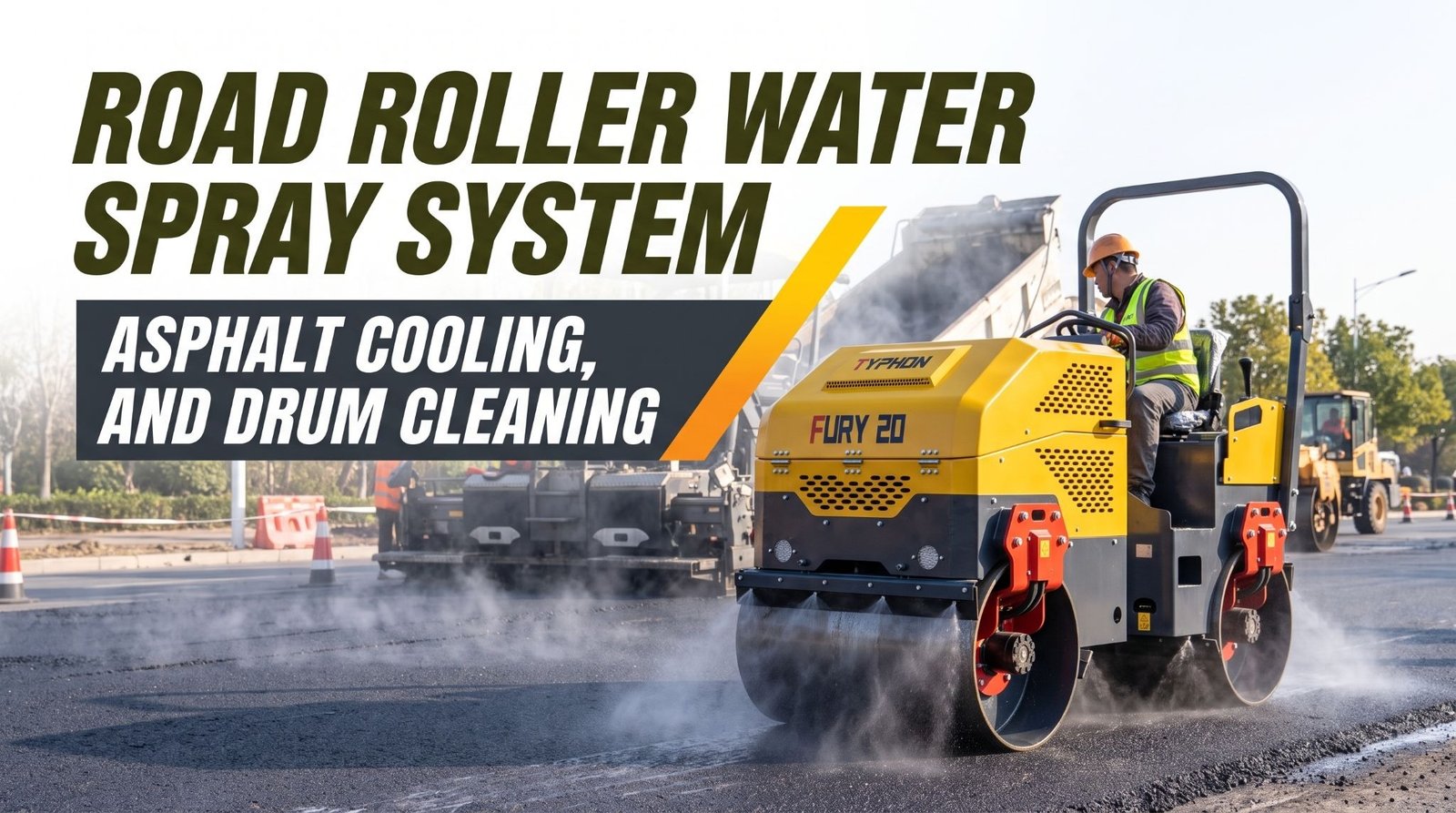
Road Roller Water Spray System, Asphalt Cooling, and Drum Cleaning
During asphalt compaction, a road roller moves steadily across the hot mat while a fine mist coats the drum just before it contacts the surface. That thin film may look minor, but it performs an important job. Hot asphalt can adhere to a bare steel drum, allowing material to build up and interfere with the finish of the pavement. Once buildup develops, drum contact becomes less consistent, compaction quality can suffer, and the operator has to work harder to maintain a clean pass. Keeping the drum clean and at a suitable working condition therefore depends heavily on the water spray system.
Several components work together to keep that process consistent. Spray nozzles need even coverage, scrapers help remove material from the drum, and the water supply must remain sufficient throughout the shift. Too little water can allow asphalt to stick, while excessive use can drain the tank faster than necessary and create unnecessary refill stops.
Proper maintenance keeps the system ready for continuous paving work. Checking nozzles, filters, hoses, pumps, scrapers, and water flow can reveal restrictions or wear before they affect drum performance. Matching spray use to asphalt temperature, roller speed, and site conditions also helps maintain clean, uniform passes throughout the job.
How the Water Spray System Works
The water spray system delivers water through a series of nozzles positioned near the compaction drum. As the roller works, those nozzles lay down a thin layer of moisture between the steel drum and the hot asphalt underneath. That film is what keeps the material from bonding to the drum, reducing buildup during operation and letting the drum roll cleanly over the mat pass after pass.
For that film to do its job, coverage has to be even. Proper nozzle placement and water distribution across the full width of the drum are what maintain consistent contact between the drum and the pavement. If part of the drum runs dry because a nozzle is blocked or poorly aimed, asphalt starts sticking there, and that’s exactly where surface problems begin. Even, reliable coverage is the foundation the whole system rests on.
Key takeaway: The water spray system lays a thin film of moisture between the drum and hot asphalt through evenly placed nozzles, preventing material from sticking during compaction.
Why Asphalt Temperature Matters
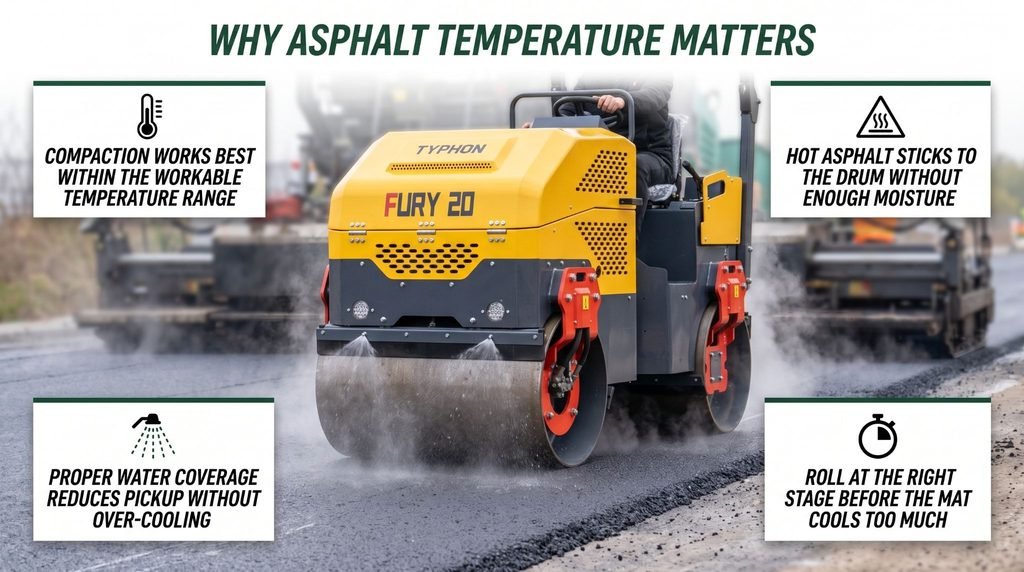
Fresh asphalt needs to remain within its workable temperature range during compaction. If the mat is too hot, the asphalt can stick to the drum, while excessive water can cool the surface too quickly. As the asphalt cools, it becomes increasingly difficult to achieve the required density. Proper timing and controlled water application therefore work together to support effective compaction.
- Workable Temperature: Compaction is most effective while the asphalt remains within its suitable temperature range.
- Drum Sticking: Hot asphalt can adhere to the drum when there is insufficient moisture on the surface.
- Water Application: Proper water coverage helps reduce asphalt pickup without unnecessarily cooling the mat.
- Rolling Timing: The roller needs to work at the right stage of the paving process before the asphalt becomes too cool to compact effectively.
Key takeaway: Hot asphalt tends to stick to the drum while over-cooled asphalt resists compaction, so roller timing and water application must work together within the material’s workable temperature range.
Keeping the Drum Surface Clean
A clean drum is what produces a clean surface, and asphalt residue is the enemy of both. When the drum isn’t properly maintained, material accumulates on the steel, and that buildup shows up directly in the work. It can mar the surface finish and interfere with the consistent contact the drum needs to compact evenly. A drum carrying hardened asphalt no longer rolls a true, smooth surface.
Keeping the drum clean comes down to regular inspection of the components that manage it. Check the drum surface itself, the scraper system that clears material during operation, and the spray equipment that keeps the film in place. Each of these works together, and a problem in one undermines the others. Making these checks a routine part of operation catches residue and equipment issues before they leave their mark on the pavement.
Key takeaway: Asphalt residue on the drum harms surface finish and disrupts consistent contact, so regularly inspect the drum, scraper system, and spray equipment to keep the compaction surface clean.
Water Flow and Spray Coverage
Water use is a balancing act, and both extremes cause problems. Too little water leaves the drum without enough of a film, and asphalt begins to stick. Too much water wastes a limited resource, empties the tank faster than it should, and wets down the surrounding work area unnecessarily. The goal is enough moisture to release the material cleanly and no more.
Even coverage is just as important as the right volume. The nozzles should deliver a consistent spray pattern across the full drum, without blocked or uneven output that leaves some sections dry. Keeping that coverage reliable depends on clean equipment: filters, nozzles, and water lines all need to stay clear, since asphalt debris and mineral deposits can clog them and disrupt the spray. Clean, well-maintained spray components are what keep the water going exactly where it’s needed.
Key takeaway: Too little water lets asphalt stick while too much wastes resources, so aim for even coverage across the drum and keep filters, nozzles, and water lines clean for reliable spray.
Drum Scrapers and Cleaning Components
The water spray system doesn’t work alone. Many road rollers use scraper bars or similar components that ride against the drum to remove material as it turns. These scrapers physically clear away any asphalt that starts to cling, working alongside the water film to keep buildup in check. Together, the two systems handle what neither could manage as well on its own.
For scrapers to do their part, position and condition both matter. A scraper set at the correct position makes firm, even contact with the drum and clears material cleanly, while one that’s worn, misaligned, or loose leaves residue behind. Regular inspection keeps the scrapers doing their job, catching wear and adjustment issues before asphalt starts accumulating. A properly set scraper is a simple component with a direct effect on the quality of the drum surface.
Key takeaway: Scraper bars work alongside the water spray system to clear material from the drum, so correct scraper position and regular inspection are essential to a clean, consistent surface.
Operating Conditions Affect Water Use
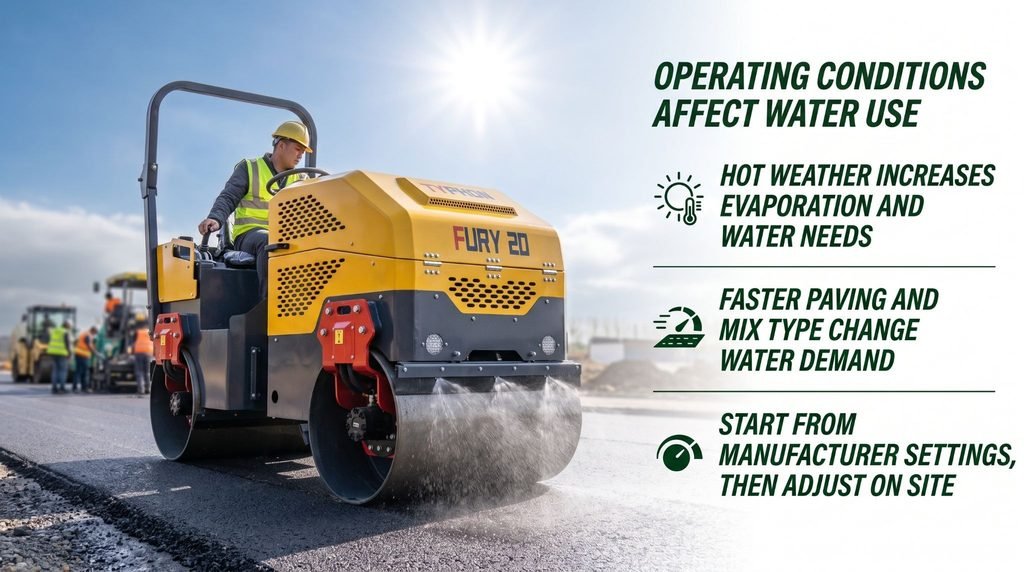
The right amount of water isn’t a fixed setting; it shifts with the conditions on site. Ambient temperature, asphalt temperature, paving speed, material type, and drum condition all influence how much water the drum actually needs for reliable release. A setting that works perfectly one day may be wrong the next as conditions change.
Weather is one of the clearest examples. Hot weather increases evaporation, so the drum needs more water to maintain its film, while cooler conditions reduce the amount required for release. Faster paving, different mix designs, and drum wear all factor in as well. The reliable approach is to follow the roller manufacturer’s operating requirements as your baseline and then adjust water use to the actual jobsite conditions in front of you. Reading the conditions and responding to them is what keeps the drum clean without wasting water.
Key takeaway: Ambient and asphalt temperature, paving speed, material type, and drum condition all affect water needs, so follow the manufacturer’s requirements and adjust water use to actual jobsite conditions.
Conclusion
A road roller water spray system helps maintain clean drum surfaces during hot-mix asphalt compaction by applying a controlled film of water that reduces asphalt adhesion. Even nozzle coverage, adequate water flow, clean filters and lines, and properly positioned scraper bars work together to prevent material buildup and maintain consistent drum contact with the asphalt. Water application should be coordinated with roller speed, asphalt temperature, ambient conditions, material characteristics, and drum condition because excessive or insufficient water can affect the compaction process and surface quality. Residue on the drum can create uneven contact and surface defects, making regular inspection of the drum, scrapers, spray nozzles, pumps, filters, hoses, and valves important throughout paving operations. Scraper condition and positioning should also be maintained because the scraper removes material that remains on the drum after each pass. Adjusting spray coverage and water use to actual paving conditions helps control asphalt pickup while supporting consistent drum contact and uniform compaction across the pavement surface.
Frequently Asked Questions
Why does a road roller use water on the drum?
Water keeps hot asphalt from sticking to the steel drum during compaction. The spray creates a thin moisture film that acts as a release layer, helping maintain clean drum contact with the asphalt. Without enough water, asphalt can build up on the drum, affecting surface finish and compaction consistency.
Can too much water affect asphalt compaction?
Yes. Excessive water can add unnecessary moisture, waste the water supply, and increase refill stops. The goal is to apply enough water to prevent asphalt from sticking without over-wetting the mat. Spray flow should be adjusted based on asphalt temperature, weather, and jobsite conditions.
How often should road roller spray nozzles be checked?
Check the spray pattern regularly during operation and inspect the nozzles as part of routine maintenance. Asphalt debris and mineral deposits can clog nozzles and create dry areas where asphalt may stick. Clean the nozzles, filters, and water lines as needed to maintain even coverage across the drum.
What keeps asphalt from building up on the drum?
Several systems work together to prevent buildup. The water spray creates a release layer, while drum scrapers remove material that begins to stick. Proper roller timing, suitable asphalt temperature, controlled water flow, and regular cleaning also help keep the drum surface clean and maintain consistent compaction.