

Why High Breakout Force Improves Compact Wheel Loader Performance
Breakout force is the muscle behind every load a compact wheel loader moves. It decides whether your machine scoops cleanly through packed material or stalls against the first stubborn pile. For contractors and operators who depend on steady output, this single spec often separates a machine that powers through the workday from one that struggles to keep pace.
This guide explains what breakout force really means and why it matters when you put a compact wheel loader to work. You’ll learn how the force is generated, the practical benefits it delivers, the trade-offs worth knowing, and how to choose and operate a machine that performs. By the end, you’ll understand exactly why breakout force belongs near the top of your buying checklist.
Choosing a compact wheel loader with sufficient breakout force also helps future-proof your investment. As projects become more demanding or materials vary from site to site, a machine with stronger digging capability provides the flexibility to handle a wider range of applications without sacrificing efficiency or productivity.
What Breakout Force Means

Before you can compare machines, you need to understand what breakout force actually describes. The term sounds technical, but the idea is simple once you picture the bucket cutting into a pile.
While engine horsepower and operating weight influence overall machine capability, breakout force provides a more direct indication of how effectively the loader can penetrate, lift, and move material. Understanding this specification makes it easier to compare machines based on real working performance rather than engine size alone.
Knowing how breakout force is measured also helps buyers evaluate different compact wheel loader models with greater confidence. Instead of focusing solely on engine power or machine size, you can compare a specification that directly reflects the loader’s ability to perform demanding loading and material-handling tasks efficiently.
Defining Breakout Force
Breakout force is the maximum power the loader’s hydraulics generate to curl the bucket and pry material loose from a pile or the ground. It’s the force that lifts the heaviest scoop, rolls dense material into the bucket, and breaks through compacted ground. Higher breakout force means the machine can tackle tougher material without bogging down.
Breakout force is especially important during the first stage of every loading cycle, when the bucket encounters the greatest resistance. A higher rating allows the loader to begin each scoop more efficiently, reducing unnecessary wheel spin and improving overall loading performance.
Where the Force Comes From
Breakout force is produced by the bucket cylinder acting through the loader’s linkage. The hydraulic system pressurizes the cylinder, which curls the bucket and creates the prying action that frees material. The size of the cylinder, the hydraulic pressure, and the geometry of the linkage all shape the final number.
Hydraulic performance and linkage design work together to determine how efficiently force reaches the bucket. Even with a powerful hydraulic system, well-engineered linkage geometry is essential for maximizing breakout force throughout the bucket’s operating range.
Why Breakout Force Matters for Tough Material
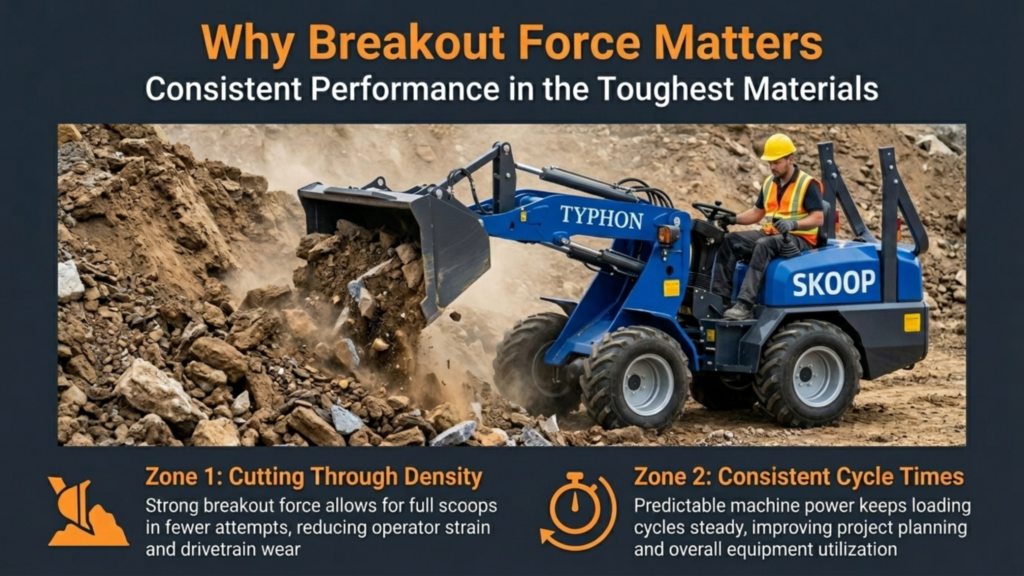
Easy material hides a weak machine. The real test comes when the pile fights back. That’s where breakout force separates a productive loader from one that struggles all day.
Jobsite materials often vary throughout the day, requiring the loader to handle everything from loose aggregates to compacted soil and demolition debris. Consistent breakout force helps maintain productivity across these changing conditions without constant adjustments to operating technique.
Reliable breakout force also minimizes the need for repeated bucket passes when working with dense or uneven material. Completing each scoop more efficiently helps reduce cycle times, improves fuel efficiency, and keeps both the machine and operator performing consistently throughout demanding workdays.
Cutting Into Dense, Compacted Material
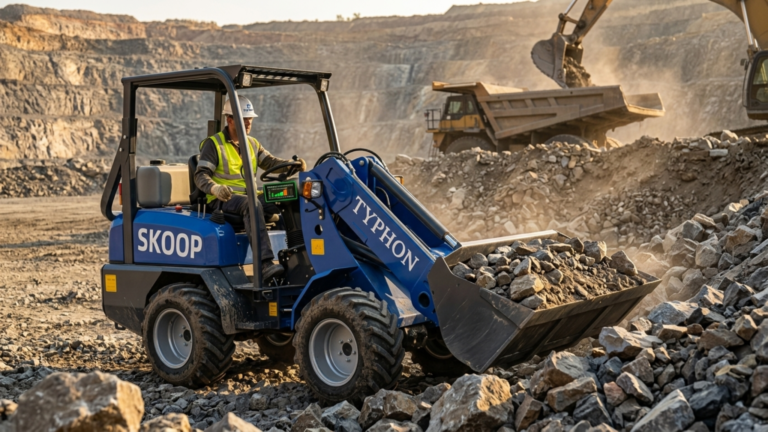
Packed gravel, dense clay, and tightly compacted stockpiles resist the bucket on every pass. A loader with strong breakout force fills the bucket in fewer attempts, so you move more material in less time. Weak force means partial scoops, repeated passes, and an operator working harder for less.
Improved bucket penetration also reduces unnecessary tire slip and repeated loading attempts. This allows operators to work more efficiently while placing less strain on both the drivetrain and hydraulic system during demanding loading operations.
Maintaining Steady Cycle Times
Breakout force isn’t only about the hardest scoop. It’s about consistency. A loader with ample power keeps cycle times steady across varied material, which keeps your whole operation on schedule. Underpowered machines slow down the moment the material gets tough.
Maintaining consistent loading cycles helps improve overall project planning and equipment utilization. Predictable machine performance allows crews to coordinate hauling, grading, and material handling more efficiently throughout the workday.
Benefits for Productivity and Attachments
The reason high breakout force matters comes down to clear, measurable advantages. These benefits show up in productivity, versatility, and the range of work your loader can take on.
The advantages of high breakout force extend beyond excavation alone. Greater loading efficiency, improved attachment performance, and smoother material handling all contribute to increased productivity while helping reduce overall operating costs.
High breakout force also gives operators greater confidence when working with challenging materials or changing jobsite conditions. By maintaining strong, consistent bucket performance throughout the workday, the loader can complete demanding tasks more efficiently while reducing unnecessary machine strain and operator fatigue.
Faster, Fuller Bucket Loads
The clearest benefit is fuller buckets in fewer passes. Strong breakout force lets you fill the bucket completely on the first attempt, even in dense material. Each full load means fewer cycles to move the same volume, which directly speeds up the job.
Loading more material with each pass also improves fuel efficiency by reducing the number of cycles needed to complete the same amount of work. Over time, these gains can significantly improve productivity on high-volume material handling projects.
Better Attachment Performance
A compact wheel loader is far more than a bucket machine. Strong breakout force and capable hydraulics drive attachments like grapples, pallet forks, and material buckets at their full rated capability. The power that fills a bucket also lets these tools grip, lift, and pry with confidence.
Consistent hydraulic power combined with strong breakout force allows attachments to perform more smoothly under varying loads. This improves work quality while reducing unnecessary stress on both the attachment and the loader itself.
Stronger Performance on Slopes and Soft Ground
Tough conditions aren’t limited to hard material. Working on inclines or soft, uneven ground demands extra force to dig and lift cleanly. A loader with strong breakout force handles these conditions without losing productivity, keeping you efficient where weaker machines falter.
Maintaining reliable digging performance under challenging ground conditions also enhances machine stability by reducing abrupt movements and repeated digging attempts. Controlled loading contributes to both safer operation and more efficient material handling.
That dependable power gives you confidence to take on varied sites. The machine performs the same whether the ground helps you or fights you. Pairing that capability with sound upkeep matters, and thiscompact wheel loader bucket force and hydraulic maintenance guide covers the habits that keep your machine delivering full strength.
Operator and Maintenance Tips
Owning a powerful machine is only half the equation. Sound technique and steady upkeep help you capture every bit of breakout force the loader offers.
Developing consistent operating habits and following a preventive maintenance schedule helps preserve breakout force over the life of the machine. Proper care ensures the loader continues delivering the performance expected from its hydraulic system and bucket linkage.
Regular inspections and routine servicing also help identify minor issues before they affect loading performance. Monitoring hydraulic components, bucket wear, and linkage condition allows operators to address small problems early, maintaining consistent breakout force while reducing the risk of costly repairs and unexpected downtime.
Use Proper Digging Technique
Even a strong machine performs better with good technique. Approach the pile with the bucket level, drive in steadily, and let the breakout force curl the bucket through the material. Forcing the machine into a stall wastes power and strains the system.
Smooth, controlled bucket movements allow the hydraulics to generate breakout force efficiently without placing unnecessary stress on the loader’s components. Good technique improves both productivity and long-term equipment durability.
Keep the Hydraulic System Healthy
Breakout force depends on a healthy hydraulic system. Clean fluid, proper levels, and timely filter changes keep the loader delivering full power. Neglect the hydraulics, and even a strong machine loses its edge over time.
Regular inspections of hoses, cylinders, fittings, and hydraulic connections also help identify developing issues before they reduce loader performance. Preventive maintenance keeps hydraulic power consistent and minimizes unexpected downtime.
Conclusion
High breakout force is the spec that decides how much real work a compact wheel loader can do. By understanding where that force comes from and how it applies to your material, you can judge a machine’s true power and choose one built to handle dense piles, rocky loads, and demanding attachments. Strong breakout force translates directly into fuller buckets, faster cycles, and the confidence to take on the toughest material your work involves.
The smart move is matching the machine to your hardest jobs, reading breakout force alongside stability and hydraulics, and backing strong specs with good technique and steady maintenance. Use proper digging technique, keep the hydraulics healthy, and inspect the bucket and linkage regularly. Do that, and a high-breakout-force compact wheel loader will reward you with dependable power, steady productivity, and the muscle to tackle every challenge on your jobsite.
Whether you’re loading aggregate, handling construction materials, clearing debris, or working on landscaping projects, high breakout force provides the capability needed to maintain consistent production across a wide range of jobsite conditions. Investing in a machine with adequate digging power helps improve efficiency, reduce equipment strain, and support reliable performance for years to come.
2 Comments