Wheel Loaders in Agriculture: A Guide to Farm and Feedlot Applications
The hum of machinery is a familiar symphony across agricultural landscapes worldwide. From the smallest family farms to vast commercial operations, technology continually reshapes how we cultivate, harvest, and manage our resources. Among the titans of modern farm equipment, one machine stands out for its versatility, power, and indispensable role in a myriad of tasks: the wheel loader. Often associated with construction sites and industrial yards, these robust machines have quietly, yet powerfully, revolutionized efficiency and productivity in the agricultural sector.
Imagine a single piece of equipment capable of effortlessly moving mountains of feed, clearing debris, loading heavy bales, and even assisting with infrastructure projects. This isn’t a futuristic fantasy; it’s the everyday reality for farms and feedlots equipped with a wheel loader. Their robust design, powerful hydraulics, and diverse attachment options make them an invaluable asset, transforming labor-intensive chores into streamlined operations. This comprehensive guide will delve deep into the world of wheel loaders in agriculture, exploring their fundamental role, the myriad benefits they offer, how to select the right machine for your needs, and best practices for their safe and efficient operation. Whether you’re a seasoned farmer looking to optimize your fleet or a newcomer exploring agricultural machinery, understanding the capabilities of a wheel loader is key to unlocking new levels of efficiency and profitability on your farm.
What are Wheel Loaders in Agriculture?
At its core, a wheel loader is a heavy equipment machine, typically articulated, used to scoop, lift, and transport loose material from the ground. While their primary function remains consistent across industries, their application in agriculture takes on unique significance. Unlike skid steers or tractors with front-end loaders, dedicated wheel loaders are designed for heavier lifting capacities, greater reach, and often more robust construction, making them ideal for the demanding environment of a farm or feedlot.
Key Characteristics:
- Powerful Engine: Wheel loaders are equipped with powerful diesel engines, providing the necessary horsepower and torque for heavy lifting and demanding tasks.
- Articulated Steering: Most agricultural wheel loaders feature articulated steering, meaning the machine bends in the middle. This design offers superior maneuverability in tight spaces, which is crucial in barns, feed alleys, and around storage facilities.
- Hydraulic System: A robust hydraulic system is the heart of a wheel loader, powering the lift arms, bucket, and various attachments. This system allows for precise control and significant lifting force.
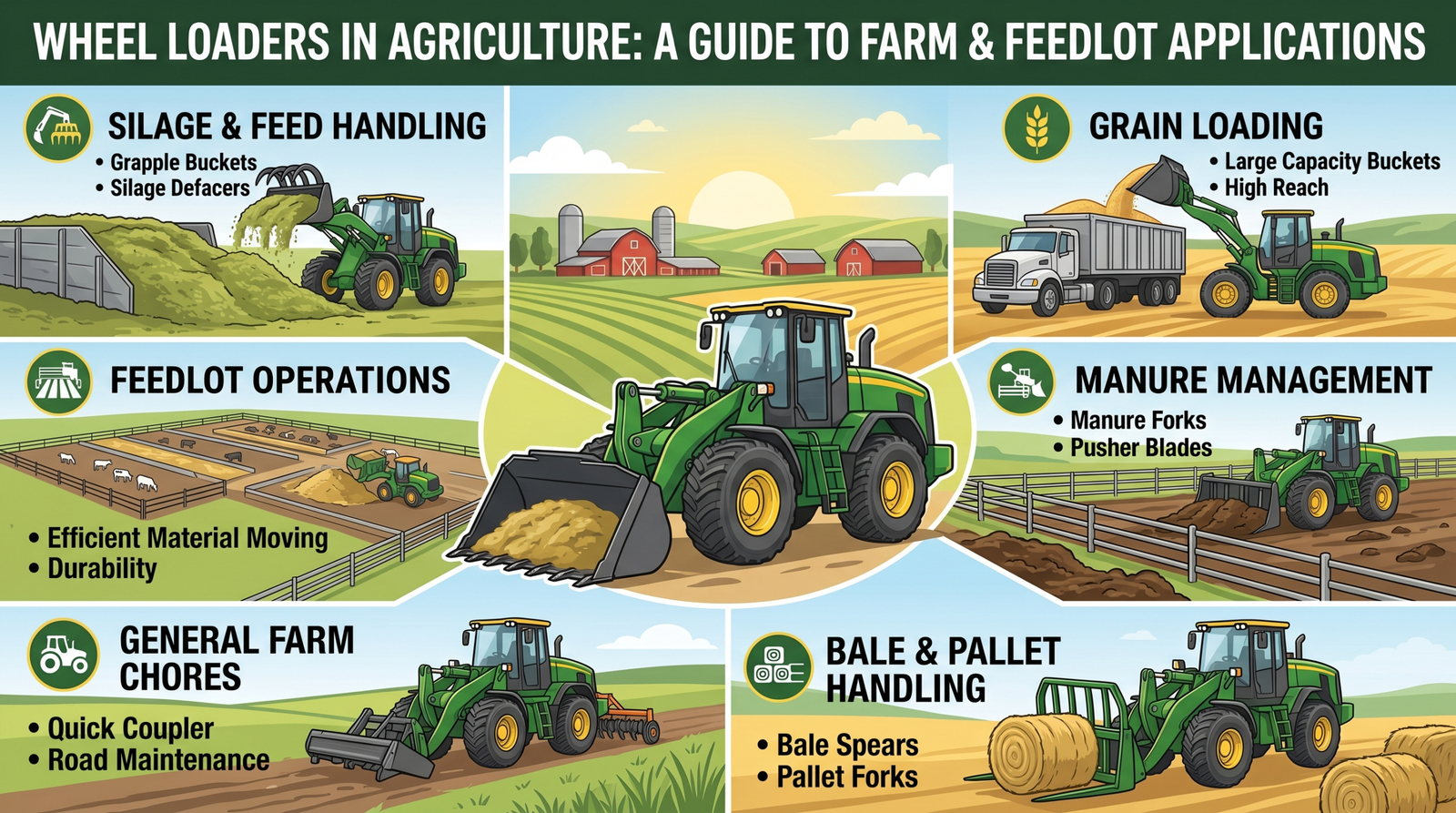
- Versatile Attachments: While a standard bucket is common, the true power of a wheel loader in agriculture comes from its ability to quickly swap out attachments. This includes silage forks, grapple buckets, bale spears, pallet forks, snow blowers, and even specialized root crop buckets.
- Operator Comfort and Visibility: Modern wheel loaders prioritize operator comfort with ergonomic controls, air-conditioned cabs, and excellent visibility, reducing fatigue during long working hours.
Distinguishing from Other Equipment:
It’s important to differentiate wheel loaders from other farm machinery that might perform similar tasks:
- Tractors with Front-End Loaders: While a tractor with a front-end loader can perform many loading tasks, a dedicated wheel loader typically offers greater lifting capacity, better stability, faster cycle times, and often superior maneuverability due to articulated steering. Tractors are primarily designed for pulling and PTO-driven implements, whereas wheel loaders are purpose-built for loading.
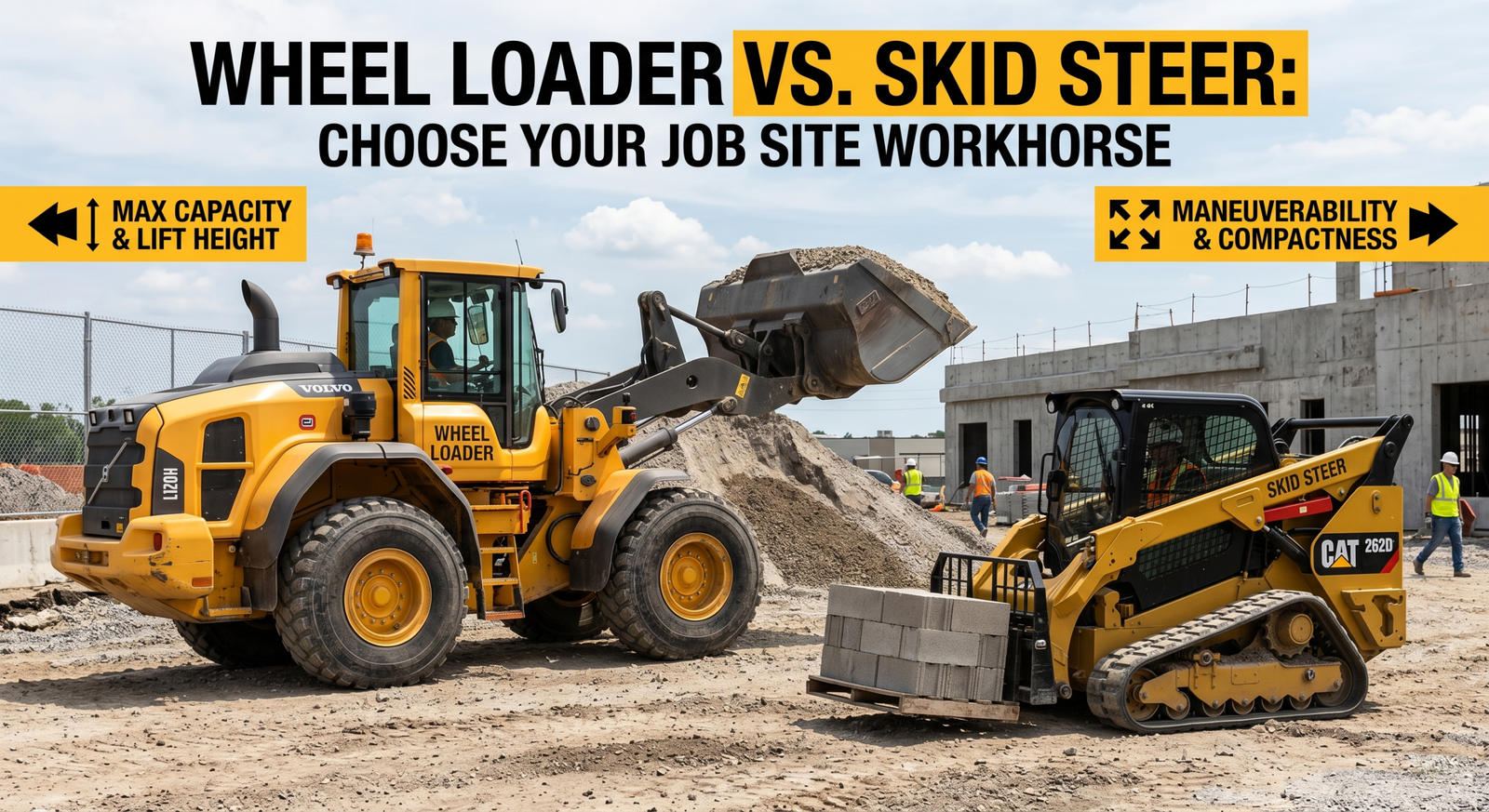
- Skid Steer Loaders: Skid steers are compact and highly maneuverable, excellent for tight spaces and lighter tasks. However, wheel loaders generally surpass them in lifting height, reach, carrying capacity, and overall power, making them more suitable for large-scale operations or moving bulk materials.
- Telehandlers: Telehandlers offer exceptional reach and lift height, particularly useful for stacking bales or reaching high into storage. While they can perform some loading tasks, their primary design is for lifting and placing. Wheel loaders, conversely, excel at scooping, carrying, and rapid material transfer.
In the agricultural context, wheel loaders are not just about moving dirt; they are about optimizing the flow of feed, managing waste, handling crops, and maintaining farm infrastructure. Their ability to handle large volumes of material quickly and efficiently translates directly into time and labor savings, making them an indispensable asset for modern farming operations. Understanding what a wheel loader is, and how it differs from other equipment, is the first step in appreciating its profound impact on agricultural productivity.
Key Benefits of Wheel Loaders in Agriculture
The integration of wheel loaders into agricultural operations brings forth a cascade of benefits that profoundly impact efficiency, productivity, and profitability. These machines are not merely tools; they are strategic investments that streamline countless daily tasks, freeing up valuable time and labor for other critical farm activities.
Enhanced Efficiency and Speed
One of the most immediate and tangible benefits of wheel loaders is their ability to dramatically increase operational efficiency. Their powerful engines and hydraulic systems enable them to move large volumes of material with remarkable speed.
- Faster Material Handling: Whether it’s scooping silage from a bunker, loading grain into trucks, or moving manure, wheel loaders can complete these tasks significantly faster than manual labor or less powerful machinery. This translates into quicker turnaround times for deliveries, reduced waiting times for other equipment, and a smoother overall workflow.
- Reduced Cycle Times: The combination of articulated steering, powerful hydraulics, and quick-attach systems allows for rapid loading and unloading cycles. Operators can quickly fill a bucket, maneuver to the destination, dump the material, and return for the next load, minimizing idle time.
- Optimized Feed Management: In feedlots and dairy farms, efficient feed delivery is paramount. Wheel loaders equipped with specialized feed buckets or silage forks can precisely measure and deliver feed to livestock, reducing waste and ensuring consistent nutrition. This also speeds up the feeding process, allowing more time for animal welfare checks and other tasks.
Versatility and Adaptability
The true strength of a wheel loader lies in its incredible versatility, largely due to the wide array of attachments it can accommodate. This adaptability allows a single machine to perform the work of several specialized pieces of equipment.
- Multi-Tasking Machine: A wheel loader can transition from moving bulk feed to stacking bales, clearing snow, digging trenches, or even handling palletized goods, all within the same day. This eliminates the need for multiple machines, reducing capital expenditure, maintenance costs, and storage space.
- Wide Range of Attachments:
- Buckets: General purpose, light material, heavy-duty, multi-purpose, silage, grain, root crop.
- Forks: Pallet forks for moving supplies, bale spears for hay and silage bales.
- Grapples: Manure grapples, brush grapples for clearing land.
- Specialized Tools: Snow pushers/blowers, sweepers, augers, trenchers, land clearing rakes.
- Seasonal Adaptability: This versatility is particularly beneficial in agriculture, where tasks change dramatically with the seasons. A wheel loader can be a feed mover in winter, a land clearer in spring, a harvest assistant in summer, and a material handler in autumn, ensuring year-round utility and a strong return on investment.
Reduced Labor and Operational Costs
Investing in a wheel loader can lead to significant long-term savings by optimizing labor and reducing operational inefficiencies.
- Labor Savings: By automating heavy lifting and material handling, a single operator with a wheel loader can accomplish tasks that would otherwise require multiple laborers and much more time. This addresses the challenge of labor shortages in agriculture and allows existing staff to focus on more skilled or specialized tasks.
- Fuel Efficiency (Relative to Task): While wheel loaders consume fuel, their efficiency in moving large volumes of material often means less fuel is burned per ton of material moved compared to smaller, less capable machines performing the same task over a longer period. Modern wheel loaders also incorporate fuel-saving technologies like eco-modes and automatic idle shutdown.
- Minimized Wear and Tear on Other Equipment: By taking on the heavy, repetitive loading tasks, wheel loaders can reduce the strain on tractors, extending their lifespan and reducing maintenance needs for equipment not primarily designed for such strenuous loading work.
- Improved Safety: Mechanizing heavy lifting reduces the risk of manual labor injuries, such as back strains or accidents from falling objects. Modern wheel loaders come with advanced safety features, including improved visibility, backup cameras, and robust roll-over protection structures (ROPS), further enhancing workplace safety.
Increased Productivity and Profitability
Ultimately, all these benefits converge to boost overall farm productivity and, consequently, profitability.
- Higher Output: Faster material handling and reduced downtime mean more work gets done in less time, directly contributing to higher output, whether it’s more feed delivered, more grain loaded, or more land cleared.
- Better Resource Management: Efficient movement of resources like feed, fertilizer, and waste leads to better inventory control and reduced spoilage or loss.
- Scalability: As farms grow, the ability of a wheel loader to handle increasing volumes of material without a proportional increase in labor makes it a scalable solution for expanding operations.
- Competitive Advantage: Farms that leverage the efficiency of wheel loaders can operate more leanly, respond faster to market demands, and ultimately achieve a stronger competitive position in the agricultural landscape.
In essence, a wheel loader transforms the arduous and time-consuming aspects of agricultural work into streamlined, efficient processes. Its power, versatility, and cost-saving potential make it an indispensable asset for any modern farm or feedlot striving for optimal performance and sustainable growth.
How to Get Started with Wheel Loaders in Agriculture
Integrating a wheel loader into your agricultural operation is a significant investment that requires careful planning and consideration. From selecting the right machine to ensuring proper training and maintenance, a structured approach will maximize your return and ensure seamless operation.
1. Assessing Your Needs and Budget
Before even looking at models, a thorough assessment of your specific agricultural needs is paramount.
- Identify Primary Tasks: What will be the main jobs for the wheel loader?
- Feed Handling: How much feed (silage, grain, TMR) do you move daily? What are the bunker/storage heights?
- Manure Management: What volume of manure do you handle? What are the loading heights for spreaders or trucks?
- Bale Handling: What type and size of bales (round, square) do you typically handle? How high do you need to stack them?
- Land Clearing/Construction: Do you anticipate using it for digging, grading, or moving heavy debris?
- Other Seasonal Tasks: Snow removal, fertilizer loading, seed handling, etc.
- Material Types and Volumes: Estimate the weight and volume of the heaviest and most frequently moved materials. This will dictate the required lifting capacity and bucket size.
- Site Constraints: Consider the layout of your farm. Are there tight turns, narrow alleys, or low overhead clearances? This will influence the machine’s size, articulation, and overall maneuverability.
- Operating Hours: How many hours per day/week/year will the machine be in operation? High usage demands more robust, durable models.
- Budget Allocation: Establish a realistic budget that includes not just the purchase price but also attachments, delivery, initial training, and ongoing maintenance. Consider whether new, used, or rental options best fit your financial strategy.
- New: Latest technology, warranty, higher initial cost.
- Used: Lower initial cost, potential for higher maintenance, less warranty. Thorough inspection is crucial.
- Rental/Lease: Good for short-term needs, trying out models, or avoiding large capital outlay.
2. Choosing the Right Size and Model
Wheel loaders come in a vast range of sizes, from compact utility loaders to massive industrial machines. Matching the machine to your assessed needs is critical.
- Compact Wheel Loaders (CWL): Ideal for smaller farms, tight spaces, and tasks requiring less lifting capacity (e.g., small dairy farms, nurseries). They offer excellent maneuverability and fuel efficiency.
- Mid-Sized Wheel Loaders: The most common choice for many agricultural operations. They offer a balance of power, lifting capacity, reach, and maneuverability suitable for feedlots, larger dairies, and crop farms.
- Large Wheel Loaders: Reserved for very large commercial operations, bulk material handling, or specialized tasks requiring maximum capacity and reach.
- Key Specifications to Compare:
- Operating Weight: Indicates the machine’s stability and power.
- Horsepower (HP): Affects digging power, travel speed, and hydraulic performance.
- Lift Capacity (Rated Operating Capacity): Crucial for ensuring it can handle your heaviest loads safely.
- Hinge Pin Height: Determines maximum dumping height, important for loading into high-sided trucks or mixers.
- Breakout Force: The force the machine can exert to break material out of a pile.
- Turning Radius/Articulation Angle: Important for maneuverability in confined spaces.
- Hydraulic Flow: Affects the speed and power of attachments.
- Cab Features: Comfort, visibility, and control layout for operator efficiency and safety.
- Brand and Dealer Support: Consider reputable brands known for reliability and strong dealer networks. Local dealer support for parts, service, and technical assistance is invaluable.
3. Selecting Essential Attachments
The versatility of a wheel loader hinges on its attachments. Plan for the primary attachments you’ll need.
- Must-Have Attachments:
- General Purpose Bucket: For most scooping and loading tasks.
- Bale Spear/Grapple: If you handle hay or silage bales.
- Pallet Forks: For moving palletized feed, seed, or supplies.
- Silage/Feed Bucket or Grapple: If you have a significant feed handling operation.
- Specialized or Seasonal Attachments:
- Manure Grapple: For efficient waste management.
- Snow Pusher/Blower: If you operate in snowy regions.
- Root Crop Bucket: For handling potatoes, beets, etc.
- Quick Coupler System: Invest in a hydraulic quick coupler system. This allows operators to change attachments rapidly from the cab, significantly enhancing efficiency and reducing manual effort.
4. Operator Training and Safety
Proper training is non-negotiable for safe and efficient operation.
- Formal Training: Ensure all operators receive formal training on wheel loader operation, including controls, safety protocols, load limits, and emergency procedures. Many dealers offer training programs.
- Machine-Specific Training: Each model has unique characteristics. Operators should be familiarized with the specific machine they will be using.
- Attachment Training: Operators must understand how to safely attach, detach, and operate each attachment.
- Daily Checks: Implement a routine for daily pre-operation checks (fluids, tires, lights, safety systems).
- Safety Protocols:
- Load Limits: Never exceed the machine’s rated operating capacity.
- Stability: Understand the center of gravity and how loads affect stability, especially on slopes.
- Visibility: Be aware of blind spots; use mirrors and cameras.
- Clearance: Always be mindful of overhead and side clearances.
- Bystander Safety: Establish clear communication protocols and exclusion zones around operating equipment.
5. Maintenance and Service
Regular maintenance is key to maximizing the lifespan and reliability of your wheel loader.
- Follow Manufacturer’s Schedule: Adhere strictly to the recommended service intervals for oil changes, filter replacements, lubrication, and hydraulic system checks.
- Preventative Maintenance: Address minor issues before they escalate into major breakdowns.
- Record Keeping: Maintain detailed records of all service and repairs. This helps track maintenance history and can be valuable for resale.
- Parts Availability: Ensure your chosen brand has readily available parts, especially wear parts like tires, cutting edges, and filters.
By systematically approaching these steps, from initial assessment to ongoing maintenance, you can successfully integrate a wheel loader into your agricultural operations, transforming it from a mere piece of equipment into a cornerstone of your farm’s productivity and efficiency.
Best Practices for Wheel Loaders in Agriculture
Operating a wheel loader effectively in an agricultural setting goes beyond simply knowing how to drive it. Adopting best practices ensures maximum efficiency, prolongs the machine’s lifespan, enhances safety, and ultimately contributes to the farm’s bottom line.
1. Pre-Operation Checks and Machine Familiarity
Every shift should begin with a thorough inspection of the wheel loader. This preventative measure can catch minor issues before they become costly breakdowns or safety hazards.
- Daily Walk-Around: Check fluid levels (engine oil, hydraulic fluid, coolant, fuel), tire pressure and condition, all lights and safety signals, mirrors, windows, and the condition of the bucket/attachment. Look for any leaks, loose bolts, or unusual wear.
- Greasing Points: Ensure all pivot points and grease fittings are adequately lubricated according to the manufacturer’s recommendations. This reduces friction and wear on critical components.
- Cab Inspection: Verify that all controls are functioning correctly, the seatbelt is operational, and the cab is free of debris.
- Attachment Security: Always confirm that the attachment is securely connected to the quick coupler or pins before starting work.
- Operator Manual Review: Encourage operators to periodically review the machine’s manual, especially for new models or when using unfamiliar attachments. Understanding the machine’s specific capabilities and limitations is crucial.
2. Efficient Loading Techniques
Optimizing loading techniques can significantly reduce cycle times, save fuel, and minimize wear on the machine.
- Approach the Pile Correctly: Approach material piles squarely and at a slight angle, using a “V-loading” technique where appropriate. This minimizes travel distance and reduces strain on the drivetrain.
- Penetration and Rollback: Use the bucket’s cutting edge to penetrate the material effectively. Once the bucket is full, use the rollback function to curl the bucket back, securing the load and preventing spillage. Avoid “ramming” the pile, which puts undue stress on the machine.
- Load Management: Avoid overloading the bucket. While tempting to move more material in one go, exceeding the machine’s capacity compromises stability, increases fuel consumption, and accelerates wear on tires, axles, and hydraulics.
- Smooth Movements: Operate controls smoothly. Jerky movements waste fuel, put stress on components, and can lead to material spillage. Anticipate movements and plan your path.
- Optimal Travel Height: When transporting material, keep the bucket low to the ground (but clear of obstacles) for maximum stability, especially when turning or on uneven terrain.
3. Safe Operation Practices
Safety should always be the top priority when operating heavy machinery.
- Maintain Clear Visibility: Keep windows and mirrors clean. Be aware of blind spots and use mirrors and backup cameras diligently. If visibility is compromised, stop and reassess.
- Awareness of Surroundings: Always know where people, other vehicles, and obstacles are. Establish clear communication protocols with ground personnel.
- Load Stability: Understand the machine’s load chart and never exceed its rated operating capacity. Be extra cautious when working on slopes or uneven ground, as this significantly impacts stability. Keep the load low when traveling.
- Proper Lighting: Ensure all working lights and warning beacons are functional, especially when operating in low-light conditions or at night.
- Seatbelt Use: Always wear the seatbelt. In the event of a tip-over, it keeps the operator safely inside the protective cab structure.
- No Passengers: Never allow unauthorized passengers on the machine.
- Engine Shut-off: Always lower the bucket to the ground, engage the parking brake, and shut off the engine before leaving the cab.
4. Regular Maintenance and Servicing
A proactive maintenance schedule is crucial for the longevity and reliability of your wheel loader.
- Adhere to Manufacturer’s Schedule: Follow the service intervals outlined in the operator’s manual for oil changes, filter replacements (fuel, air, hydraulic), and lubrication.
- Fluid Analysis: Consider regular fluid analysis for engine oil and hydraulic fluid. This can detect wear metals and contaminants, indicating potential issues before they become major problems.
- Tire Care: Tires are a significant operating cost. Maintain correct tire pressure, inspect for cuts or damage, and rotate them as needed to ensure even wear.
- Hydraulic System Checks: Regularly inspect hydraulic hoses and fittings for leaks or damage. A small leak can quickly become a major issue.
- Record Keeping: Keep detailed records of all maintenance performed, including dates, hours, and parts used. This helps track service history and can be valuable for warranty claims or resale.
- Professional Servicing: Utilize qualified technicians for complex repairs or major service intervals, especially if your in-house capabilities are limited.
5. Attachment Management and Care
Proper care of attachments extends their life and ensures their effective performance.
- Clean After Use: Remove any accumulated material from buckets, grapples, and forks after each use. This prevents corrosion and ensures proper function.
- Inspect for Wear: Regularly check cutting edges, tines, and grapple teeth for wear or damage. Replace worn components promptly to maintain efficiency and prevent further damage to the attachment or machine.
- Proper Storage: Store attachments in a designated area, out of the way, and protected from the elements if possible. Ensure they are stable and won’t tip over.
- Match Attachment to Task: Always use the correct attachment for the job. Using a general-purpose bucket for heavy digging might damage it, while a specialized silage bucket ensures efficient feed handling.
By integrating these best practices into your daily operations, your wheel loader will not only perform at its peak but also remain a safe, reliable, and cost-effective asset for your agricultural enterprise for many years to come.
Frequently Asked Questions about Wheel Loaders in Agriculture
Investing in a wheel loader for your farm or feedlot can be a game-changer, but it often comes with a host of questions. Here, we address some of the most common inquiries to help you better understand these versatile machines.
1. What is a wheel loader in agriculture, and how does it differ from a tractor with a front-end loader?
A wheel loader in agriculture is a heavy equipment machine specifically designed for scooping, lifting, and transporting bulk materials like feed, manure, grain, and bales. It typically features an articulated chassis (bends in the middle), a powerful engine, and a robust hydraulic system.
The key differences from a tractor with a front-end loader are:
- Purpose-Built: Wheel loaders are purpose-built for loading tasks, offering superior lifting capacity, reach, and breakout force compared to a tractor’s front-end loader, which is an attachment to a machine primarily designed for pulling and PTO work.
- Maneuverability: Most wheel loaders have articulated steering, providing a tighter turning radius and better maneuverability in confined spaces like barns or feed alleys than rigid-frame tractors.
- Stability: Wheel loaders are designed with a lower center of gravity and heavier counterweights, offering greater stability when lifting heavy loads, especially at full extension.
- Cycle Times: Due to their design and hydraulic power, wheel loaders generally offer faster loading and dumping cycle times, increasing efficiency for high-volume material handling.
2. What are the primary benefits of using a wheel loader on a farm or feedlot?
The benefits of using a wheel loader in agriculture are numerous and impactful:
- Increased Efficiency: Dramatically speeds up material handling tasks, reducing labor hours and improving overall operational flow.
- Versatility: With a wide range of quick-attach implements (buckets, forks, grapples, bale spears), one machine can perform multiple tasks, from feeding livestock and cleaning pens to moving supplies and clearing snow.
- Reduced Labor Costs: A single operator can accomplish tasks that would otherwise require multiple workers or less efficient machinery.
- Improved Safety: Mechanizes heavy lifting, reducing the risk of manual labor injuries. Modern cabs offer excellent visibility and safety features.
- Enhanced Productivity: Faster task completion allows for higher output, better resource management, and more time for other critical farm activities.
- Durability: Built to withstand demanding conditions, offering a long service life with proper maintenance.
3. How does a wheel loader work, particularly its hydraulic system and attachments?
A wheel loader operates through a combination of its engine, drivetrain, and hydraulic system:
- Engine: A powerful diesel engine provides the primary power for both driving the wheels and operating the hydraulic pump.
- Drivetrain: Power is transmitted to all four wheels, often through an automatic or powershift transmission, allowing for robust traction and speed.
- Hydraulic System: This is the heart of the machine for its primary function. The engine drives a hydraulic pump, which pressurizes hydraulic fluid. This fluid is then directed through control valves to hydraulic cylinders (for lifting and tilting the boom/bucket) and hydraulic motors (for some attachments). The operator controls these movements via joysticks or levers in the cab.
- Attachments: Attachments are connected to the loader arms, often via a quick coupler system. This system allows the operator to rapidly switch between different tools (e.g., a general-purpose bucket to a bale spear) from the comfort of the cab, typically by activating hydraulic pins or latches. The hydraulic system provides the power to operate functions like grapples or multi-purpose buckets.
4. What factors should I consider when choosing the right size wheel loader for my farm?
Selecting the correct size is crucial for optimal performance and cost-effectiveness:
- Lifting Capacity: Determine the maximum weight of material you need to lift (e.g., heaviest bale, full bucket of grain).
- Hinge Pin Height: How high do you need to dump material (e.g., into high-sided feed mixers, grain trucks, or manure spreaders)?
- Operating Space: Consider the width of your barn aisles, feed alleys, and the tightness of turns. Compact wheel loaders excel in confined spaces.
- Material Volume: How much material do you move daily or hourly? Larger machines move more material per cycle but consume more fuel.
- Budget: Larger machines have higher purchase prices, fuel consumption, and maintenance costs.
- Attachments: Ensure the chosen machine has the hydraulic flow and capacity to operate the specific attachments you need.
5. What are some common attachments for wheel loaders in agriculture, and what are they used for?
The versatility of a wheel loader is largely due to its wide range of attachments:
- General Purpose Bucket: Standard attachment for scooping and moving soil, gravel, feed, and light debris.
- Silage/Feed Bucket: Larger capacity buckets, often with a high back, designed for efficiently handling silage, TMR, and other bulk feeds.
- Bale Spear: Used for piercing and transporting round or square bales of hay and silage.
- Pallet Forks: Essential for moving palletized goods like feed bags, fertilizer, seed, and other farm supplies.
- Grapple Bucket/Manure Grapple: Features hydraulic “claws” to securely grab and move loose manure, brush, or other bulky, irregularly shaped materials.
- Snow Pusher/Blower: For efficient snow removal from driveways, yards, and access roads during winter months.
- Root Crop Bucket: Specialized bucket with tines or an open design to handle root crops like potatoes or sugar beets, minimizing damage.
- Multi-Purpose/4-in-1 Bucket: Can scoop, grab, doze, and dump, offering extreme versatility for various tasks.
6. How can I ensure the safe operation of a wheel loader on my farm?
Safety is paramount. Key practices include:
- Operator Training: Ensure all operators are formally trained and certified, understanding the machine’s controls, capabilities, and limitations.
- Pre-Operation Checks: Perform daily walk-around inspections (fluids, tires, lights, attachments, safety features).
- Maintain Visibility: Keep windows clean, use mirrors and cameras, and be aware of blind spots.
- Load Management: Never exceed the machine’s rated operating capacity. Keep loads low when traveling for stability.
- Site Awareness: Be constantly aware of people, other vehicles, and obstacles in the work area.
- Seatbelt Use: Always wear your seatbelt to stay protected within the ROPS/FOPS cab in case of an incident.
- Proper Maintenance: A well-maintained machine is a safer machine. Follow all service schedules.
7. What kind of maintenance does a wheel loader require?
Regular and preventative maintenance is essential for longevity and reliability:
- Daily Checks: Fluids, tires, lights, attachment security, leaks, grease points.
- Scheduled Servicing: Adhere to the manufacturer’s recommended intervals for:
- Engine oil and filter changes.
- Fuel filter replacement.
- Hydraulic fluid and filter changes.
- Air filter inspection/replacement.
- Driveline and axle oil changes.
- Greasing all pivot points.
- Tire Care: Maintain correct pressure, inspect for damage, and rotate as needed.
- Hydraulic System: Inspect hoses and fittings for wear or leaks.
- Attachment Maintenance: Inspect cutting edges, tines, and grapples for wear and replace as necessary.
- Record Keeping: Maintain detailed service records for all maintenance and repairs.
By addressing these questions, you can gain a clearer understanding of the role, benefits, and operational aspects of wheel loaders in modern agricultural practices, helping you make informed decisions for your farm.
Conclusion
The evolution of agriculture has always been intertwined with the advancement of technology, and the wheel loader stands as a testament to this enduring relationship. Far from being an industrial niche player, these powerful and versatile machines have carved out an indispensable role in modern farming and feedlot operations. From the meticulous handling of feed and efficient management of waste to the heavy lifting of bales and the crucial maintenance of farm infrastructure, wheel loaders offer an unparalleled blend of power, precision, and adaptability.
We’ve explored how these machines dramatically enhance efficiency, reduce labor demands, and ultimately drive profitability for agricultural enterprises of all sizes. The ability to quickly swap between a myriad of attachments transforms a single investment into a multi-tasking powerhouse, capable of tackling diverse seasonal challenges. However, realizing these benefits hinges on a thoughtful approach to selection, rigorous operator training, and a commitment to consistent maintenance.
As the demands on agricultural productivity continue to grow, the strategic integration of equipment like the wheel loader becomes not just an advantage, but a necessity. It’s about working smarter, safer, and more sustainably, ensuring that the critical work of feeding the world is done with optimal efficiency. Embracing the capabilities of a wheel loader is an investment in the future of your farm, promising increased output, reduced operational costs, and a more streamlined workflow.
Ready to revolutionize your farm’s efficiency and productivity?
Learn more today about how a wheel loader can transform your agricultural operations. Explore specific models, attachment options, and financing solutions tailored to your needs. Visit our [Wheel Loaders in Agriculture guide] for further resources and expert advice.