Compact Wheel Loader vs. Skid Steer: Which is Better for Your Jobsite?
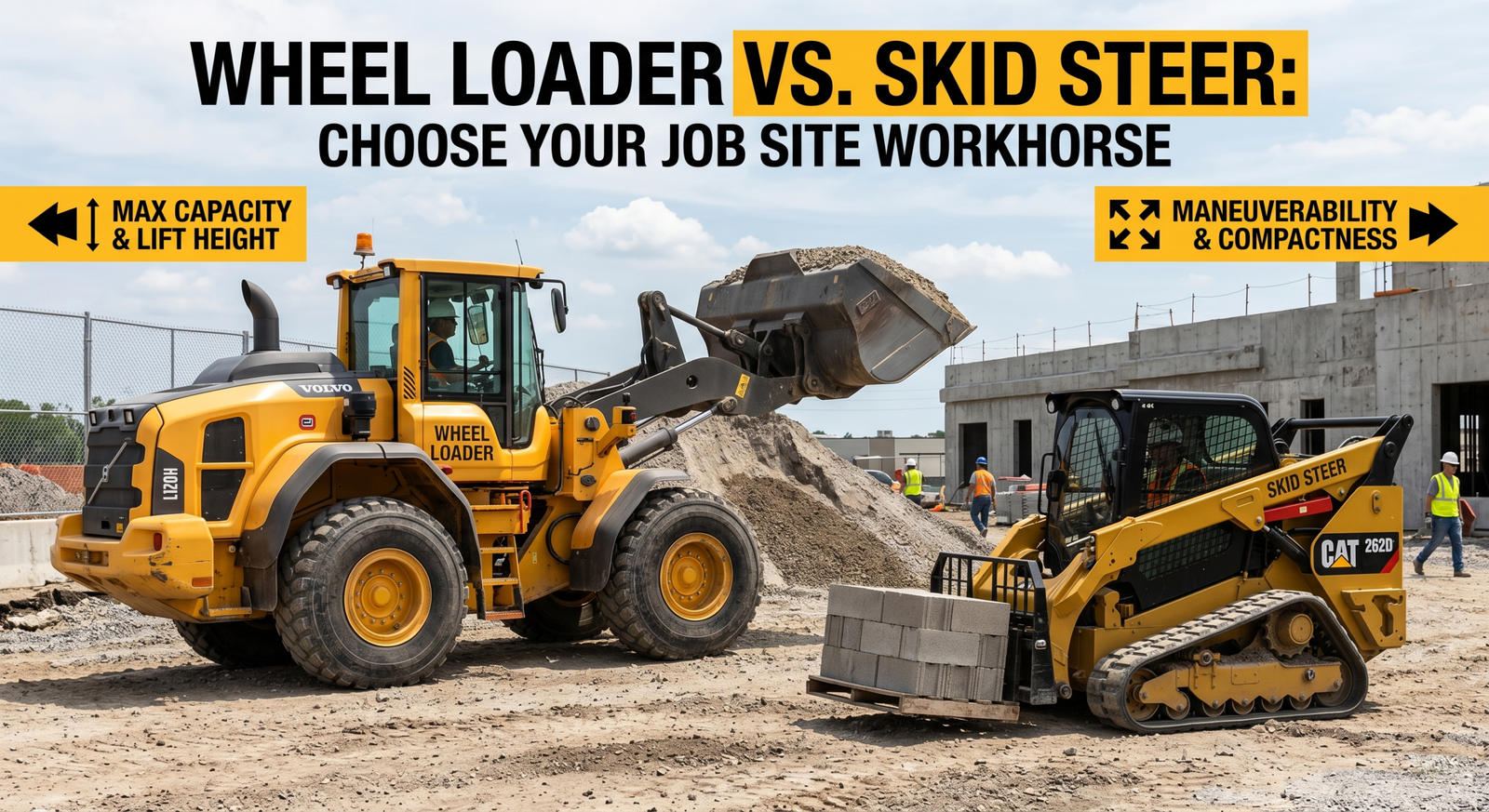
Imagine standing on a bustling construction site, a sprawling farm, or a meticulously planned landscaping project. Around you, powerful machines hum and whir, effortlessly moving earth, lifting heavy materials, and shaping the very ground beneath your feet. Among the most versatile and indispensable of these workhorses are two titans of compact equipment: the compact wheel loader and the skid steer. Both are designed to tackle a myriad of tasks, offering incredible efficiency and power in a relatively small footprint. Yet, despite their shared purpose of making heavy work lighter, they possess distinct characteristics, operational philosophies, and ideal applications.
Choosing between a compact wheel loader and a skid steer isn’t merely a matter of preference; it’s a critical decision that can significantly impact project efficiency, cost-effectiveness, and overall success. Are you looking for unparalleled maneuverability in tight spaces, or do you prioritize stability, lift capacity, and operator comfort over long workdays? Do you need a machine that excels at digging and pushing, or one that can rapidly transport materials across uneven terrain? This comprehensive guide will dissect the nuances of each machine, exploring their core functionalities, unique advantages, and the specific scenarios where one truly outshines the other. By the end, you’ll have a clear understanding of which compact powerhouse is the ultimate champion for your specific jobsite needs, ensuring your investment drives maximum productivity and profitability. Let’s delve into the world of compact equipment and uncover the perfect match for your next big project.
1. Understanding Compact Wheel Loaders and Skid Steers
To make an informed decision, it’s crucial to first understand what each machine is, how it operates, and its fundamental design principles. While both are considered compact utility machines, their engineering and operational characteristics lead to very different performance profiles.
1.1 What is a Compact Wheel Loader?
A compact wheel loader (CWL), often referred to simply as a small wheel loader or compact loader, is a versatile piece of heavy equipment primarily designed for scooping, lifting, and moving materials. Think of it as a smaller, more agile version of its larger industrial counterparts. These machines typically feature an articulated chassis, meaning the machine bends in the middle to steer. This articulation allows for a tighter turning radius compared to rigid-frame machines, enhancing maneuverability in certain situations.
CWLs are characterized by their four large, equally sized wheels, which provide excellent traction and stability, especially on uneven or soft terrain. The operator sits in a cab, usually positioned high for good visibility, and controls a front-mounted bucket or other attachments via hydraulic arms. The engine is typically located at the rear, acting as a counterweight to the load in the front bucket, which contributes to its superior lifting capacity and stability.
Key Design and Operational Characteristics:
- Articulated Steering: The machine “breaks” in the middle, allowing the front and rear sections to pivot independently. This results in a smaller turning circle and less tire scrubbing compared to skid steers, reducing wear and tear on tires and the ground.
- Four Large Wheels: Provides excellent ground clearance, stability, and traction, making them well-suited for rough, muddy, or uneven surfaces.
- Higher Ground Speed: Generally faster than skid steers, especially over longer distances, making them efficient for material transport.
- Parallel Lift Linkage: Many CWLs feature a Z-bar or parallel lift linkage system that keeps the bucket level throughout its lift arc, which is ideal for carrying materials without spillage.
- Operator Comfort: Often designed with more spacious cabs, better suspension, and smoother operation, leading to less operator fatigue during extended work periods.
- Higher Lift Capacity and Reach: Due to their design and counterweighting, CWLs typically offer greater lift capacity and reach than skid steers of comparable size.
Typical Applications: Compact wheel loaders excel in tasks requiring material handling over distances, such as loading trucks, moving gravel, sand, mulch, or snow. They are frequently found on landscaping projects, municipal work, agricultural operations (e.g., feeding livestock, cleaning barns), and light construction sites where stability and continuous material movement are paramount. Their gentle footprint also makes them suitable for finished surfaces or delicate ground.
1.2 What is a Skid Steer Loader?
A skid steer loader, often simply called a skid steer, is a compact, rigid-frame, engine-powered machine with lift arms used to attach a wide variety of labor-saving tools or attachments. Unlike a compact wheel loader, a skid steer does not steer by turning its wheels. Instead, it “skids” or drags its wheels across the ground to turn. This is achieved by having the wheels on one side of the machine move independently or at a different speed than the wheels on the other side. For example, to turn left, the left wheels slow down or reverse while the right wheels continue forward.
Skid steers are renowned for their exceptional agility and ability to operate in extremely confined spaces. Their compact size and unique steering mechanism allow them to turn within their own footprint, making them indispensable on cluttered jobsites or in tight corners where other machines simply cannot go.
Key Design and Operational Characteristics:
- Skid Steering: The defining characteristic. Wheels on one side move independently of the other, allowing for zero-radius turns. This is fantastic for maneuverability but can cause tire scrubbing and ground disturbance.
- Rigid Frame: The entire chassis is one solid unit, contributing to its robust build but limiting its steering mechanism to skidding.
- Compact Size: Generally smaller and lighter than CWLs, making them easier to transport and ideal for space-constrained environments.
- Lower Center of Gravity: While CWLs often have higher lift capacity, skid steers can feel very stable due to their lower center of gravity, especially when performing digging or pushing tasks.
- Unmatched Attachment Versatility: Skid steers are often considered the “Swiss Army knife” of compact equipment. Their universal quick-attach system allows for a vast array of attachments, from buckets and forks to trenchers, augers, grapples, mulchers, and snow blowers.
- Operator Position: The operator typically sits lower in the machine, which can sometimes limit forward visibility compared to CWLs, though modern designs have improved this significantly.
Typical Applications: Skid steers are workhorses on almost any jobsite. They excel in demolition, excavation, grading, trenching, brush clearing, snow removal, and landscaping. Their ability to swap attachments quickly makes them incredibly versatile for tasks that require frequent changes in tooling, such as a contractor needing to dig a trench, then backfill it, then move some pallets, all within the same afternoon. They are particularly favored in urban construction, residential landscaping, and any scenario where space is at a premium.
1.3 Key Differences at a Glance
| Feature | Compact Wheel Loader (CWL) | Skid Steer Loader |
|---|---|---|
| Steering Mechanism | Articulated (bends in the middle) | Skid Steer (wheels on one side move independently) |
| Maneuverability | Good, larger turning radius, less ground disturbance | Excellent, zero-radius turns, high ground disturbance |
| Tires | Four large, equal-sized wheels | Four smaller wheels, often different sizes front/rear |
| Ground Disturbance | Low, gentle on finished surfaces, less tire wear | High, tire scrubbing can damage turf, higher tire wear |
| Stability | Excellent, especially with heavy loads, due to articulation and counterweighting | Good, lower center of gravity, but can be less stable with high/heavy loads |
| Lift Capacity/Reach | Generally higher lift capacity and reach | Good, but typically less than CWLs of similar size |
| Speed | Faster travel speed, better for long-distance material transport | Slower travel speed, better for short, precise movements |
| Operator Comfort | Generally higher, smoother ride, better visibility | Can be rougher ride, visibility improving with modern designs |
| Versatility | Good, but fewer attachment options than skid steers | Exceptional, vast array of attachments via universal quick-attach |
| Best For | Material handling, loading trucks, farming, landscaping (large areas), snow removal (large lots) | Digging, grading, trenching, demolition, brush clearing, landscaping (tight spaces), utility work |
Understanding these fundamental differences is the first step in aligning the machine with your specific operational requirements. Each machine is a master in its own domain, and recognizing those domains is key to maximizing productivity.
2. Key Benefits of Each Machine
Both compact wheel loaders and skid steers offer significant advantages, but these benefits are often tailored to different operational needs and jobsite conditions. Delving into their specific strengths will help clarify which machine is the optimal choice for your particular challenges.
2.1 Advantages of Compact Wheel Loaders
Compact wheel loaders are often lauded for their efficiency in material handling and their operator-friendly design, making them a preferred choice for tasks that involve continuous movement and heavy lifting over longer durations.
2.1.1 Superior Stability and Lift Capacity
One of the most significant benefits of a CWL is its inherent stability and impressive lift capacity relative to its size. The articulated steering mechanism, combined with the engine acting as a natural counterweight to the front-mounted bucket, allows CWLs to handle heavier loads with greater confidence. This is particularly advantageous when loading high-sided dump trucks or stacking materials. The balanced design minimizes the risk of tipping, even when the boom is fully extended, providing a safer working environment and enabling operators to move more material in fewer cycles. For instance, a CWL can comfortably lift and dump a full bucket of dense gravel into a 10-foot-high truck bed, a task that might push a similarly sized skid steer to its limits or require multiple, smaller lifts.
2.1.2 Enhanced Operator Comfort and Visibility
CWLs are generally designed with operator comfort in mind, especially for long workdays. Their cabs are often more spacious, offering better legroom and ergonomic controls. The articulated steering results in a smoother ride, as the machine doesn’t “skid” or jolt during turns, reducing operator fatigue. Furthermore, the higher seating position in many CWLs provides superior visibility of the attachment, the work area, and surrounding obstacles. This enhanced visibility is crucial for safety and precision, particularly when navigating busy jobsites or working close to structures. Imagine an operator spending eight hours moving snow from a large parking lot; the smoother ride and better visibility of a CWL would significantly reduce strain compared to the constant jolting and turning of a skid steer.
2.1.3 Reduced Ground Disturbance and Tire Wear
The articulated steering of a CWL means that all four wheels follow a similar path, eliminating the “skidding” action that characterizes a skid steer. This results in significantly less ground disturbance. If you’re working on finished landscapes, delicate turf, or paved surfaces, a CWL will leave a much lighter footprint, minimizing the need for costly repairs or restoration. This also translates to reduced tire wear, as the tires aren’t constantly dragging and scrubbing against the ground. Over the lifespan of the machine, this can lead to substantial savings on tire replacement costs, which are often a significant operational expense for heavy equipment. A landscaper laying sod or moving decorative rocks on a client’s pristine lawn would undoubtedly prefer the gentle touch of a CWL.
2.1.4 Faster Travel Speeds and Fuel Efficiency
Compact wheel loaders typically boast higher travel speeds compared to skid steers, making them more efficient for tasks that involve transporting materials over longer distances. Whether you’re moving a pile of mulch from one end of a property to another or shuttling snow across a large commercial lot, the CWL gets the job done faster. Additionally, due to their more efficient drivetrain and less friction from tire scrubbing, CWLs can often be more fuel-efficient for certain types of work, particularly those involving continuous forward motion. This combination of speed and efficiency can lead to higher productivity and lower operating costs over time.
2.2 Advantages of Skid Steer Loaders
Skid steers, while perhaps less comfortable for long hauls, are champions of agility and versatility, making them indispensable for a different set of challenges.
2.2.1 Unmatched Maneuverability in Tight Spaces
The defining advantage of a skid steer is its ability to perform zero-radius turns. This means the machine can literally pivot in its own footprint, allowing it to navigate incredibly tight and confined spaces where other equipment simply cannot go. For urban construction sites, residential landscaping projects, or indoor demolition, this maneuverability is a game-changer. An operator can easily weave around obstacles, turn sharply in narrow alleys, or work efficiently within the confines of a building. This agility translates directly to increased productivity in constrained environments, as less time is spent repositioning the machine. Imagine clearing debris from a backyard with limited access; a skid steer can get into corners and turn around effortlessly.
2.2.2 Exceptional Attachment Versatility
Skid steers are often called the “Swiss Army knife” of compact equipment, and for good reason. Their universal quick-attach system allows them to rapidly swap between a vast array of attachments, transforming the machine for countless tasks. From buckets, forks, and grapples to trenchers, augers, hydraulic breakers, stump grinders, snow blowers, brush cutters, and even concrete mixers – the possibilities are nearly endless. This versatility means a single skid steer can replace several specialized machines, offering incredible value and flexibility to contractors and property owners. A single machine can be used for digging footings in the morning, grading the site in the afternoon, and then clearing brush the next day, simply by changing attachments. This reduces equipment investment and storage needs.
2.2.3 Lower Initial Cost and Easier Transport
Generally, skid steer loaders tend to have a lower initial purchase price compared to compact wheel loaders of similar power and capacity. This makes them a more accessible option for smaller businesses, independent contractors, or those with tighter budgets. Furthermore, their typically smaller size and lighter weight make them easier and often less expensive to transport. Many skid steers can be hauled on a standard trailer behind a heavy-duty pickup truck, eliminating the need for specialized transport equipment or permits. This ease of transport adds to their flexibility, allowing them to be moved quickly between multiple jobsites in a single day.
2.2.4 Excellent Digging and Pushing Power
While CWLs excel at lifting and carrying, skid steers often demonstrate superior pushing and digging power, particularly in applications where the machine needs to exert significant force directly into the ground. Their rigid frame and direct drive system contribute to this capability. For tasks like breaking ground, excavating foundations, or pushing large piles of material, a skid steer can be incredibly effective. The way they “dig in” and push makes them highly efficient for initial site preparation, trenching, and grading work where raw power and precise control over the bucket’s angle are crucial.
By understanding these distinct advantages, you can begin to see how the choice between a CWL and a skid steer is less about which machine is “better” overall, and more about which machine is “better suited” for the specific demands of your project.
3. How to Choose: Matching the Machine to Your Jobsite
Making the right choice between a compact wheel loader and a skid steer involves a careful assessment of your specific needs, the nature of your work, and the conditions of your jobsite. This isn’t a one-size-fits-all decision; rather, it’s about aligning the machine’s strengths with your operational requirements.
3.1 Assessing Your Primary Tasks and Applications
The first and most critical step is to clearly define the primary tasks the machine will be performing. Are you primarily moving bulk materials, digging, grading, or a combination of many different jobs?
3.1.1 Material Handling and Loading
If your main objective is to efficiently move large volumes of material – such as dirt, gravel, sand, mulch, or snow – and load it into trucks or hoppers, a compact wheel loader is generally the superior choice.
- Use Case Example: A landscape supply yard needs to quickly load customer trucks with various aggregates. A CWL’s higher lift capacity, greater reach, and faster travel speed over distances make it highly efficient for this continuous loading operation. Its articulated steering also means less tire scrubbing on the paved yard surface.
- Why CWL excels: Its design prioritizes stability and lift, making it safer and more productive for repetitive loading tasks. The parallel lift linkage ensures the bucket stays level, minimizing spillage.
3.1.2 Digging, Excavating, and Grading
For tasks that involve breaking ground, digging trenches, excavating foundations, or precise grading, a skid steer loader often has the edge, especially when paired with the right attachments.
- Use Case Example: A utility contractor needs to dig a series of trenches for new pipelines in a residential area. A skid steer equipped with a trencher attachment can quickly and accurately cut trenches. Later, with a bucket, it can backfill and then with a grader attachment, precisely level the ground.
- Why Skid Steer excels: Its pushing power and ability to use a wide array of specialized digging and grading attachments make it incredibly versatile for earthmoving. Its maneuverability is also key for working in confined excavation sites.
3.1.3 Demolition and Site Clearing
Both machines can be used for demolition and site clearing, but their suitability depends on the scale and type of work. For heavy-duty demolition of structures or large-scale brush clearing, a skid steer with specialized attachments like hydraulic breakers, grapples, or mulchers is often preferred.
- Use Case Example: A contractor is demolishing a small outbuilding and clearing dense underbrush on a new construction site. A skid steer with a hydraulic breaker can quickly break up concrete, then swap to a grapple to clear debris, and finally use a mulcher to clear vegetation.
- Why Skid Steer excels: Its robust frame and unparalleled attachment versatility allow it to adapt to a wide range of demolition and clearing tasks, making it a highly cost-effective solution.
3.1.4 Landscaping and Property Maintenance
This category is where the choice can be most nuanced, as both machines have strong applications.
- For large-scale landscaping involving moving bulk materials (soil, mulch, rocks), loading trucks, and working on open ground with minimal disturbance to finished areas, a compact wheel loader is often preferred.
- Example: Moving several pallets of pavers, spreading large quantities of topsoil, or transferring decorative boulders.
- For detailed landscaping, working in tight residential yards, intricate grading, planting trees, or installing features that require various tools, a skid steer is usually the better fit due to its maneuverability and attachment versatility.
- Example: Digging holes for trees, trenching for irrigation, moving materials through narrow gates, or using a grapple to place large rocks precisely.
3.2 Evaluating Jobsite Conditions
The physical characteristics of your jobsite play a significant role in determining which machine will perform best.
3.2.1 Space Constraints and Accessibility
- Tight Spaces: If your jobsites frequently involve narrow pathways, crowded urban environments, or working inside buildings, the skid steer’s zero-radius turning capability is an undeniable advantage. Its ability to maneuver in its own footprint makes it the clear winner for confined spaces.
- Open Spaces/Longer Hauls: For more open jobsites where materials need to be transported over longer distances, the compact wheel loader’s faster travel speed and smoother ride make it more efficient.
3.2.2 Ground Conditions
- Soft, Uneven, or Muddy Terrain: The compact wheel loader’s larger, equally sized wheels and articulated steering provide superior traction and stability on challenging ground. It’s less likely to get stuck and offers a smoother ride over rough terrain.
- Finished Surfaces/Delicate Turf: The compact wheel loader causes significantly less ground disturbance due to its steering mechanism, making it ideal for working on established lawns, paved driveways, or other sensitive surfaces where minimizing damage is crucial.
- Rough, Rocky, or Demolition Sites: While a CWL can handle rough terrain, a skid steer is often more robust for direct digging into hard, rocky ground or navigating demolition debris, especially with appropriate tires or tracks.
3.2.3 Load Requirements (Weight and Height)
- Heavy Lifting and High Stacking: If your tasks regularly involve lifting very heavy loads or reaching significant heights to load tall trucks or stack materials, the compact wheel loader generally offers superior lift capacity and reach.
- Moderate Lifting/Pushing: For tasks requiring moderate lifting or significant pushing power at ground level, a skid steer is highly capable.
3.3 Considering Operator Comfort and Experience
Operator comfort directly impacts productivity and safety, especially during long shifts.
- Long Workdays/Continuous Operation: The compact wheel loader typically offers a more comfortable ride, better suspension, and a more spacious cab, reducing operator fatigue. This is a crucial factor for operators spending many hours in the machine.
- Frequent Entry/Exit/Short Bursts of Work: While modern skid steers have improved comfort, their ride can be rougher. However, for tasks involving frequent dismounting to check work or short bursts of operation, this might be less of a concern.
- Operator Skill Level: Both machines require training, but the articulated steering of a CWL can sometimes feel more intuitive to operators accustomed to traditional vehicles, while the skid steer’s unique steering takes some getting used to.
3.4 Budget and Versatility Needs
Finally, your budget and the need for versatility will weigh heavily on your decision.
- Budget-Conscious: Skid steer loaders generally have a lower initial purchase price, making them a more accessible entry point for many businesses.
- Maximum Versatility (Attachments): If you need one machine to perform a wide variety of specialized tasks using numerous attachments, the skid steer is the undisputed champion. Its universal quick-attach system and vast array of available tools offer unparalleled flexibility.
- Specialized Material Handling: If your business is primarily focused on material handling and loading, and you have the budget, investing in a compact wheel loader for its specialized efficiency in these tasks can be highly cost-effective in the long run.
By systematically going through these considerations, you can create a detailed profile of your ideal machine, leading you to the most effective and profitable choice for your jobsite. Remember, sometimes the answer isn’t one or the other, but rather understanding which machine will handle the majority of your core tasks most efficiently.
4. Best Practices for Operation and Maintenance
Once you’ve selected the ideal machine for your needs, understanding best practices for operation and maintenance is crucial for maximizing its lifespan, ensuring safety, and optimizing productivity. Both compact wheel loaders and skid steers are significant investments, and proper care will pay dividends.
4.1 Safe Operation Guidelines
Safety should always be the top priority on any jobsite. Both CWLs and skid steers are powerful machines that, if not operated correctly, can pose significant hazards.
4.1.1 Pre-Operation Checks
Before starting any work, a thorough walk-around inspection is essential.
- Fluid Levels: Check engine oil, hydraulic fluid, coolant, and fuel levels.
- Tires: Inspect tire pressure and condition for any damage or excessive wear. Ensure lug nuts are tight.
- Attachments: Verify that the attachment is securely connected and that all pins and locking mechanisms are in place. Check hydraulic lines for leaks or damage.
- Safety Features: Test lights, horn, backup alarm, and emergency stop buttons. Ensure seatbelt and Rollover Protective Structure (ROPS) / Falling Object Protective Structure (FOPS) are in good condition.
- Visibility: Clean windows, mirrors, and lights. Remove any debris from the engine compartment or around moving parts.
- Jobsite Scan: Before moving, scan the work area for personnel, obstacles, uneven terrain, and overhead hazards (power lines, tree branches).
4.1.2 Operating Techniques
- Load Management: Never exceed the machine’s rated operating capacity (ROC) or tip load. Overloading can lead to instability, damage the machine, and cause serious accidents. Keep loads low when traveling to maintain stability.
- Smooth Movements: Avoid sudden starts, stops, or turns, especially with a loaded bucket. Smooth operation reduces wear and tear on components and prevents material spillage.
- Visibility: Always maintain clear visibility of your work area and surroundings. If visibility is obstructed, stop and reposition. Use mirrors and consider spotters if necessary.
- Slope Awareness: Understand the machine’s limits on slopes. When traveling up a slope with a load, keep the load facing uphill. When traveling down, keep the load facing downhill. Never travel across steep slopes.
- Attachment Specifics: Familiarize yourself with the specific operating procedures and safety warnings for each attachment you use.
- Shut Down Procedures: When parking, lower the attachment to the ground, engage the parking brake, shut off the engine, and remove the key.
4.1.3 Personal Protective Equipment (PPE)
Operators and those working near the machine should always wear appropriate PPE, including hard hats, safety glasses, high-visibility clothing, and steel-toed boots. Hearing protection may also be necessary depending on noise levels.
4.2 Essential Maintenance Tips
Regular and proactive maintenance is the cornerstone of equipment longevity and reliability. Following the manufacturer’s recommended maintenance schedule is non-negotiable.
4.2.1 Daily/Weekly Checks
- Greasing: Lubricate all grease points as specified in the operator’s manual. This is critical for reducing wear on pins, bushings, and pivot points.
- Air Filters: Check engine air filter and cabin air filter. Clean or replace as needed, especially in dusty environments.
- Tires/Tracks: For wheeled machines, check tire pressure and inspect for cuts or punctures. For tracked machines (compact track loaders, a variant of skid steers), check track tension and inspect for damage.
- Hydraulic Hoses and Cylinders: Look for leaks, chafing, or damage. Ensure cylinder rods are clean.
- Electrical System: Check battery terminals for corrosion, ensure lights are functioning.
4.2.2 Scheduled Service Intervals
Adhere strictly to the manufacturer’s service schedule for:
- Oil Changes: Engine oil and filter, hydraulic oil and filter, transmission fluid (if applicable).
- Fuel Filters: Regular replacement prevents fuel system issues.
- Coolant System: Check coolant levels and condition, flush and replace as recommended.
- Brake System: Inspect and adjust as necessary.
- Belts and Hoses: Inspect for wear, cracks, or leaks. Replace as needed.
- Structural Inspection: Periodically check the frame, boom, and attachment points for cracks, bends, or other signs of stress.
4.2.3 Cleanliness and Storage
- Regular Cleaning: Keep the machine clean, especially the engine compartment and radiator fins, to prevent overheating and allow for easier inspection of leaks or damage. A clean machine is easier to maintain and inspect.
- Proper Storage: When not in use, store the machine in a dry, secure location, preferably under cover, to protect it from the elements. This prevents rust and degradation of components.
4.2.4 Documentation and Training
- Read the Manual: The operator’s manual is your most valuable resource. It contains specific safety warnings, operating instructions, and maintenance schedules for your exact machine model.
- Operator Training: Ensure all operators are properly trained and certified for the specific equipment they are using. Regular refresher training is also beneficial.
- Maintenance Records: Keep detailed records of all maintenance performed. This helps track service intervals, identify recurring issues, and can be valuable for resale.
By implementing these best practices, you not only extend the life of your compact wheel loader or skid steer but also ensure a safer, more productive, and more profitable operation. Ignoring maintenance or safety protocols can lead to costly breakdowns, accidents, and downtime, ultimately impacting your bottom line.
5. Frequently Asked Questions
Choosing between a compact wheel loader and a skid steer often brings up a host of common questions. Here, we address some of the most frequent inquiries to help solidify your understanding.
5.1 What is the primary difference between a compact wheel loader and a skid steer?
The primary difference lies in their steering mechanism. A compact wheel loader (CWL) uses articulated steering, meaning it bends in the middle to turn, similar to a larger articulated truck. This results in a smoother ride, less ground disturbance, and a larger turning radius. A skid steer loader steers by “skidding” its wheels across the ground; the wheels on one side move independently or at a different speed than the wheels on the other side. This allows for zero-radius turns, offering exceptional maneuverability in tight spaces but causing more ground disturbance and tire wear.
5.2 How does the lift capacity compare between the two machines?
Generally, compact wheel loaders tend to have a higher lift capacity and greater reach than skid steers of comparable size and horsepower. This is due to their articulated design, which allows the engine to act as a counterweight to the front-mounted load, enhancing stability. Skid steers, while capable lifters, often have their lift capacity limited by their rigid frame and shorter wheelbase, especially when lifting heavy loads to maximum height. For tasks requiring consistent heavy lifting or loading high-sided trucks, a CWL typically performs better.
5.3 Which machine is better for working on delicate surfaces like lawns or finished pavement?
The compact wheel loader is significantly better for working on delicate surfaces. Its articulated steering means the wheels follow a similar path, minimizing tire scrubbing and ground disturbance. This reduces the risk of damaging turf, paved driveways, or other finished areas. A skid steer’s “skidding” action, while great for maneuverability, can easily scuff, tear, or damage sensitive surfaces due to the tires dragging across the ground.
5.4 What are the benefits of a skid steer’s attachment versatility?
The main benefit of a skid steer’s attachment versatility is its ability to perform a vast array of tasks with a single machine, effectively replacing several specialized pieces of equipment. Thanks to a universal quick-attach system, operators can quickly swap between dozens of attachments such as buckets, forks, grapples, trenchers, augers, hydraulic breakers, snow blowers, brush cutters, and more. This makes the skid steer an incredibly cost-effective and flexible tool for contractors who need to tackle diverse jobs without investing in multiple machines.
5.5 Which machine offers better operator comfort for long hours?
The compact wheel loader generally offers superior operator comfort, especially for long workdays. Its articulated steering provides a smoother ride with less jolting and vibration compared to a skid steer’s “skidding” motion. CWLs often feature more spacious cabs, better suspension systems, and higher seating positions that can improve visibility and reduce operator fatigue. While modern skid steers have made significant strides in comfort, the inherent design of a CWL typically provides a more comfortable operating experience over extended periods.
5.6 Are compact track loaders (CTLs) an alternative to consider?
Yes, compact track loaders (CTLs) are an excellent alternative, particularly if you’re considering a skid steer but need better traction, stability, and less ground pressure. CTLs are essentially skid steers mounted on rubber tracks instead of wheels.
- Benefits of CTLs: Superior traction on soft, muddy, or uneven terrain; better flotation (less ground pressure) which reduces ground disturbance compared to wheeled skid steers; enhanced stability on slopes; and a smoother ride than wheeled skid steers.
- Drawbacks of CTLs: Higher initial purchase cost, higher maintenance costs for tracks (compared to tires), and slower travel speeds than wheeled skid steers or CWLs. CTLs are often preferred for tasks like grading, landscaping on soft ground, or working in conditions where wheeled machines would struggle.
5.7 What are the typical fuel efficiencies of these machines?
Fuel efficiency can vary greatly depending on the specific model, engine size, workload, and operator technique. However, generally:
- Compact Wheel Loaders: Can often be more fuel-efficient than skid steers for tasks involving continuous forward motion and material transport over distances, as their articulated steering reduces tire scrubbing and associated friction.
- Skid Steers: May consume more fuel per hour when performing tasks that involve frequent turning and “skidding,” as this action requires more engine power. However, for short, intensive tasks in confined spaces, their efficiency lies in their ability to complete the job quickly. Ultimately, comparing specific models and their engine specifications, as well as considering the type of work performed, will give the most accurate assessment of fuel consumption.
Conclusion
Navigating the world of compact equipment can seem daunting, but by dissecting the unique characteristics and strengths of the compact wheel loader and the skid steer, the path to the right decision becomes clear. We’ve explored how the compact wheel loader shines in tasks demanding superior lift capacity, stability, operator comfort, and minimal ground disturbance, making it the champion for efficient material handling, loading, and working on delicate surfaces. Its articulated steering and higher travel speeds make it ideal for larger jobsites and longer hauls.
Conversely, the skid steer loader emerges as the undisputed master of versatility and agility. Its unparalleled maneuverability in tight spaces, coupled with an extensive array of quick-attach implements, transforms it into a multi-talented workhorse capable of digging, grading, trenching, demolition, and much more. For jobsites where space is a premium and diverse tasks are the norm, the skid steer’s adaptability and often lower initial cost make it an attractive and highly productive choice.
Ultimately, the “better” machine isn’t an absolute; it’s a relative term defined by your specific needs. Consider your primary applications, the typical conditions of your jobsites, your budget, and the importance of operator comfort and versatility. By carefully weighing these factors, you can confidently select the compact powerhouse that will not only enhance your operational efficiency but also drive the success of your projects for years to come.
The right equipment is more than just a tool; it’s a strategic investment in your productivity and profitability. Make an informed decision that empowers your work.