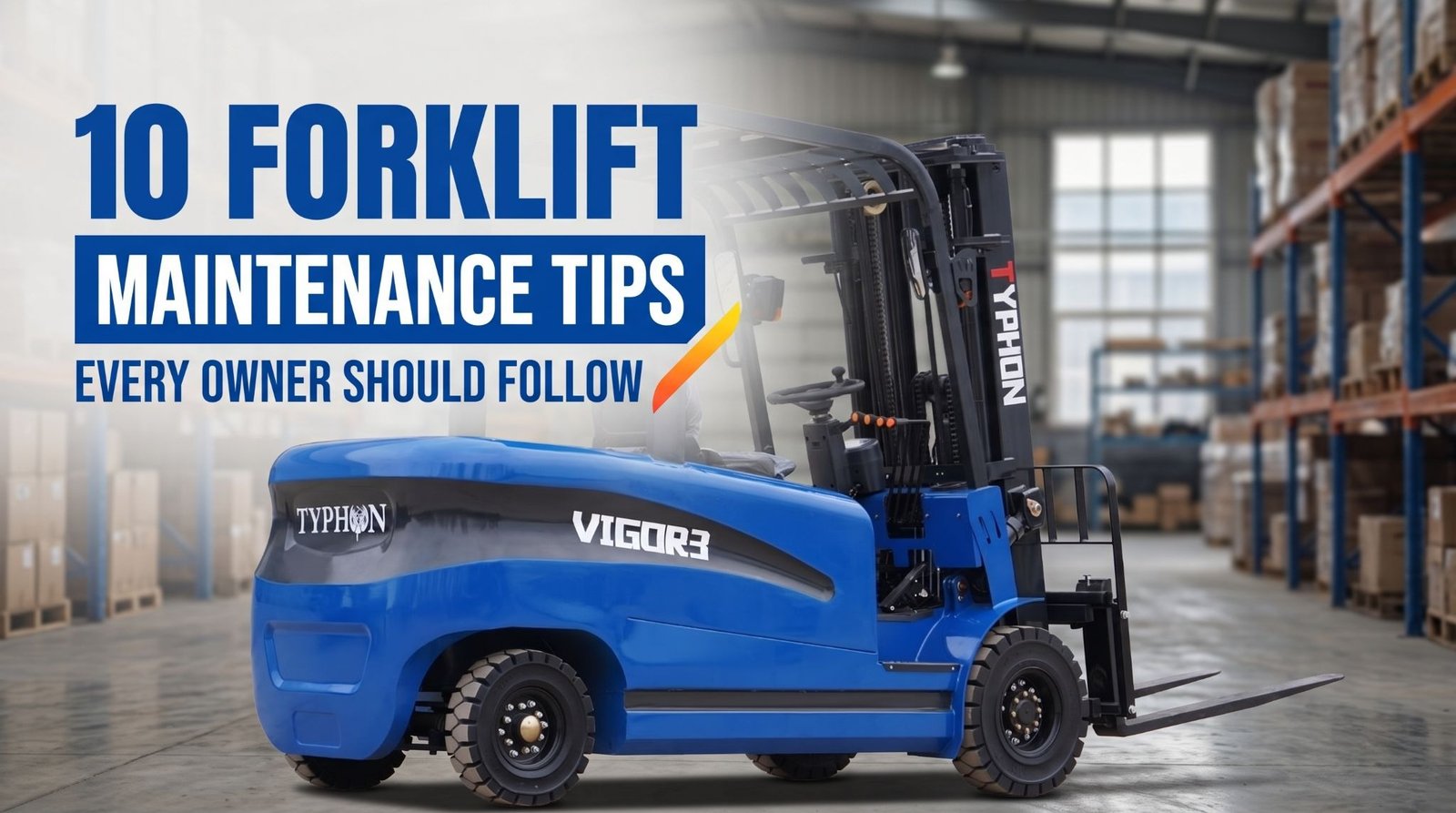
10 Forklift Maintenance Tips Every Owner Should Follow
The forklift had moved pallets through the warehouse for years without a hiccup, so the shift lead barely noticed when the lift felt a little slow raising a load one Tuesday morning. He kept the operation running, figuring it was nothing worth stopping for. By afternoon the mast stuck halfway up with a loaded pallet pinned overhead, a hydraulic hose had split, and fluid was pooling across a busy aisle. The forklift sat tagged out for three days while a replacement hose and a rushed service call came in, orders backed up at the dock, and a repair that a five-minute daily check would have flagged turned into a costly, avoidable shutdown.
Forklift problems rarely start with a major failure. More often, they develop when routine maintenance is overlooked until a simple repair turns into costly downtime. A forklift is built to handle demanding work day after day, but its reliability depends on consistent care. Regular inspections and preventive maintenance help reduce unexpected breakdowns, improve workplace safety, extend equipment life, and protect your investment. In this guide, you’ll learn ten practical forklift maintenance tips, from daily inspections and fluid checks to mast, fork, tire, and battery care, along with scheduled service practices that keep your forklift operating safely and efficiently for the long term.
Daily Checks That Catch Problems Early
Most serious forklift failures give warning long before they strike, and the operators who catch those signals run a short routine every shift. Making these first three tips automatic is the cheapest protection you can give a forklift, turning you into someone who prevents downtime rather than reacts to it.
Tip 1: Run a Pre-Shift Inspection Every Time
Before the first load, walk around the machine and look for anything out of place. Fresh oil or hydraulic fluid puddles beneath the forklift, damaged hoses, loose bolts, low tires, and cracks on the mast or forks all point to trouble worth catching before you start. A problem spotted at the dock is a quick fix; the same problem discovered mid-lift is a stalled machine and a safety risk.
Build a simple, repeatable habit so nothing slips through. A solid forklift pre-shift inspection checklist covers fluid levels, tires, forks, mast, brakes, steering, horn, lights, and the seatbelt before the engine even warms up. These daily safety checks are often required by workplace regulations, and they protect both the machine and everyone working around it.
Tip 2: Test the Safety Systems and Controls
A forklift lifts heavy loads around people, so its safety features are not optional extras. Test the brakes, steering, horn, lights, backup alarm, and seatbelt at the start of every shift, and confirm the hydraulic controls raise, lower, and tilt smoothly without hesitation or drift.
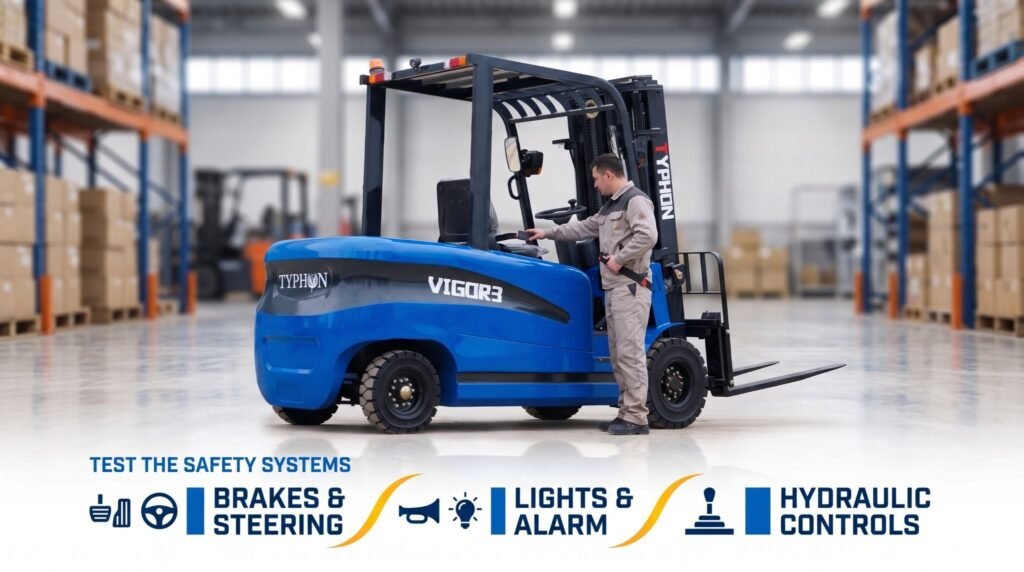
Pay attention to how the machine responds. Spongy brakes, a wandering steer, or lift controls that stick or jerk are early signals of wear that deserve attention before they worsen. Tag any forklift that fails a safety check and keep it parked until it’s repaired, because gambling a shift on a faulty machine risks far more than downtime.
Tip 3: Watch the Gauges and Listen to the Machine
Once the forklift is running, let it tell you how it feels. Watch the temperature, fuel or charge, and pressure gauges during warm-up, listen for unusual noises from the engine or hydraulics, and note any hesitation when lifting or driving. These early signals flag a problem while it’s still small and cheap to fix.
Treat every warning light and odd sound as a decision point rather than something to push through. A rising temperature, a new whine, or a sluggish lift caught early almost always costs far less than the failure it precedes.
Takeaway: a consistent pre-shift inspection, a full test of the safety systems, and close attention to gauges and sounds catch the majority of failures before they strand you, so make these three daily habits non-negotiable.
Fluid and Power-System Care That Keeps It Running
Nearly everything a forklift does depends on clean fluids and a healthy power source, whether that’s an engine or a battery. Let either slide and the machine loses power, wears from the inside, and eventually quits mid-shift. These tips protect the systems that keep the forklift working.
Tip 4: Check and Change the Fluids on Schedule
Inspect the engine oil, coolant, transmission fluid, and hydraulic fluid regularly, and top off anything low with the correct type. Running a forklift short on fluid is one of the fastest ways to cause expensive internal damage, and it’s entirely preventable with a quick daily look. Never mix fluid types, since the wrong blend degrades performance and can ruin seals.
Cleanliness counts as much as level. Staying on top of hydraulic fluid maintenance means changing the fluid and its filters on the manufacturer’s schedule to keep dirt, water, and metal particles out of the system. Milky or dark fluid, a burnt smell, or a level that keeps dropping between checks all signal a problem worth chasing down before it becomes a pump or engine failure.
Tip 5: Care for the Battery or Fuel System
How you maintain the power source depends on the forklift type, so match your routine to the machine. On an electric forklift, keep the battery terminals clean and free of corrosion, check water levels on flooded lead-acid batteries as recommended, and follow proper charging practice to protect battery life. Careful forklift battery care keeps the machine holding a full shift’s charge and prevents premature replacement of an expensive component.
On an internal-combustion forklift, tend the fuel system instead. Inspect for leaks, keep the fuel filter fresh, and confirm connections are secure, whether the machine runs on propane, diesel, or gasoline. On propane units, check the tank, hoses, and fittings for leaks before each use, since a fuel leak is both a performance problem and a serious safety hazard.
Tip 6: Protect the Hydraulic System
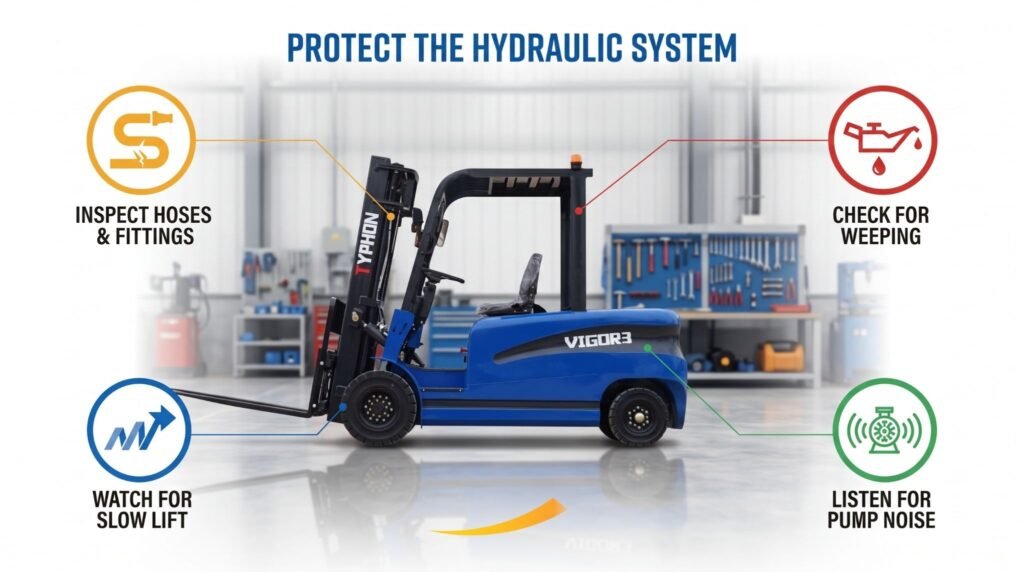
The hydraulic system is the muscle behind every lift, tilt, and load, so guard it closely. Inspect the hoses, fittings, and cylinders regularly for cracks, bulges, soft spots, and weeping, and replace a suspect hose before it bursts. A blown hydraulic line sprays hot fluid under pressure, which endangers anyone nearby and ends the workday on the spot.
Learn the early signs of hydraulic trouble so you can act in time: slow or weak lifting, jerky mast movement, a load that drifts down on its own, or unusual pump noise. Catching an issue while it’s still a fluid or filter fix beats replacing a failed pump mid-season.
Takeaway: clean and full fluids, a well-maintained battery or fuel system, and a closely guarded hydraulic system keep the forklift powered and lifting reliably, so treat these core systems as the foundation of your maintenance routine.
Mast, Forks, and Tires That Keep Lifting Safe
A forklift earns its living raising heavy loads and rolling across hard floors and yards, and that punishes the mast, the forks, and the tires it rides on. Neglect here leads to unsafe lifts, uneven wear, and pricey repairs. A little routine attention keeps the machine lifting safely and moving smoothly.
Tip 7: Inspect the Mast and Lift Chains
The mast does the heavy work of raising and lowering loads, so give it real attention. A regular forklift mast inspection should cover the lift chains, rollers, and carriage for wear, cracks, and proper tension, since a stretched or damaged chain can fail under load with dangerous results. Watch that both chains carry the load evenly, because uneven tension points wear that spreads.
Keep the mast moving smoothly, too. Check that it raises, lowers, and tilts without binding or excessive noise, and confirm the lift chains stay properly lubricated so they flex freely. A quiet, well-lubricated mast that lifts evenly is a strong sign the machine’s most safety-critical system is in good order.
Tip 8: Check the Forks and Load Backrest
The forks carry every load, so damaged forks are a direct safety risk. Inspect them for cracks, bends, gouges, and wear at the heel where they meet the carriage, and check that the fork tips haven’t spread apart or worn thin. A worn or cracked fork can bend or break under a load, so replace forks that fail inspection rather than nursing them along.
Confirm the forks lock securely in position and don’t shift during use, and check the load backrest for cracks or damage that could let a load fall toward the operator. These parts protect the person in the seat, so any doubt about their condition means the machine comes out of service until it’s fixed.
Tip 9: Maintain the Tires
Tires are a major expense and a real safety factor, so protect them daily. Watch for forklift tire wear signs like cracks, chunking, flat spots, and wear down to the tire’s wear line, since worn tires hurt stability, traction, and ride quality while making loads harder to control. On pneumatic tires, keep the pressure at the manufacturer’s spec, because a soft or overinflated tire wears faster and handles poorly.
Cushion (solid) tires wear differently but still need attention, so replace them once they’ve worn past their safe limit or developed chunks and flat spots. Uneven wear across the machine often points to alignment or loading problems worth investigating. Addressing tire damage early stretches their life and keeps the forklift planted and steady under a load.
Takeaway: regular mast and chain inspection, careful fork and backrest checks, and attentive tire care protect the systems that make every lift safe, so never let these load-bearing parts go neglected.
Scheduled Service That Sustains Reliability
Daily habits handle the immediate problems, but long-term reliability depends on planned service. A forklift rewards discipline with years of dependable work and punishes neglect with the kind of major failures that shorten a machine’s life. These final tips are where consistency pays the biggest dividends.
Tip 10: Grease the Pivot Points and Moving Parts
A forklift carries numerous pivot points across the mast, carriage, steering, and tilt cylinders, and every one needs regular grease. Dry pins and bushings wear rapidly under load, developing play that spreads to surrounding parts and turns a cheap greasing habit into an expensive repair. Follow the greasing schedule without shortcuts.
Make lubrication a fixed part of the routine rather than an afterthought. Hit every fitting on schedule, wipe away old grease and grit first, and use the lubricant the manufacturer specifies. Keep the lift chains lubricated as well, since dry chains wear quickly and lift unevenly. This one habit prevents a large share of the wear that quietly degrades a machine over time.
Follow the Service Intervals and Change Filters on Time
Every forklift comes with recommended service intervals based on operating hours, and following them closely is the surest route to reliability. Oil and fluid changes, filter replacements, and system inspections all fall on scheduled hours for a reason: they replace worn parts and tired fluids before failure, not after. Skipping intervals to keep a machine running trades a small routine cost for the risk of a major repair.
Filters are cheap, and the damage a clogged one causes is not. A dirty air filter starves the engine and burns extra fuel, while neglected fuel and hydraulic filters let contaminants reach the parts they protect. Track hours with the hour meter rather than the calendar, since a hard-working forklift reaches its service points faster, and replace filters on schedule instead of waiting for symptoms.
Keep Maintenance Records and Know When to Call a Pro
Track your maintenance instead of trusting memory. A simple log of hours, fluid and filter changes, inspections, and repairs tells you what’s due and helps you spot patterns before they become failures. Good records also protect resale value by proving the machine was cared for properly, and they help demonstrate compliance with workplace safety requirements.
Know the line between routine service and work that needs a professional. Complex hydraulic, drivetrain, electrical, and transmission issues are best handled by a qualified technician before they worsen, and leaning on dependable support keeps a small problem from becoming an emergency.
Takeaway: greasing every pivot point, following service intervals with on-time filter changes, and keeping solid records while knowing when to call a pro-sustain reliability across years of work, so treat scheduled service as the backbone of a forklift that keeps earning.
Frequently Asked Questions
How often should I perform maintenance on a forklift?
Follow the intervals in your operator manual, which are based on operating hours rather than the calendar. Daily checks of fluids, tires, forks, the mast, and the safety systems should happen before every shift, and many are required by workplace safety rules. Filter changes, oil and fluid changes, and deeper inspections fall on scheduled hour intervals, while greasing pivot points is often a daily or weekly task. Because a hard-working forklift reaches its service points faster, let the hour meter guide your timing.
What are the most important daily checks on a forklift?
Start with a walk-around for leaks, damaged hoses, and cracks, then confirm the fluid levels and the tire condition. Inspect the forks and mast for wear and damage, and test the brakes, steering, horn, lights, backup alarm, and seatbelt. Finally, watch the gauges during warm-up and listen for unusual noises. These few minutes catch most problems before they turn into breakdowns and keep the machine safe to operate.
How do I care for a forklift battery or fuel system?
It depends on the machine. On an electric forklift, keep the battery terminals clean and corrosion-free, check water levels on flooded batteries as recommended, and follow proper charging practice to protect battery life. On an internal-combustion forklift, inspect the fuel system for leaks, keep the fuel filter fresh, and confirm connections are secure. On propane units, always check the tank, hoses, and fittings for leaks before use, since a fuel leak is a safety hazard as well as a performance issue.
Conclusion
Keeping a forklift safe and reliable comes down to consistent habits rather than complicated work, and these ten tips form a routine any owner can follow: run a thorough pre-shift inspection every time, test the safety systems and controls, watch the gauges and listen to the machine, check and change the fluids on schedule, care for the battery or fuel system, protect the hydraulic system, inspect the mast and lift chains, check the forks and load backrest, maintain the tires, and grease the pivot points while following the manufacturer’s service intervals, changing filters on time, keeping solid maintenance records, and knowing when to call a professional, because none of it is difficult but all of it matters, and the machines that work hardest and last longest are the ones whose owners never skip the basics, so take an honest look at your maintenance routine before the next shift and tighten up wherever it has slipped, since the few minutes you invest today are exactly what keep the forklift lifting safely and earning tomorrow, and if you’d like help choosing a dependable forklift or sourcing the parts and support to keep yours running strong, reach out to a trusted equipment specialist who can pair dependable equipment with the results your operation depends on.