What’s the Difference Between a Wheel Loader and a Bulldozer?
A site foreman needs to move a big pile of gravel from the yard entrance to a stockpile two hundred feet back, then load it into trucks all afternoon. He grabs the bulldozer already parked on site to save a rental fee. It shoves the gravel back well enough, but it can’t lift a single bucket into a truck, so the whole loading job stalls while a wheel loader gets called in anyway. He pays for two machines, a wasted morning, and a crew standing around, all because he treated a pusher and a loader as if they did the same work. The pile got moved. The plan behind it fell apart.
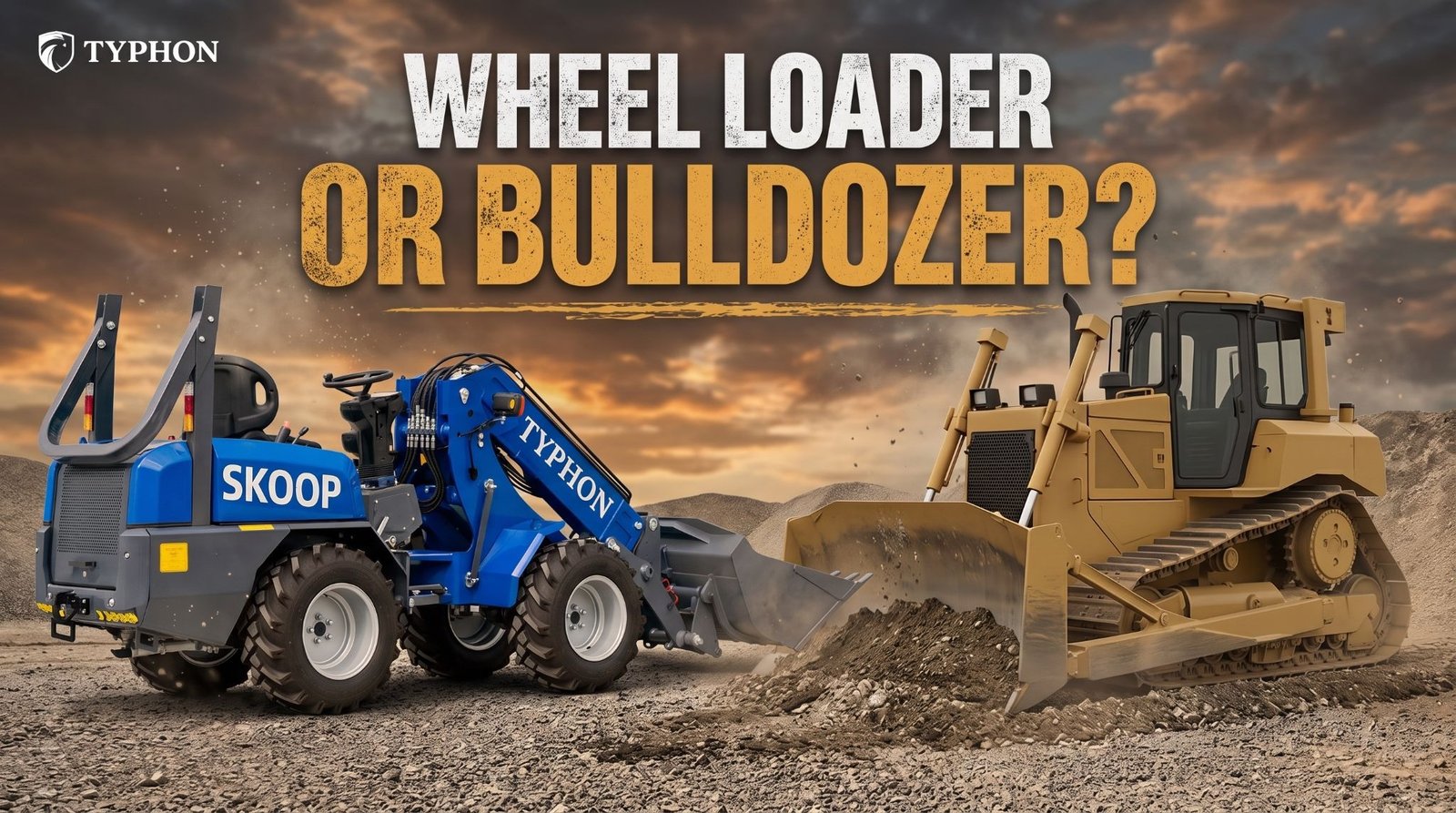
That mix-up costs more operators than they’d like to admit, because a wheel loader and a bulldozer look like cousins and get lumped together as “big yellow earthmovers.” They both move enormous volumes of material and anchor heavy construction sites, so on the surface they seem interchangeable. The real difference is in how each one handles material: one pushes and grades, the other scoops, lifts, and hauls. Pick the wrong one and you either can’t load a truck or you’re using an expensive loader to do a dozer’s shoving.
This guide walks you through exactly how the two machines differ and when each one earns its place. We’ll cover how each moves material, the blade-versus-bucket mechanics that define them, the terrain and site conditions that favor one over the other, and a straightforward way to choose based on the work in front of you. Sort that out, and you match the machine to the job the first time.
How Each Machine Moves Material
The clearest way to tell these machines apart is to watch what they do with a pile of dirt. A bulldozer and a wheel loader attack material from opposite directions, and that single distinction drives nearly every other difference. Before comparing specs, understand this core split in purpose.
The Bulldozer Pushes and Spreads
A bulldozer is a pushing machine at heart. It drives a wide blade forward to shove soil, rock, debris, and rubble across a site, cutting into ground and spreading material as it goes. It excels at moving large volumes over short distances and reshaping the surface underneath it.
Think of the dozer as the machine that shapes the ground itself. It strips topsoil, rough-grades a pad, backfills a trench, and clears land by pushing everything in front of it. When the job is about relocating material a short push away or leveling a surface, the dozer’s forward force is exactly what the work needs.
The Wheel Loader Scoops, Lifts, and Hauls
A wheel loader works in the opposite way. It drives a bucket into a pile, scoops the material up, lifts it high, and carries it to a truck, hopper, or stockpile before dumping it. Lifting and loading are its whole reason for existing, and no dozer can match it there.
The loader shines at handling and transporting loose material rather than reshaping ground. It fills haul trucks, feeds crushers, moves stockpiles around a yard, and relocates material over medium distances on its wheels. When the task involves getting material up and into something, the loader is the answer.
Speed, Mobility, and Hauling Range
Mobility separates the two just as sharply. A wheel loader rolls on large rubber tires, so it moves quickly across firm ground and covers real distance between the pile and the dump point without tearing up the surface. That speed makes it efficient for repetitive load-and-carry cycles.
A bulldozer crawls on tracks at a slower pace, trading speed for grip and pushing power. It isn’t built to haul material any real distance, only to push it a short way. Match a machine’s load and carry distance to your layout, because a loader wins over distance while a dozer dominates the short, forceful push.
Takeaway: a bulldozer pushes and spreads material while a wheel loader scoops, lifts, and hauls it, so the direction your material needs to travel points you straight to the right machine.
Blade vs. Bucket: The Mechanics That Define Them
The tool bolted to the front of each machine tells the whole story. A dozer’s blade and a loader’s bucket are built for entirely different actions, and recognizing how each works clarifies why the machines aren’t interchangeable. Here’s what sets the two attachments apart.
How the Dozer Blade Works
A bulldozer’s blade is a broad, curved steel plate mounted low across the front. It cuts down into the ground and pushes material forward, and the operator adjusts its height and angle to control how deep it digs and where the material rolls off. This is a machine designed to work at or below ground level.
That blade design makes the dozer a grading and cutting tool. By setting the bulldozer blade grading depth precisely, an operator can slice high spots down, fill low spots in, and leave a roughly level surface behind. Different blade shapes suit different work, from straight blades for fine grading to U-shaped blades for moving big volumes.
How the Loader Bucket Works
A wheel loader’s bucket is a deep scoop mounted on lift arms. It drives into a pile at ground level, curls to capture a load, then raises high on those arms to dump the material well above the ground. The action is all about capacity and lift height rather than cutting or grading.
Bucket size drives the machine’s productivity, so weigh the wheel loader bucket capacity against how much material you move per cycle. A larger bucket fills a truck in fewer passes, while lift height determines how tall a truck or hopper the loader can dump into cleanly. The bucket is a container, where the blade is a plow.
What Each Attachment Can’t Do
The limits matter as much as the strengths. A dozer blade cannot lift material or load a truck, since it only pushes along the ground. Ask a dozer to fill a haul truck and the work simply stops, because the tool was never built to raise a load.
A loader bucket, in turn, struggles with the fine grading and heavy cutting a blade handles with ease. It can rough-grade and backfill in a pinch, but it won’t slice a precise slope or push through packed ground the way a dozer does.
Takeaway: the dozer’s blade cuts and pushes at ground level while the loader’s bucket scoops and lifts overhead, so the attachment each machine carries defines the work it can and can’t perform.
Terrain and Site Conditions That Favor One
Beyond the material itself, the ground and layout of your site steer the decision. Tracks and tires behave very differently underfoot, and a machine that thrives in one setting struggles in another. Confirm your site conditions before you commit to either machine.
Where the Bulldozer Holds an Advantage
A bulldozer’s tracks spread its weight over a large area, giving it low ground pressure and excellent traction. That lets it work on soft, muddy, sandy, or uneven ground where a wheeled machine would sink or spin. On raw, unimproved sites, the dozer stays productive.
Tracks also deliver the grip a dozer needs to push hard. Steep grades, rough terrain, and heavy pushing through packed material all reward the traction that only tracks provide. When the site is soft, sloped, or unprepared, the dozer is built to handle it.
Where the Wheel Loader Excels
A wheel loader wants firm, stable ground under its tires. On compacted soil, gravel, pavement, and finished surfaces, it moves fast and works efficiently, rolling smoothly between the pile and the dump point. Improved yards, quarries, and established sites suit it perfectly.
The loader also protects finished surfaces its tires can cross without tearing them up, and it maneuvers well in the tighter confines of a working yard. When the ground is solid and the site is developed, the loader’s speed and agility pay off shift after shift.
The Cost of a Terrain Mismatch
Putting a machine on the wrong ground wastes money fast. Run a wheel loader across soft, muddy, or steeply sloped ground and it loses traction, bogs down, and risks getting stuck, stalling the work you brought it to do. The tires simply can’t grip what tracks were made for.
Force a dozer into a long-haul loading role on a firm site, and you’re crawling material short distances it should be carried across quickly, burning time and fuel. A quick review using an earthmoving equipment comparison against your real ground conditions prevents both errors.
Takeaway: a bulldozer conquers soft, sloped, and unprepared ground on its tracks while a wheel loader thrives on firm, developed sites on its tires, so let your terrain confirm which machine belongs there.
How to Choose Between Them for Your Work
With the differences clear, the decision comes down to a few honest questions about your job. Answer them accurately and the right machine names itself. Guess, and you risk a stalled site or a second rental you didn’t budget for.
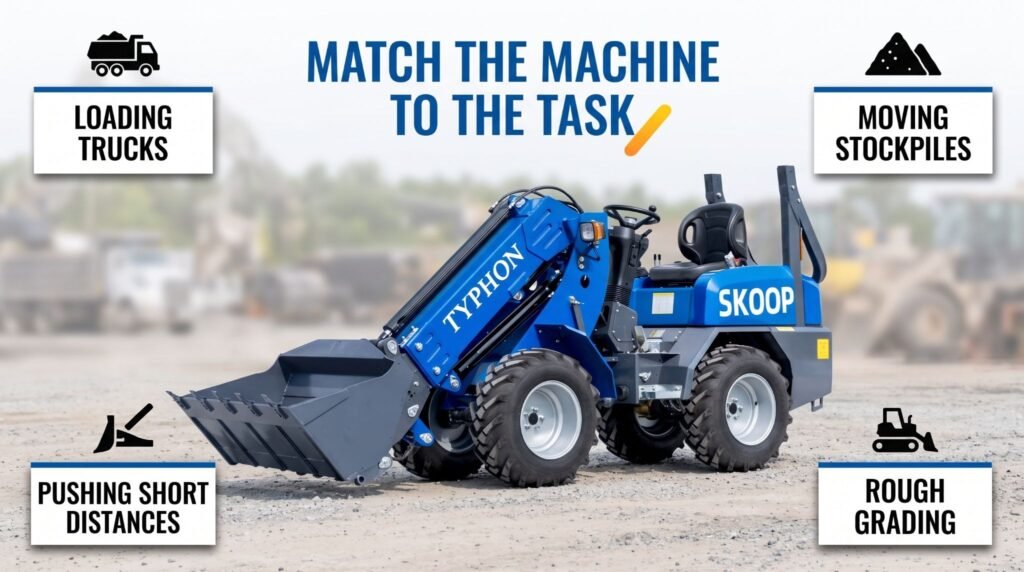
Match the Machine to the Task
Start with what the job actually requires. If you need to load trucks, feed a hopper, move stockpiles, or carry material across a yard, the wheel loader is your machine. If you need to push material short distances, strip topsoil, rough-grade a pad, backfill, or clear land, the bulldozer wins.
Name your primary task before anything else. Loading and hauling point to the loader, while pushing, spreading, and grading point to the dozer. Most sites have a dominant need, and identifying it settles the choice for the bulk of your work.
Typical Jobs for Each Machine
Certain jobs belong squarely to one machine. Wheel loaders own material handling: filling haul trucks in quarries and pits, loading aggregate at supply yards, moving snow, feeding crushers, and shifting stockpiles. Anywhere material needs lifting into something, the loader leads.
Bulldozers own site preparation and earthmoving: clearing land, stripping and stockpiling topsoil, rough-grading building pads and roads, pushing overburden, and backfilling. When the work is about shaping the ground and moving material a short push away, the dozer is the standard tool for the job.
When You Might Need Both
Large projects often need both machines working together, since they complement rather than replace each other. A common pattern has the dozer pushing and rough-grading material into a pile, then the loader scooping that pile up and loading it into trucks for hauling away.
If your work regularly spans both pushing and loading, plan for both rather than forcing one machine to do the other’s job poorly. For occasional needs, renting the second machine for specific phases keeps costs down.
Takeaway: choose a wheel loader when the work is loading and hauling and a bulldozer when it’s pushing and grading, and recognize that big jobs frequently need both, so match the machine to your dominant task before you buy or rent.
Frequently Asked Questions
What is the main difference between a wheel loader and a bulldozer?
The core difference is how each machine handles material. A bulldozer uses a front blade to push, cut, and spread material across the ground, and it rides on tracks for traction. A wheel loader uses a front bucket to scoop material, lift it high, and carry it to a truck or stockpile, and it rides on rubber tires for speed. In short, the dozer pushes and grades, while the loader scoops, lifts, and hauls.
Can a wheel loader do grading like a bulldozer?
Only to a limited degree. A wheel loader can rough-grade, backfill, and level loose material with its bucket in a pinch, but it can’t match a dozer’s precision or cutting power. A bulldozer’s blade is designed to cut into packed ground, slice slopes, and grade a surface accurately, while the loader’s bucket is built to scoop and lift. For serious grading and site shaping, the dozer is the correct machine.
Which machine is better for loading trucks?
The wheel loader, without question. It scoops material from a pile, raises its bucket high on lift arms, and dumps cleanly into a haul truck or hopper, cycle after cycle. A bulldozer physically cannot load a truck, because its blade only pushes material along the ground and has no way to lift a load. Any job centered on filling trucks calls for a loader.
Which works better on soft or muddy ground?
A bulldozer handles soft, muddy, sandy, or uneven ground far better. Its tracks spread the machine’s weight over a large area, giving low ground pressure and strong traction so it stays productive where a wheeled machine would sink or spin. A wheel loader needs firm, stable ground under its tires, so on soft or unprepared sites, the tracked dozer is the safer and more capable choice.
Do I need both a wheel loader and a bulldozer?
It depends on your work. Many large sites use both because they complement each other: the dozer pushes and rough-grades material into piles, and the loader scoops those piles into trucks for hauling. If your jobs regularly involve both pushing and loading, owning or renting both makes sense. If one task clearly dominates your work, a single machine matched to that task will usually serve you well.
Conclusion
Telling a wheel loader and a bulldozer apart ultimately comes down to recognizing that they move material in opposite ways, since the bulldozer drives a low blade forward on its tracks to push, cut, spread, and grade material across the ground, thriving on soft, sloped, and unprepared sites, while the wheel loader drives a bucket into a pile on its rubber tires to scoop, lift, and haul material into trucks and stockpiles, excelling on firm, developed ground where speed and lift height matter, so rather than treating the two as interchangeable earthmovers because they share a size and a color, look honestly at what your job actually demands by asking whether you mainly need to push and shape the ground or to load and carry material, then confirm your terrain supports the machine you’re leaning toward, and remember that big projects often need both working in tandem with the dozer feeding piles the loader then loads out; get that match right and each machine does the work it was built for instead of struggling at the other’s job, and when you’re ready to pair the right machine with your site and your workload, reach out to a trusted equipment specialist who can match dependable equipment to the results your projects depend on.