How Hydraulic Flow Affects Wheel Loader Fuel Efficiency
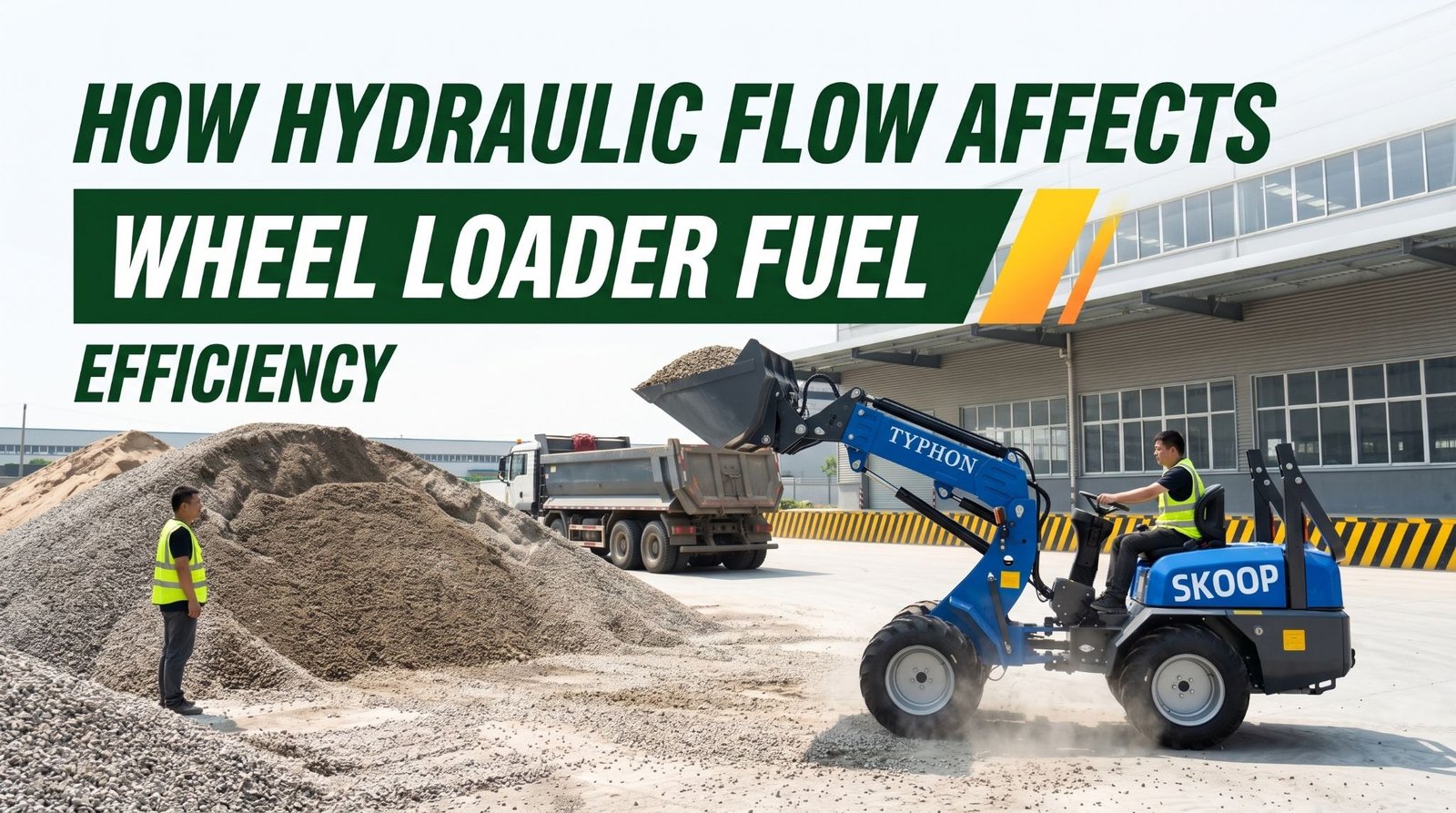
Wheel loaders can carry identical buckets, run the same shift, and haul comparable tonnage, yet post very different fuel bills at week’s end. A large part of that gap lives in the hydraulic circuit, specifically in how much fluid the pumps push and how hard the engine works to supply it. Hydraulic flow, measured in liters or gallons per minute, sets how fast the loader lifts, tilts, and steers. It also draws directly on engine output, so every gallon of fluid moved carries a fuel cost. Owners who chase fuel savings by watching the tank alone often overlook the hydraulic side, where a mismatched circuit quietly drinks diesel all day.
Flow matters because it sits between the engine and the work. Feed the hydraulics correctly, and the loader lifts briskly while the engine stays in its efficient band. Supply too much or too little, and fuel disappears into wasted effort. This post walks through how the hydraulic system operates, how flow drives fuel burn, where mismatched flow leaks money, and how to size a circuit that pays you back.
How the Hydraulic System Works in a Wheel Loader
A wheel loader moves its bucket through hydraulics, not cables or mechanical linkages. The diesel engine drives one or more hydraulic pumps, and those pumps pressurize fluid and route it to the lift and tilt cylinders that raise the arms and curl the bucket. The same circuit often powers the steering and any auxiliary attachments as well.
Two properties define what the circuit delivers. Flow, the volume of fluid moved per minute, sets how fast the cylinders extend and therefore how quickly the loader works. Pressure, the force behind that fluid, sets how much weight the machine can lift. Both come from the engine, and both cost fuel to produce.
Many modern loaders use load-sensing pumps that supply only the flow a function actually calls for, rather than pumping full volume constantly. That design already targets fuel savings, but it only pays off when the circuit is sized to match the real work.
Key takeaway: The engine drives the pumps that supply hydraulic flow and pressure, and both properties draw fuel, so how the circuit is fed shapes consumption directly.
How Flow Demand Affects Engine Load and Fuel Burn
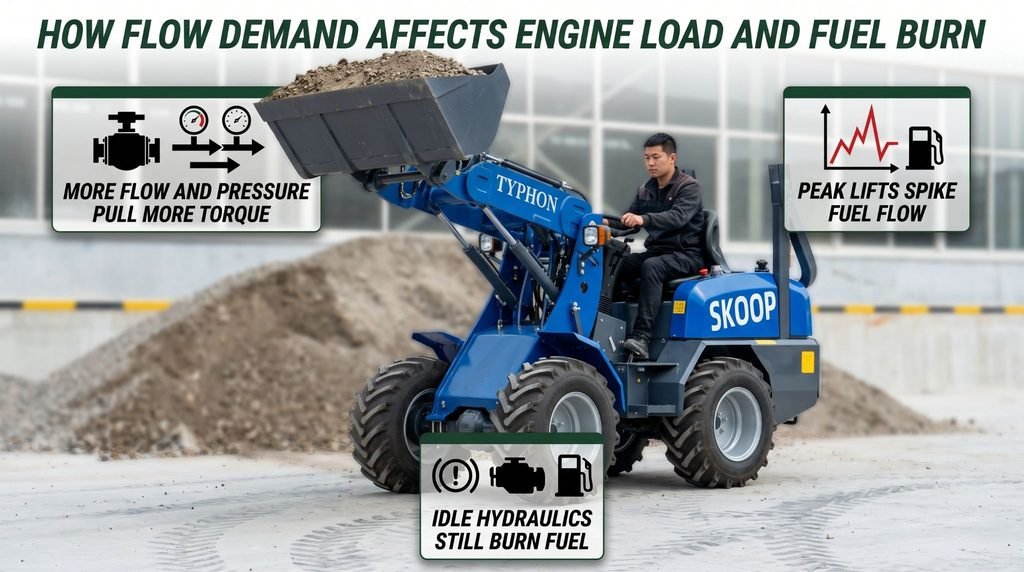
Every time an operator lifts a full bucket or curls it hard, the pumps demand more flow at higher pressure. Meeting that demand pulls torque from the engine, and supplying torque burns diesel. The heavier and faster the hydraulic call, the more the engine has to give, and the more fuel it consumes to answer.
You’ll notice this most during peak functions. Raising a loaded bucket to full height while accelerating away from a pile stacks hydraulic demand on top of traction demand, and the engine works near its ceiling to serve both. At that moment, fuel flow spikes. A circuit tuned to deliver flow smoothly keeps the engine in its efficient rev band, while a poorly matched one forces the engine to labor or race to keep pace.
Here’s the part most operators miss: idle time with the hydraulics active still burns fuel. Holding pressure, feathering the joystick, or leaving the pump loaded during pauses all draw diesel with nothing to show for it.
Key takeaway: Higher flow demand pulls more torque from the engine, and every unit of torque costs diesel, so how and when you call for flow directly sets fuel burn.
How Over-Specced or Under-Specced Flow Wastes Fuel
A hydraulic circuit sized wrong in either direction quietly drains the tank. Both mismatches cost money, just through different mechanisms.
When Flow Is Over-Specced
An oversized pump or a circuit built for more flow than the job needs pushes surplus fluid the machine never uses. That excess still has to be pumped, and pumping it costs fuel, even when much of it bleeds off across relief valves as heat. You gain little speed and pay a steady premium in diesel, plus added strain on the cooling system as wasted energy turns into heat.
When Flow Is Under-Specced
Too little flow forces the engine to run harder and longer to complete each cycle. Lift times stretch, the operator holds functions longer, and the machine spends more seconds under load per bucket. Across hundreds of cycles a day, those extra seconds compound into extra fuel and lost throughput. An undersized circuit also tempts operators to hold high revs to squeeze out speed, pushing consumption higher.
Key takeaway: Over-specced flow burns fuel pumping fluid you never use, while under-specced flow burns it dragging out every cycle, so matching flow to the work is the goal in both directions.
How Duty Cycle and Load Conditions Interact With Flow
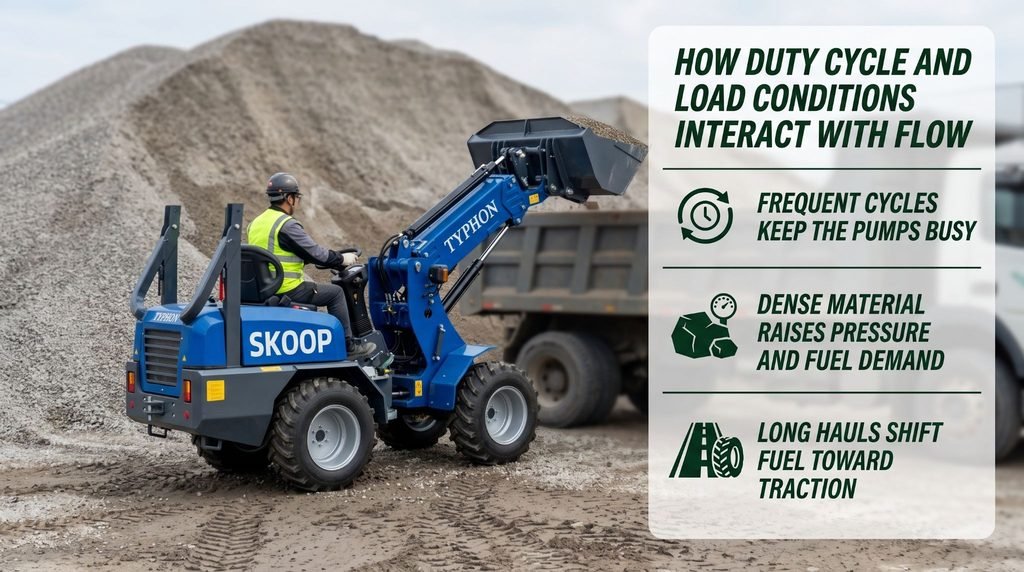
Flow demand never sits still through a shift. A loader running short, repetitive load-and-carry cycles calls on the hydraulics constantly, with frequent lift and tilt commands that keep the pumps busy. A machine doing occasional cleanup or light grading asks far less. Your duty cycle shapes how flow translates into fuel over the day.
Load conditions layer on top. Dense, sticky material resists the bucket, raising the pressure the pumps must build and the fuel the engine must supply. Light, loose material flows easily, so the same lift costs less. A loader working wet clay all shift draws more hydraulic fuel than one handling dry aggregate, even at identical cycle counts.
Site layout counts too. Long haul distances shift the fuel balance toward traction and away from hydraulics, while tight, high-cycle loading keeps the hydraulic circuit dominant in the fuel equation. Reading your own pattern tells you where fuel actually goes.
Key takeaway: Duty cycle, material density, and site layout decide how much of your fuel flows through the hydraulics, so the same machine burns very differently across jobs.
Best Practices for Managing Hydraulic Flow to Save Fuel
You control more of your hydraulic fuel burn than the spec sheet suggests. A handful of disciplined habits keep the circuit efficient and the engine in its sweet spot.
- Run the engine in its efficient band. Avoid holding full throttle when the work doesn’t require it. Many loaders deliver ample hydraulic flow at moderate revs, where fuel efficiency peaks.
- Smooth out joystick inputs. Abrupt, full-stroke commands spike flow demand and fuel draw. Measured inputs let load-sensing systems supply only what’s needed.
- Match the attachment to the circuit. Running a high-flow tool off a circuit not built for it forces the engine to strain and waste fuel.
- Limit loaded idling. Lower the bucket and ease off the hydraulics during pauses rather than holding pressure that burns diesel for nothing.
- Keep fluid and filters healthy. Clean fluid at the right level and clean filters let the pumps move flow efficiently, so the engine works less to deliver it.
- Watch hydraulic temperature. Overheating fluid signals wasted energy and thins the oil, making the whole circuit work harder and burn more.
Applied together, these habits recover a meaningful share of the diesel that a careless or mismatched circuit quietly spends.
Key takeaway: Running efficient revs, smoothing inputs, matching attachments, and maintaining clean, cool fluid keep hydraulic flow productive and fuel burn in check.
Conclusion
Hydraulic flow and fuel efficiency are tied together through the engine, because supplying flow demands torque, and torque burns diesel. A circuit matched to your work keeps the engine in its efficient band and completes cycles quickly, while a mismatched one wastes fuel either pumping fluid you never use or dragging out every lift. Read your duty cycle and material, manage your inputs and maintenance, and size the circuit to the job, and your wheel loader will move more material per gallon across every shift.
Frequently Asked Questions
Why does my wheel loader burn more fuel during heavy lifting than while driving?
The extra fuel goes into the hydraulics. Lifting a loaded bucket demands high flow at high pressure, and the pumps supplying that fluid pull substantial torque from the engine. Producing torque burns diesel, so a hard lift, especially raising a full bucket to height, spikes fuel draw well above light travel. Dense or sticky material raises the demand further, since the bucket meets more resistance and the pumps must build higher pressure. Driving unloaded, by contrast, asks far less of the hydraulic circuit. If your fuel use climbs during loading and stacking, that’s the hydraulics doing heavy work, which is normal rather than a fault. Smooth joystick inputs and moderate engine revs help keep that demand efficient.
Is a loader with higher hydraulic flow always more fuel efficient?
No, and often the opposite. Higher flow means faster cycles only if your work actually uses that speed. A circuit specified beyond your needs pumps surplus fluid the machine never applies, and that excess still costs fuel to move, frequently bleeding off as wasted heat. You pay a steady diesel premium for capacity you don’t tap. The efficient choice is flow matched to your real cycle pace and material, ideally through a load-sensing system that supplies only what each function calls for. Too little flow wastes fuel by dragging out cycles, while too much wastes it pumping unused fluid, so the goal is a circuit sized to the job rather than the largest number available.
How can I reduce the fuel my hydraulics use without slowing the work?
Start by running the engine in its efficient band rather than holding full throttle, since many loaders deliver ample flow at moderate revs where fuel economy peaks. Smooth your joystick inputs so the system isn’t spiking with abrupt full-stroke commands, and lower the bucket to ease off the hydraulics during pauses instead of holding pressure that burns diesel for nothing. Keep the hydraulic fluid clean and at the right level, replace filters on schedule, and watch fluid temperature, because a healthy, cool circuit lets the pumps move and flow with less engine effort. Finally, match any attachment to the circuit built to feed it. Together these steps trim fuel use while keeping cycle speed and output intact.