
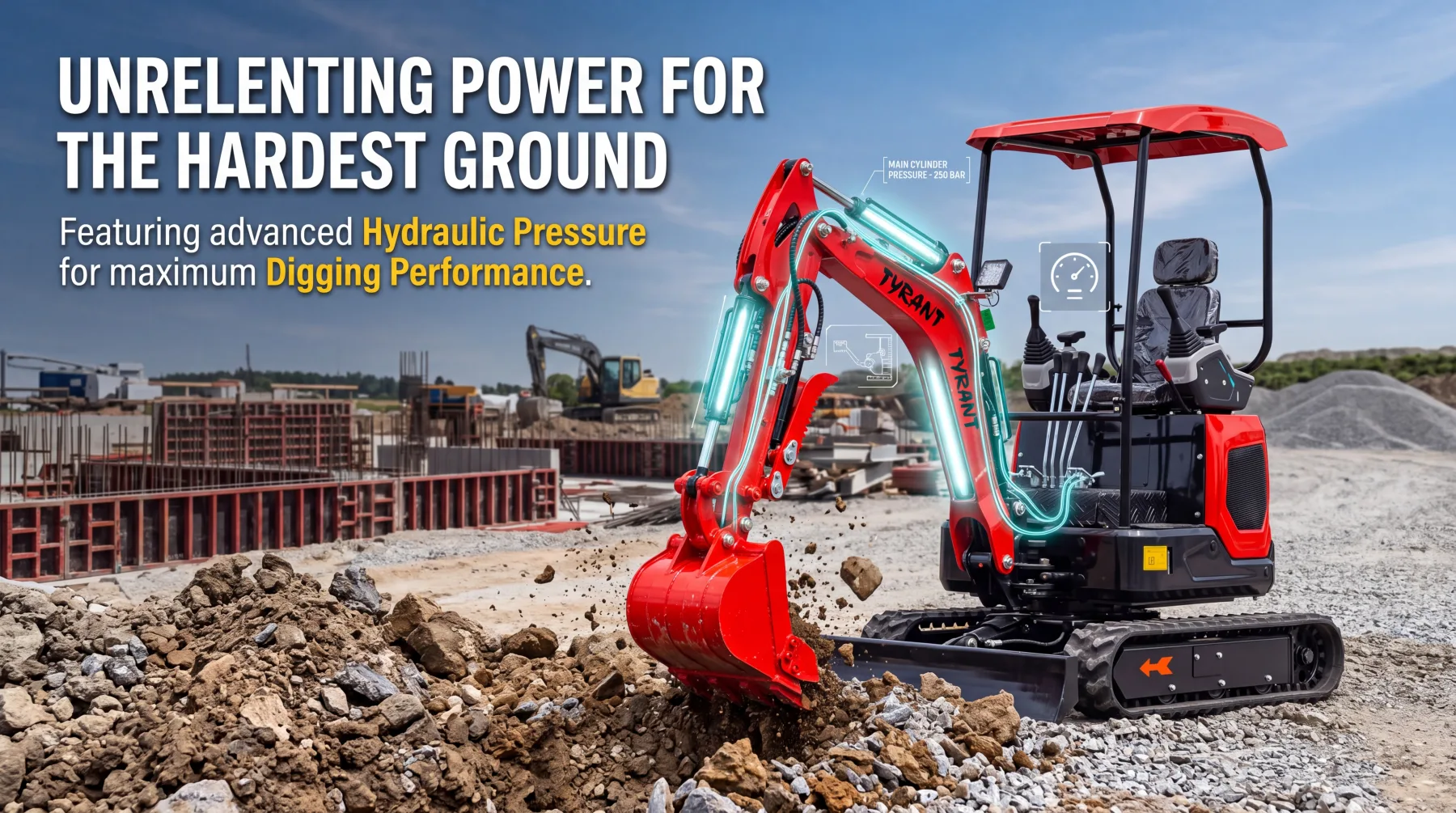
Why Hydraulic Pressure Matters for Digging Performance
An excavator’s ability to dig comes down to something you cannot see directly but feel in every movement: hydraulic pressure. It is the invisible muscle behind the boom, arm, and bucket, converting engine power into the force that breaks through soil, rock, and debris. When an operator watches a bucket bite into compacted ground with ease, hydraulic pressure is doing the heavy lifting. Understanding how it works, how it differs from flow, and what keeps it performing at its best helps operators and buyers get the most from their machines. This guide explains why hydraulic pressure matters so much, how it shapes digging force, what influences it, and how to choose the right system for your work.
Understanding Hydraulic Pressure in Excavators
Hydraulic pressure is the force that powers an excavator’s boom, arm, and bucket movements, and it sits at the very heart of how the machine works. Inside the excavator, a pump pressurizes hydraulic fluid and sends it through hoses and cylinders. As that pressurized fluid pushes against the pistons in each cylinder, it creates the powerful, controlled motion that raises the boom, extends the arm, and curls the bucket. In simple terms, pressure is what turns engine power into physical digging force, and without adequate pressure, even a large machine would struggle to move earth.
The relationship between pressure and performance is direct and practical. Higher pressure allows the machine to apply greater force, which is exactly what you need when digging through compact soil and heavy materials. A machine with strong hydraulic pressure can push its bucket into dense, resistant ground and pry loose material that a weaker system would fail to budge. This is why pressure ratings appear so prominently in excavator specifications and why they matter so much to anyone judging a machine’s real capability.
Understanding pressure also helps operators work more effectively. When you know that pressure supplies the force behind every dig, you can appreciate why the machine performs the way it does under load and why demanding materials call for a system built to deliver strong, consistent pressure. It explains why some machines power through tough conditions while others stall or strain. Hydraulic pressure is not an abstract figure buried in a spec sheet; it is the foundation of everything the excavator accomplishes in the ground. Grasping this fundamental principle sets the stage for understanding how pressure works alongside flow, how it shapes digging force, and how to keep it performing reliably shift after shift.
Hydraulic Pressure vs. Hydraulic Flow
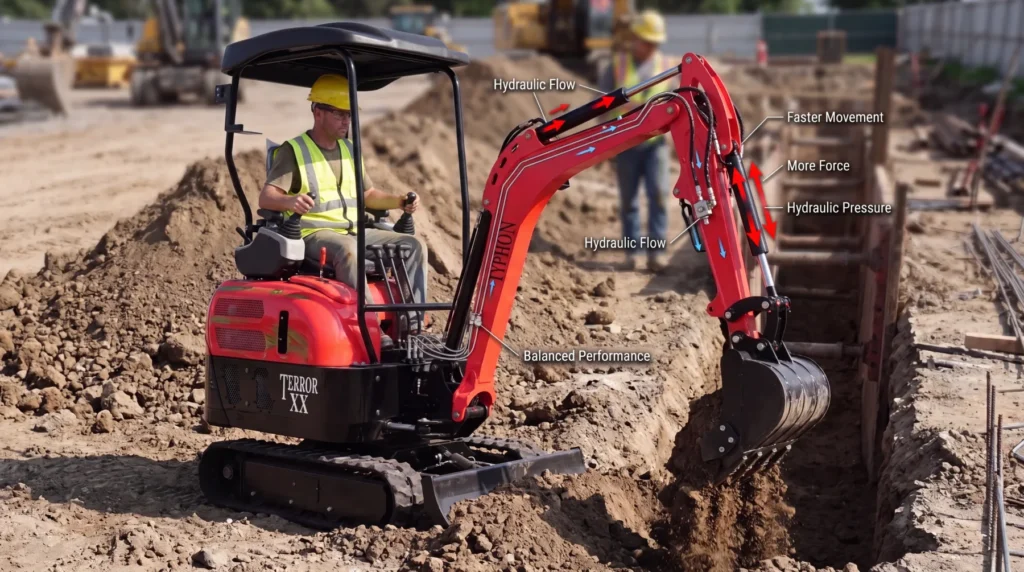
Pressure and flow are often mentioned in the same breath, yet they serve very different purposes, and confusing the two leads to misunderstandings about how an excavator performs. Pressure, as we have seen, provides the digging force, the raw power the machine uses to break into and move material. Flow, by contrast, refers to the volume of hydraulic fluid moving through the system over time, and it determines how quickly the hydraulic functions operate. In other words, pressure decides how hard the machine can push, while flow decides how fast it can move.
A simple way to picture the difference is to think of the two working together during a dig. Pressure gives the bucket the strength to penetrate hard ground, while flow governs how fast the boom lifts, the arm swings, and the bucket curls. A machine with high pressure but low flow may dig powerfully yet feel sluggish, while one with high flow but low pressure may move quickly yet lack the muscle to handle tough material. Neither extreme delivers ideal performance on its own.
The key point is balance, because both must work together for the machine to perform at its best:
- Pressure supplies the force needed to dig through resistant material.
- Flow controls the speed and responsiveness of every hydraulic movement.
- Balance between the two produces smooth, powerful, and efficient operation.
When pressure and flow are matched well, the excavator digs with both strength and speed, completing cycles quickly without sacrificing the force needed for demanding work. That balance is what separates a machine that feels powerful and responsive from one that feels underpowered or slow. For anyone evaluating an excavator, looking at pressure and flow together, rather than either figure alone, gives a far more accurate sense of how the machine will perform on real jobs.
How Hydraulic Pressure Affects Digging Force
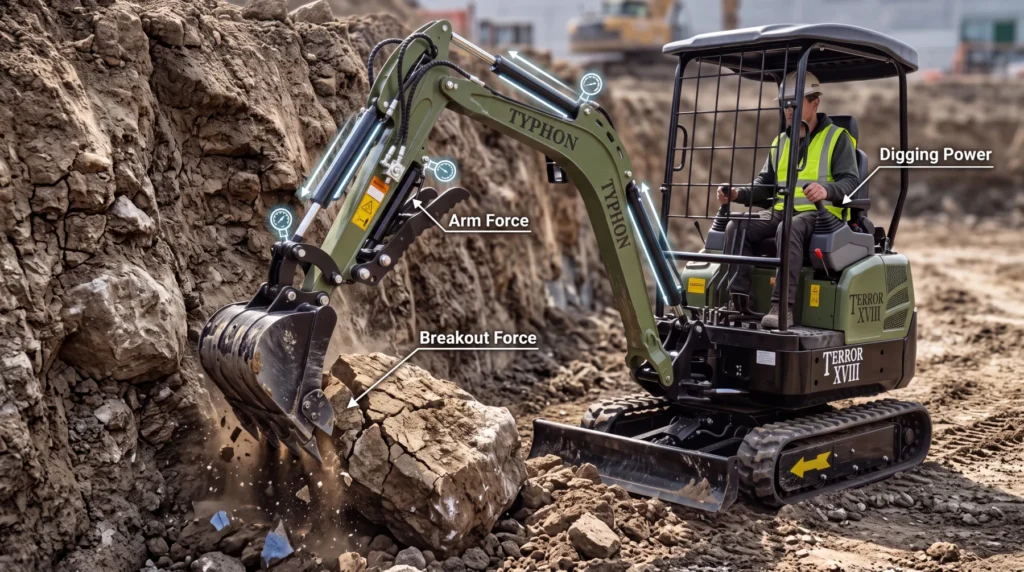
The most tangible effect of hydraulic pressure shows up in digging force, the power the machine brings to bear at the cutting edge. An excavator with adequate hydraulic pressure can generate stronger bucket breakout force and arm force, and these two figures largely determine how well the machine handles tough ground. Breakout force is the power the bucket uses to break free and pry loose material once its teeth have engaged, while arm force, sometimes called crowd force, is the power that drives the bucket through the material. Both depend heavily on the pressure the system can deliver.
Strong digging force translates directly into better performance in demanding conditions. With sufficient pressure behind it, the bucket penetrates hard, compacted ground more easily, cutting into material that would stop a weaker machine. That improved penetration reduces the effort required to complete each dig, because the machine does the work rather than forcing the operator to make repeated attempts at stubborn ground. The result is smoother, more confident digging that keeps the operator productive rather than fighting the material.
The productivity gains follow naturally from this added force. When an excavator digs powerfully and penetrates cleanly, it moves more material in each cycle and completes tasks faster. Fewer stalled attempts mean less wasted time, and consistent digging force keeps the whole operation flowing steadily. Over the course of a shift, that efficiency adds up to meaningful gains in output, which is exactly what businesses expect from capable equipment. Strong hydraulic pressure, then, is not just about raw power for its own sake; it is about turning that power into practical results. A machine that generates ample breakout and arm force digs harder, works faster, and delivers the reliable, productive performance that demanding excavation work requires.
Factors That Influence Hydraulic Performance
Hydraulic performance is not a fixed quality; it depends on several factors working together, and keeping each in good condition is essential to maintaining consistent digging power. Pump efficiency is one of the most important. The hydraulic pump is responsible for pressurizing the fluid that drives every movement, so a pump in good working order delivers strong, steady pressure, while a worn or failing pump loses the ability to generate the force the machine needs. Because the pump sits at the source of hydraulic power, its condition directly shapes how well the entire system performs.
The hydraulic fluid itself plays an equally vital role, and its condition deserves close attention. Clean, properly maintained fluid transmits pressure efficiently, while contaminated, degraded, or low fluid undermines performance and can damage components over time. Operating temperature matters too, since hydraulic systems are designed to work within a specific range. Fluid that runs too hot thins out and loses effectiveness, while a system that overheats strains its components and risks lasting damage.
Several key factors determine how reliably an excavator delivers its digging power:
- Pump efficiency, which governs how strongly the system generates pressure.
- Hydraulic fluid condition, ensuring pressure transmits cleanly and efficiently.
- System maintenance, keeping hoses, seals, and components in sound working order.
- Operating temperature, kept within range so fluid and parts perform as intended.
Regular, thorough maintenance ties all of these factors together and protects the machine’s performance over the long term. Checking fluid levels and quality, replacing filters, inspecting hoses and seals for leaks, and monitoring operating temperature all help keep the hydraulic system delivering consistent power. A well-maintained machine performs reliably day after day, while a neglected one loses force gradually until the drop in performance becomes impossible to ignore. Treating hydraulic care as a priority is one of the surest ways to protect both digging power and the machine’s overall dependability.
Choosing the Right Hydraulic System for Your Work
Different applications require different levels of hydraulic performance, and matching the system to your work is one of the most important decisions when selecting an excavator. It can be tempting to assume that more pressure is always better, but the smarter approach is to match the machine’s capability to the demands you actually face. A system built for the most punishing excavation may carry size and cost that lighter work simply does not justify, while a machine suited to gentle tasks will struggle if pushed into heavy digging it was never designed for.
Consider the nature of your typical projects carefully. Light landscaping, fine grading, and general property work place modest demands on a hydraulic system, so a machine with moderate pressure handles them comfortably and economically. Demanding excavation, by contrast, such as digging through compacted or rocky ground, breaking hard material, or working continuously under heavy load, calls for a robust system that delivers strong, sustained pressure. Choosing a machine whose hydraulic performance suits your work ensures it completes tasks efficiently without strain and without the expense of capability you rarely use.
A few practical questions help guide the decision toward the right fit:
- How tough is the material you dig most often, from loose soil to compacted or rocky ground?
- How heavy and continuous is your typical workload throughout a shift?
- How demanding are your most challenging jobs, and how often do they occur?
Answering these honestly points you toward a machine matched to your real needs rather than an extreme at either end. A contractor tackling heavy excavation daily needs a powerful hydraulic system built to sustain force under load, while a landscaper handling lighter work benefits from a machine sized appropriately for those tasks. Selecting the right hydraulic performance for your work maximizes both efficiency and jobsite productivity, giving you a machine that digs capably, runs economically, and serves your projects dependably for years.
Conclusion
Hydraulic pressure is the driving force behind everything an excavator accomplishes in the ground, powering the boom, arm, and bucket with the force needed to dig through compact soil and heavy material. Understanding how it differs from flow clarifies that pressure supplies the digging force while flow controls speed, and that both must be balanced for smooth, powerful performance. That pressure directly shapes bucket breakout and arm force, improving penetration into hard ground, reducing digging effort, and boosting productivity. Keeping hydraulic performance consistent depends on pump efficiency, clean fluid, sound maintenance, and proper operating temperature, all of which protect the machine’s power over time. Finally, matching the hydraulic system to your work, whether light landscaping or demanding excavation, ensures maximum efficiency and dependable results. Choose a machine suited to your real demands, care for its hydraulics well, and it will deliver reliable digging power on every job.