How to Choose the Right Wheel Loader for Your Business
Introduction
In industries such as construction, agriculture, mining, landscaping, and material handling, productivity and efficiency are essential for success. Businesses constantly look for equipment that can reduce manual labor, increase output, and improve operational performance. One of the most valuable machines for achieving these goals is the wheel loader.
A wheel loader is a powerful and versatile machine designed to scoop, lift, transport, and dump materials quickly and efficiently. From moving gravel on construction sites to handling feed on farms, wheel loaders are widely used across multiple industries because of their flexibility and reliability.
However, choosing the right wheel loader is not as simple as selecting the biggest or most powerful machine available. Every business has unique requirements, and selecting the wrong loader can result in high operating costs, poor efficiency, increased downtime, and reduced productivity. The right machine should match your workload, operating environment, and long-term business goals.
This guide explains everything businesses need to know about selecting the ideal wheel loader, including machine types, key specifications, operational considerations, benefits, and best practices for maximizing return on investment.
What Is a Wheel Loader?
A wheel loader, also known as a front-end loader or bucket loader, is a heavy-duty machine equipped with a large front-mounted bucket attached to hydraulic arms. The machine is designed to lift, scoop, move, and dump materials such as:
- Dirt
- Sand
- Gravel
- Snow
- Rock
- Feed
- Waste materials
- Demolition debris
Unlike tracked loaders, wheel loaders use rubber tires, which provide greater speed, mobility, and maneuverability on various surfaces.
Wheel loaders are commonly used in:
- Construction projects
- Agricultural operations
- Mining and quarrying
- Landscaping
- Recycling facilities
- Waste management
- Snow removal operations
Because of their versatility and ability to work with different attachments, wheel loaders are considered one of the most valuable machines in material handling operations.
Why Choosing the Right Wheel Loader Matters
Selecting the right wheel loader directly impacts your business performance. A machine that matches your operational requirements can significantly improve productivity, reduce operating costs, and enhance workplace safety.
However, choosing the wrong machine can create several problems:
- Reduced efficiency
- Increased fuel consumption
- Higher maintenance costs
- Excessive wear and tear
- Operator fatigue
- Project delays
For example, an undersized loader may struggle to handle heavy materials, forcing operators to work longer hours and placing additional stress on the machine. On the other hand, an oversized loader may consume unnecessary fuel and cost more to maintain.
The ideal wheel loader is one that balances power, efficiency, versatility, and operating costs according to your specific business needs.
Understanding Your Operational Needs
Before purchasing a wheel loader, businesses must first evaluate their operational requirements carefully.
1. Material Type and Density
The type of material being handled plays a major role in determining the correct loader size and bucket capacity.
Light Materials
Examples include:
- Snow
- Mulch
- Wood chips
- Feed
These materials allow larger bucket capacities because they weigh less.
Heavy Materials
Examples include:
- Rock
- Gravel
- Ore
- Wet soil
Dense materials require stronger lifting capacity and more engine power.
Understanding material density helps businesses choose the correct machine without overloading equipment.
2. Volume of Material
Businesses moving large quantities of material daily require wheel loaders with:
- Higher bucket capacity
- Faster cycle times
- More engine power
For example, a construction company loading dozens of dump trucks every day needs a machine capable of moving materials efficiently in fewer passes.
3. Work Environment
The operating environment significantly affects wheel loader performance.
Tight Spaces
Compact construction sites or warehouses require:
- Small wheel loaders
- Tight turning radius
- Excellent maneuverability
Open Areas
Large mines or quarries can accommodate:
- Large wheel loaders
- Higher horsepower
- Bigger buckets
Terrain conditions also matter. Muddy, rocky, or uneven surfaces may require specialized tires and additional stability.
4. Haul Distance
Short-distance material movement often favors compact and agile loaders. Longer haul distances may require larger machines with higher travel speeds.
5. Loading Height
Businesses must ensure the loader has sufficient:
- Dump height
- Reach
- Lift capability
This is especially important when loading:
- Dump trucks
- Hoppers
- Feed mixers
- Processing equipment
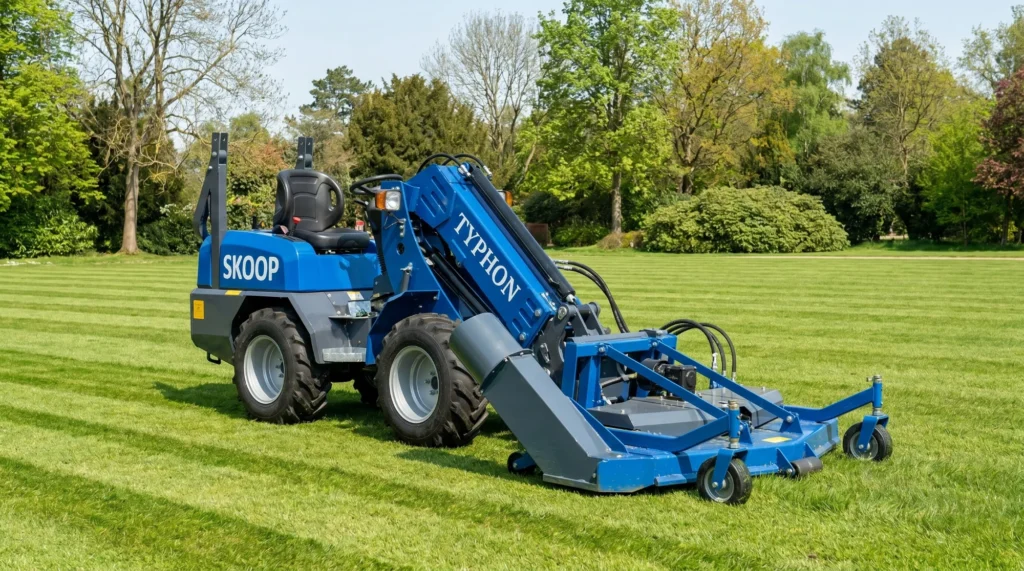
6. Attachment Requirements
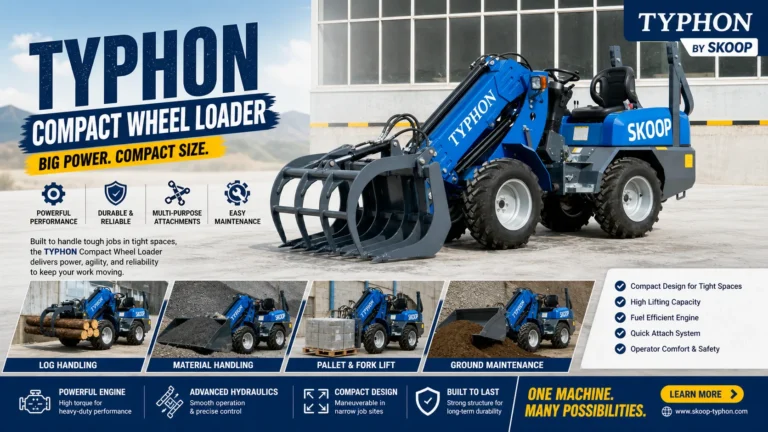
Modern wheel loaders support multiple attachments, including:
- Forks
- Grapples
- Snowplows
- Sweepers
- Brooms
Attachment compatibility increases versatility and allows one machine to perform several tasks.
Types of Wheel Loaders
Wheel loaders are generally categorized into three main size groups.
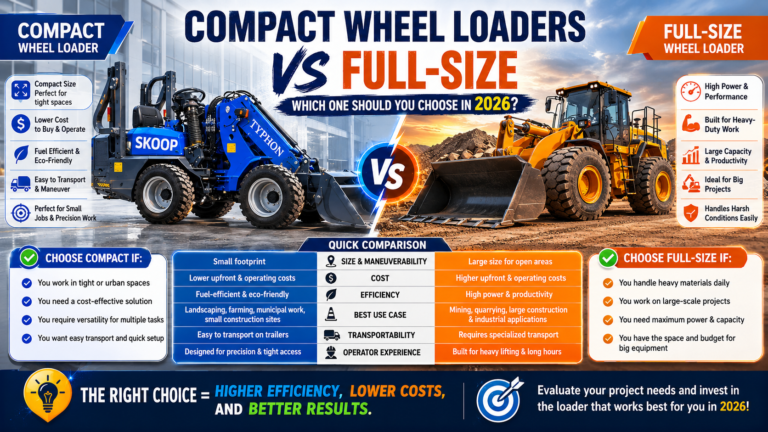
Compact Wheel Loaders
Features
- Small size
- High maneuverability
- Lower operating weight
- Versatile attachment options
Best For
- Landscaping
- Small farms
- Light construction
- Snow removal
- Municipal work
Advantages
- Easy to transport
- Excellent in confined spaces
- Lower fuel consumption
Medium Wheel Loaders
Features
- Balanced power and efficiency
- Moderate bucket capacity
- Good versatility
Best For
- General construction
- Agriculture
- Material handling
- Industrial operations
Advantages
- Most versatile category
- Suitable for various applications
- Strong productivity performance
Large Wheel Loaders
Features
- High horsepower
- Massive bucket capacity
- Heavy-duty construction
Best For
- Mining
- Quarrying
- Port operations
- Large infrastructure projects
Advantages
- Maximum productivity
- Exceptional durability
- Handles extreme workloads
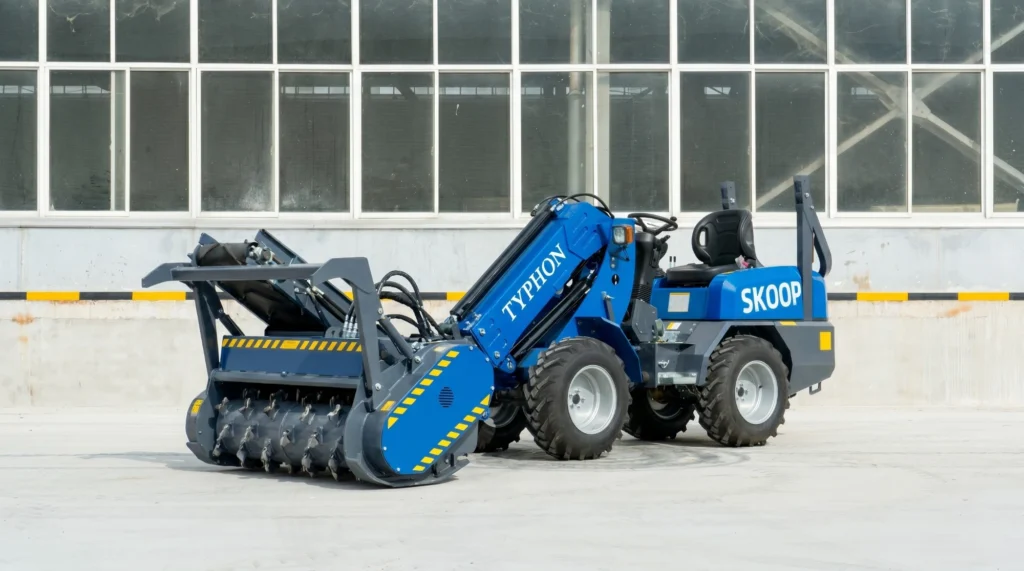
Key Specifications to Consider
1. Operating Weight
Operating weight affects:
- Stability
- Durability
- Lifting capability
Heavier machines are generally more stable when lifting large loads.
2. Engine Horsepower
Horsepower determines the loader’s ability to:
- Handle heavy materials
- Operate on steep terrain
- Maintain productivity under load
Higher horsepower is essential for demanding applications.
3. Bucket Capacity
Bucket capacity directly impacts productivity.
Larger buckets allow operators to move more material per cycle, reducing loading times.
However, bucket size must match:
- Material density
- Lift capacity
- Machine stability
4. Lift Capacity
Lift capacity indicates the maximum safe load the machine can handle.
Choosing insufficient lift capacity can damage the machine and reduce efficiency.
5. Dump Height and Reach
These specifications determine whether the loader can efficiently load materials into trucks or equipment.
6. Turning Radius
Turning radius is important in confined spaces.
Compact wheel loaders offer superior maneuverability for tight work areas.
7. Fuel Efficiency
Fuel costs represent a major operating expense.
Modern wheel loaders often include:
- Eco-modes
- Smart engine systems
- Automatic idle management
These technologies help reduce fuel consumption and operating costs.
Benefits of Choosing the Right Wheel Loader
Increased Productivity
The right machine improves efficiency by:
- Reducing cycle times
- Moving more material
- Completing jobs faster
This allows businesses to increase output and meet project deadlines more effectively.
Lower Operating Costs
Properly matched machines experience:
- Less wear and tear
- Lower fuel consumption
- Reduced maintenance expenses
This lowers total ownership costs over time.
Improved Safety
Modern wheel loaders include advanced safety systems such as:
- Rearview cameras
- Object detection sensors
- Rollover protection structures
- Improved visibility
These features reduce accidents and improve operator safety.
Enhanced Operator Comfort
Comfortable operators are more productive.
Modern cabs include:
- Ergonomic controls
- Adjustable seating
- Climate control systems
- Reduced noise levels
These features minimize operator fatigue during long shifts.
Greater Versatility
Attachments allow wheel loaders to perform multiple tasks using one machine.
This reduces the need for additional equipment and improves equipment utilization.
New vs. Used Wheel Loaders
Buying New
Advantages
- Latest technology
- Better fuel efficiency
- Full warranty
- Lower maintenance needs
- Advanced safety features
Disadvantages
- Higher upfront cost
- Faster initial depreciation
Buying Used
Advantages
- Lower purchase price
- Reduced depreciation
- Immediate availability
Disadvantages
- Potential maintenance issues
- Limited warranty
- Unknown service history
Businesses purchasing used wheel loaders should always inspect the machine carefully and review maintenance records.
Importance of Maintenance
Proper maintenance is essential for maximizing wheel loader lifespan and performance.
Daily Inspections
Operators should check:
- Fluid levels
- Tire condition
- Hydraulic systems
- Lights and brakes
- Visible leaks
Scheduled Maintenance
Businesses should follow manufacturer service schedules for:
- Oil changes
- Filter replacements
- Lubrication
- Hydraulic maintenance
Preventive maintenance reduces breakdowns and downtime.
Tire Management
Tires are a major operating cost.
Maintaining proper tire pressure and monitoring wear helps improve:
- Fuel efficiency
- Stability
- Tire lifespan
Operator Training
Even the best wheel loader will underperform without skilled operators.
Training should include:
- Safe operation
- Efficient loading techniques
- Attachment usage
- Daily inspections
- Fuel-saving practices
Well-trained operators improve productivity while reducing machine wear and fuel consumption.
Technology and Telematics
Modern wheel loaders often include telematics systems that provide real-time data on:
- Fuel consumption
- Machine location
- Idle time
- Maintenance alerts
- Performance metrics
Telematics help businesses:
- Improve fleet management
- Reduce operating costs
- Increase uptime
- Schedule preventive maintenance
These systems are becoming increasingly important for large operations.
Best Practices for Maximizing Investment
To maximize return on investment, businesses should:
- Match the machine to the workload
- Train operators properly
- Perform preventive maintenance
- Minimize excessive idling
- Avoid overloading buckets
- Use correct attachments
- Monitor telematics data
These practices improve machine lifespan, productivity, and profitability.
Conclusion
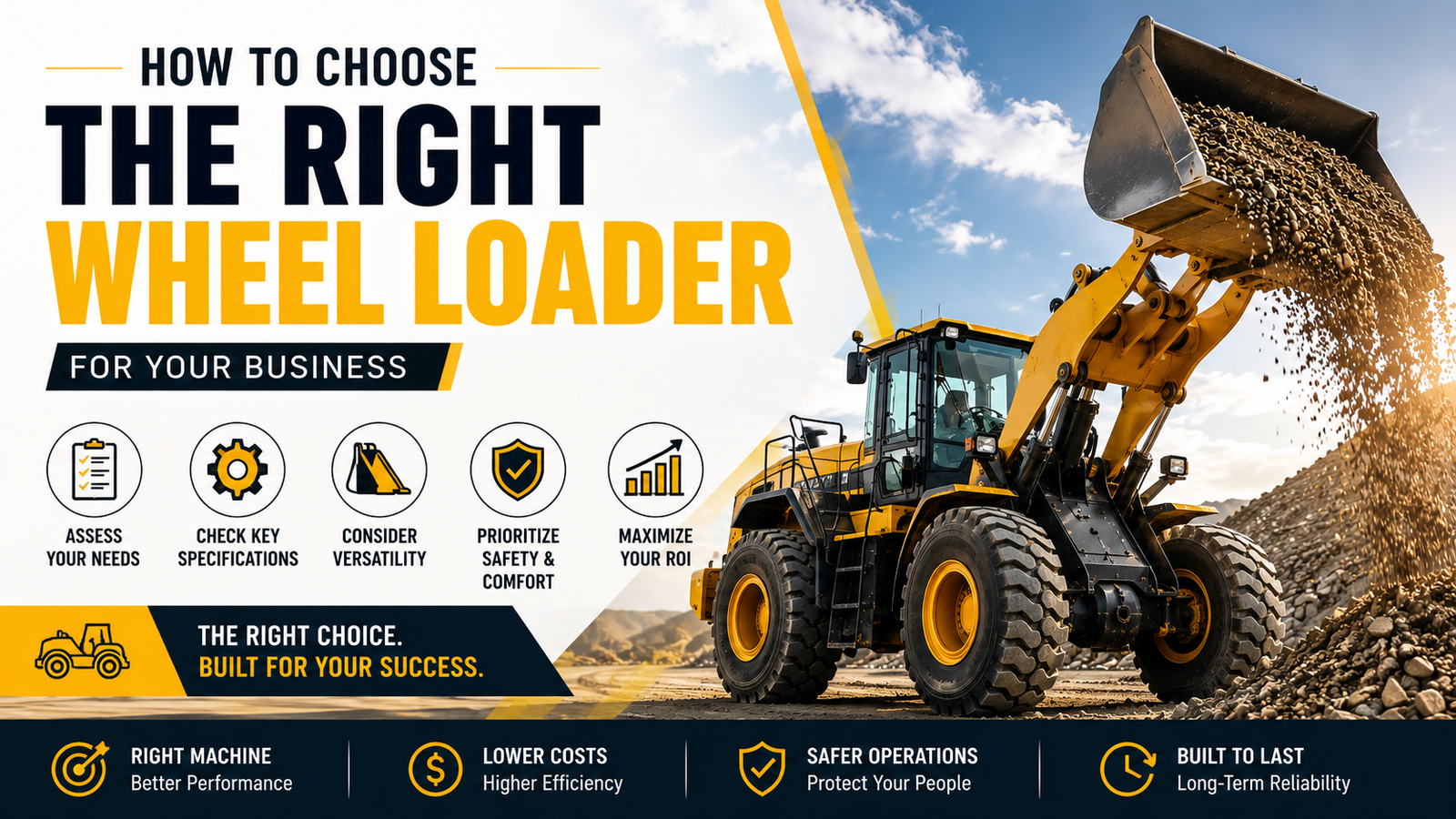
Choosing the right wheel loader for your business is a major investment that affects efficiency, productivity, safety, and long-term profitability. The ideal wheel loader is not necessarily the largest or most expensive machine, but the one that best matches your operational requirements.
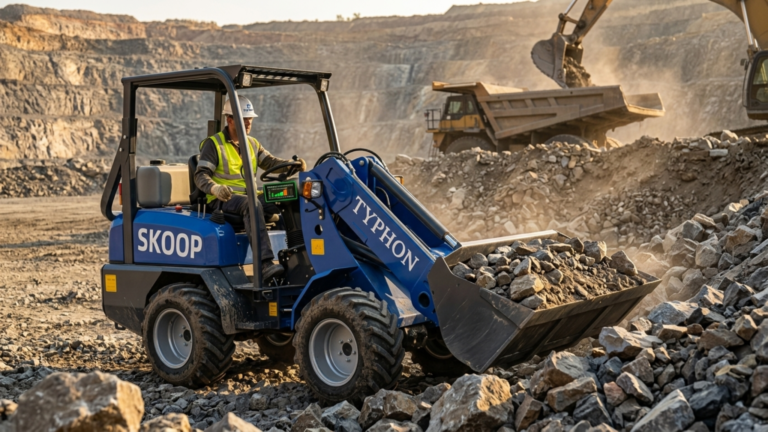
Businesses must carefully evaluate factors such as: Skoop Wheel loader attachment
- Material type
- Work environment
- Bucket capacity
- Lift capability
- Fuel efficiency
- Attachment compatibility
- Operator comfort
A properly selected wheel loader can significantly improve workflow, reduce operating costs, and enhance overall business performance. Combined with proper maintenance, operator training, and smart operational practices, the right machine becomes a valuable long-term asset that supports business growth and operational success.
By understanding your needs and evaluating all key factors carefully, you can confidently choose a wheel loader that delivers maximum efficiency, reliability, and return on investment for years to come.