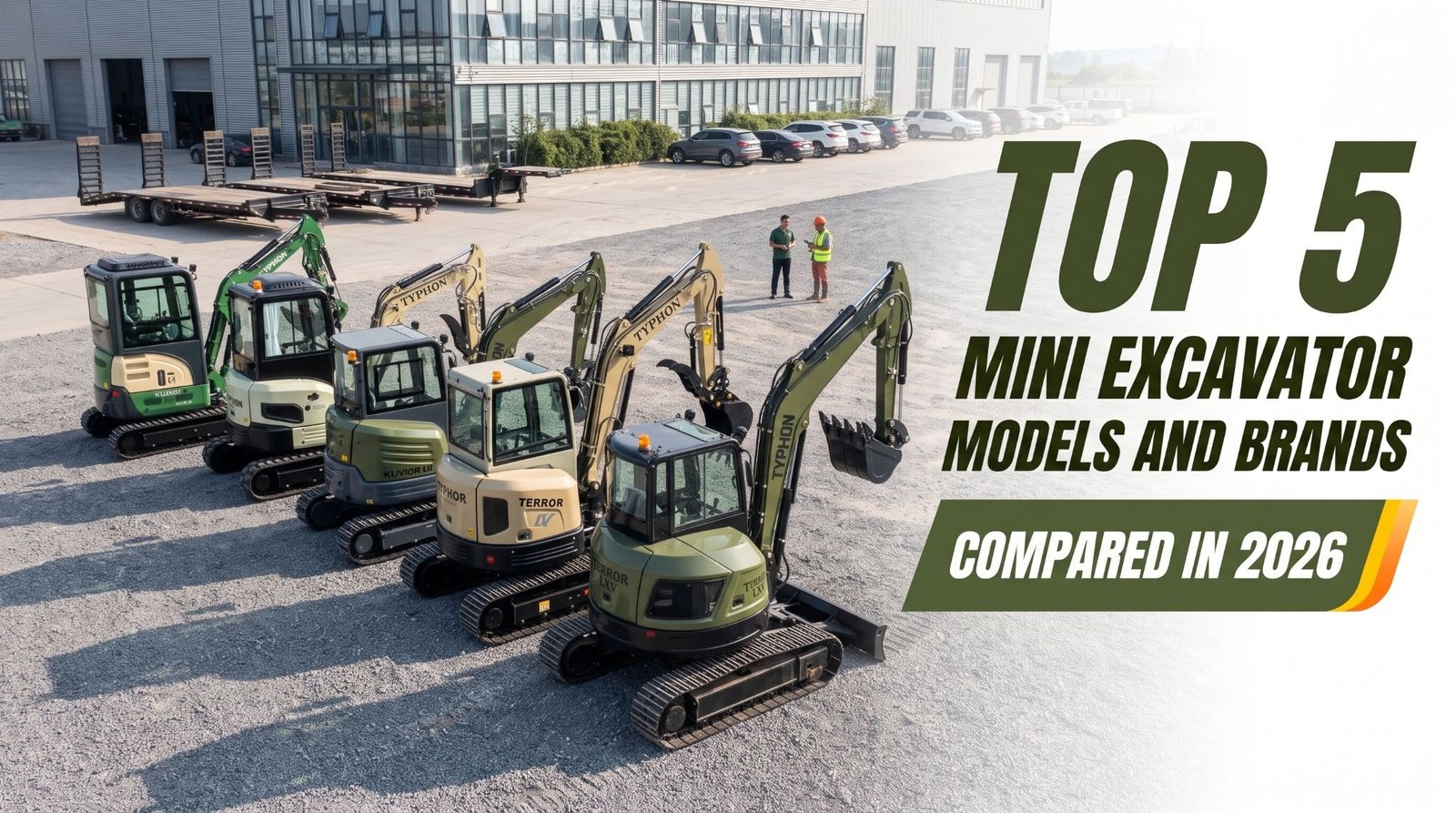
Top 5 Mini Excavator Models and Brands Compared in 2026
Choosing a mini excavator in 2026 starts with one practical question: what work does the machine need to do every day? A landscaper working behind narrow residential gates needs different capabilities than a utility crew trenching across open commercial lots or a builder cutting footings beside existing structures. A machine that suits one of those jobs can slow down another.
The TYPHON lineup covers a range of compact excavation needs. This comparison looks at five models: the TYPHON TERROR LXV, TYPHON KUVUO 4.0, TYPHON TERROR IV PROPACT SERIES, TYPHON TERROR III PROPACT SERIES, and TYPHON KUVUO 2.7. Each one balances machine size, digging range, hydraulic capability, operator comfort, and transport requirements in its own way. Dealer support and parts availability also shape the ownership experience long after the purchase.
No single model is the right choice for every job, so the strongest comparison begins with the work itself. This guide explains where each model tends to fit, what to verify on its current specification sheet, and how to build a shortlist around your actual workload. Always confirm published figures for the exact model and configuration before you finalize a decision.
How to Compare Models for Your Work
A reliable comparison starts with job requirements, not model names. Use these five factors to build a shortlist that reflects the work you actually perform and the support you will need over time.
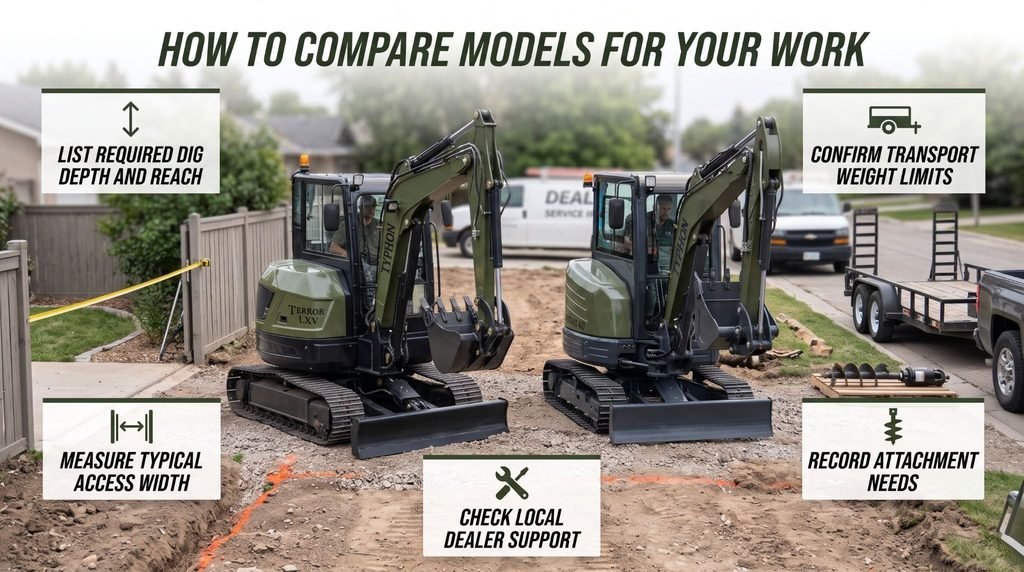
- Dig Depth and Reach: List the trench, footing, and drainage depths and reach your jobs most often.
- Transport Weight: Confirm that your trailer and tow vehicle can legally and safely haul the machine.
- Access Width: Measure the gates, passages, and entries you encounter on typical sites.
- Attachment Needs: Record the tools you run regularly and their flow, pressure, and coupler requirements.
- Dealer Support: Review local service coverage, parts availability, and warranty terms.
Key takeaway: Compare dig depth, transport weight, access width, attachment needs, and dealer support using each model’s current specification sheet before making a final decision.
TYPHON TERROR LXV for Demanding Daily Excavation
The TYPHON TERROR LXV is a strong candidate for contractors who run their machine hard, day after day. Utility trenching, site preparation, drainage installation, and foundation work all put steady demands on the hydraulics, the undercarriage, and the operator. A machine considered for this kind of workload needs to deliver consistent performance across a full shift, not just in short bursts.
When evaluating the TERROR LXV, focus on the specifications that drive daily productivity. Review digging depth, reach, operating weight, hydraulic flow, and system pressure on the current product listing. Compare those figures with the trench depths, footing dimensions, and material types your crews handle most often. A clear match between machine capability and job demands keeps cycle times steady and reduces repositioning.
Transport and access deserve equal attention. A machine built for heavier daily work may need a larger trailer and tow vehicle, and it may not fit every residential gate. Measure your typical access points and confirm your trailer ratings before committing.
Finally, look at long-term support. Service access, filter and fluid check points, parts availability, and warranty coverage all affect uptime when a machine works every day. Ask your dealer how quickly common wear parts can be sourced in your area.
Key takeaway: The TYPHON TERROR LXV suits contractors with demanding daily workloads, so confirm its digging range, hydraulic specifications, transport needs, and service support against the jobs you run most often.
TYPHON KUVUO 4.0 for Expanded Working Capability
The TYPHON KUVUO 4.0 is part of the KUVUO family and is worth considering when a contractor wants more working capability than the KUVUO 2.7 offers. The model naming suggests a step up within the series, but buyers should verify its operating weight, digging range, and hydraulic figures directly from the current specification sheet rather than relying on the name alone.
This kind of machine often appeals to crews who split their time between residential and light commercial work. Deeper footings, longer utility runs, and heavier material can all benefit from added working range and capacity. Compare the KUVUO 4.0’s published depth and reach with your most common excavation requirements to see whether the extra capability will be used regularly.
Added capability usually brings added size. Check whether the KUVUO 4.0 can still pass through the gates and passages you face most often. Confirm its transport weight against your trailer and tow vehicle ratings, and assess ground conditions on your usual sites.
Attachment plans should also guide the decision. If you run augers, breakers, or hydraulic thumbs, confirm the machine’s auxiliary flow, pressure, return line, and coupler setup. A good attachment match extends what the machine can do across a busy season.
Key takeaway: The TYPHON KUVUO 4.0 suits buyers who need more working capability within the KUVUO family, but its size, transport weight, and attachment compatibility must fit your typical sites.
TYPHON TERROR IV PROPACT SERIES for Versatile Site Work
The TYPHON TERROR IV PROPACT SERIES is a practical option for contractors who handle a broad mix of jobs. One week might involve landscaping and grading, while the next calls for utility connections or drainage repair. A versatile machine helps crews move between those tasks without changing equipment.
Versatility depends on balance. Review the TERROR IV PROPACT’s digging depth, reach, operating weight, and dimensions together rather than focusing on one figure. A machine that combines reasonable reach with manageable transport weight can cover more job types than a model that excels in only one area.
Operator comfort plays a large role in mixed workloads. Check the cab layout, control type, seat adjustment, and visibility to the bucket and tracks. Operators who switch between precise trimming and heavier digging benefit from controls that feel natural and responsive.
Ask about attachment versatility as well. A machine that runs several compatible tools can replace extra equipment on smaller jobs. Confirm hydraulic requirements and coupler compatibility for each tool before building a multi-purpose setup.
Key takeaway: The TYPHON TERROR IV PROPACT SERIES suits contractors with mixed workloads, provided its balance of reach, size, operator comfort, and attachment compatibility matches the jobs you rotate through.
TYPHON TERROR III PROPACT SERIES for Compact Everyday Projects
The TYPHON TERROR III PROPACT SERIES is worth considering for smaller excavation and landscaping projects where a compact footprint matters. Property owners, small contractors, and landscaping crews often need a machine that is easy to transport, simple to operate, and capable enough for planting beds, small trenches, and ground preparation.
For this type of work, the most important specifications are transport weight, overall width, digging depth, and control layout. Compare the TERROR III PROPACT’s published figures with the tasks you complete most often. Small machines deliver the best value when their limits line up closely with everyday workloads.
Ease of use matters for crews with several operators or less-experienced staff. Check how quickly a new operator becomes comfortable with the controls, and confirm that entry, exit, and visibility suit the people who will run the machine.
Do not overlook support. Even on a smaller machine, local dealer service and parts availability determine how quickly you recover from a breakdown. Include that support in your comparison from the start.
Key takeaway: The TYPHON TERROR III PROPACT SERIES suits compact everyday projects, so match its transport weight, width, digging range, and ease of use to the small-scale work you handle most often.
TYPHON KUVUO 2.7 for Restricted Access and Precision Work
The TYPHON KUVUO 2.7 stands out for jobs where access and precision decide the outcome. Its retractable undercarriage narrows to approximately 39 inches for travel through suitable access points and expands to approximately 51.2 inches for a wider working stance. That makes it a strong candidate for side yards, garden gates, and tight commercial entries.
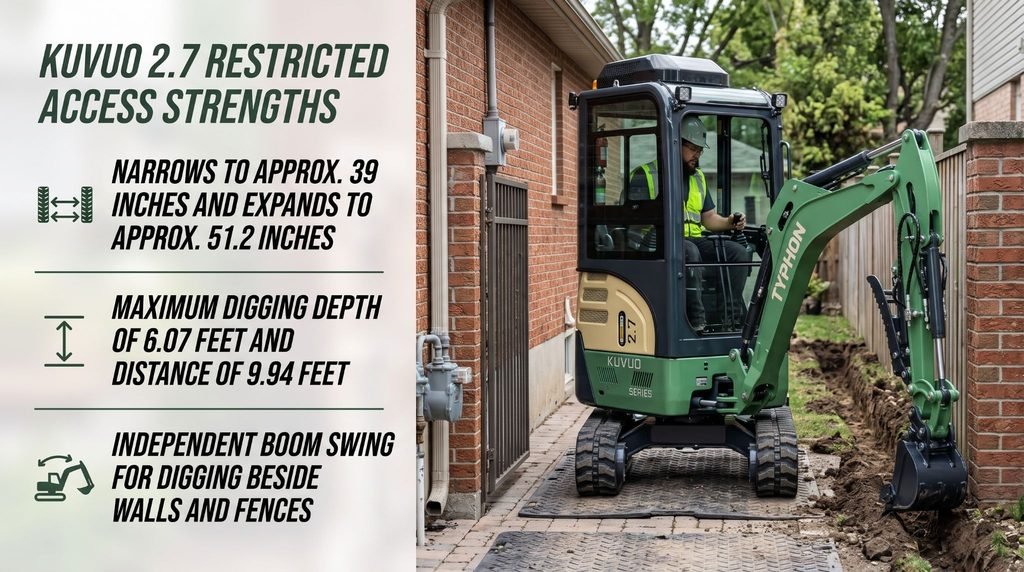
Its published working range supports common residential and light commercial tasks. The product listing specifies a maximum digging depth of 6.07 feet and a maximum digging distance of 9.94 feet. Compare those figures with your trench, footing, and drainage requirements before committing.
Hydraulic design adds to its appeal. The KUVUO 2.7 uses a variable-displacement axial piston pump with a 28 ml/rev displacement, total hydraulic flow of 17.91 GPM, and system pressure of approximately 2,973 PSI. Full pilot joystick controls, independent boom swing, and an enclosed cab with heating and air conditioning support smooth, comfortable work near walls, fences, and foundations. Its diesel engine is listed at up to 25 HP.
Setup still matters. Expand the tracks to working width wherever the site allows, follow the manufacturer’s stability requirements, and assess ground conditions before digging or lifting. Measure every gate and passage along the route rather than assuming the narrow setting will clear.
Key takeaway: The TYPHON KUVUO 2.7 suits restricted-access and precision work, combining a retractable undercarriage, piston-pump hydraulics, pilot controls, and independent boom swing in a compact platform.
Conclusion
The five TYPHON models in this comparison serve different operating needs: the TERROR LXV suits demanding daily excavation, the KUVUO 4.0 offers expanded capability within the KUVUO family, the TERROR IV PROPACT SERIES handles versatile mixed workloads, the TERROR III PROPACT SERIES fits compact everyday projects, and the KUVUO 2.7 excels in restricted-access and precision work with its retractable undercarriage, piston-pump hydraulics, and independent boom swing. For buyers considering why to choose TYPHON, the key is matching each model’s capabilities to the demands of the job. The best 2026 choice depends on your work, access conditions, required capacity, and available support. Start by listing your required dig depth and reach, confirming your trailer and tow vehicle limits, measuring your most common access points, and recording your attachment requirements. Then compare current published specifications, verify local dealer and parts coverage, and arrange demonstrations of your top two or three models on representative ground.
Frequently Asked Questions
Which TYPHON mini excavator is best in 2026?
No single model is best for every buyer. The right choice depends on your job requirements, access conditions, transport setup, and budget. A machine that excels on open commercial sites may be the wrong fit behind narrow residential gates.
Is the KUVUO 2.7 suitable for tight residential sites?
Yes, it is designed with restricted access in mind. Its undercarriage narrows to approximately 39 inches for suitable access points and expands to approximately 51.2 inches for work. Operators should still measure the full route and follow the manufacturer’s stability requirements during setup.
What specifications matter most when comparing these models?
Digging depth, reach, operating weight, width, hydraulic flow and pressure, and transport dimensions are strong starting points. Lifting limits and attachment compatibility also matter for many jobs. Always confirm figures on each model’s current specification sheet.
Are dealer support and parts availability important?
Yes. They affect repair time, maintenance planning, and long-term ownership costs. A nearby dealer with parts in stock helps keep downtime to a minimum during busy seasons.