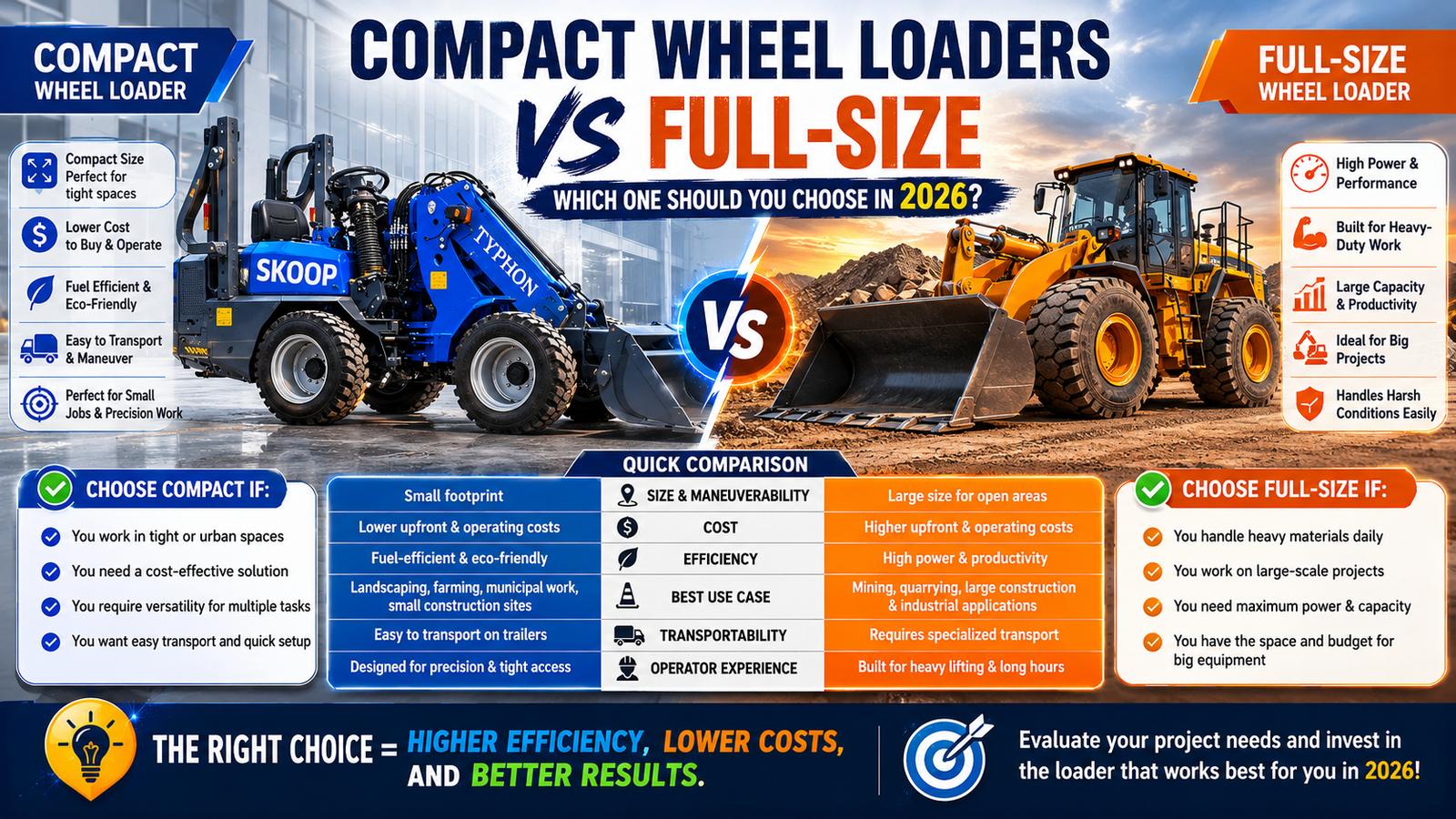
Compact Wheel Loaders vs Full-Size: Which One Should You Choose in 2026?
In the dynamic world of construction, agriculture, landscaping, and material handling, choosing the right equipment can make all the difference between a project’s success and its struggle. Among the most versatile and indispensable machines are wheel loaders – robust workhorses designed to scoop, lift, and transport vast quantities of material. But when it comes to selecting a wheel loader, a fundamental question often arises: should you opt for a compact model or a full-size behemoth?
This isn’t a decision to be taken lightly. The choice impacts everything from operational efficiency and fuel consumption to initial investment, maintenance costs, and even the types of projects you can undertake. As we look towards 2026, advancements in technology, evolving project demands, and increasing environmental considerations are further complicating this choice. Are compact loaders becoming more powerful and versatile, blurring the lines with their larger counterparts? Or do full-size machines still hold an undeniable advantage for specific heavy-duty applications?
This comprehensive guide is designed to cut through the confusion, providing you with a clear, in-depth comparison of compact and full-size wheel loaders. We’ll explore their unique characteristics, delve into their respective benefits, and offer practical advice to help you determine which machine is the optimal fit for your specific needs in the coming years. Whether you’re a seasoned contractor, a growing landscaping business, or a farm owner looking to upgrade your fleet, understanding these differences is crucial for making an informed, cost-effective decision that propels your operations forward. Let’s dig in and uncover the ideal wheel loader for your future endeavors.
1. Understanding Compact Wheel Loaders vs Full-Size: Which One Should You Choose in 2026?
The core of this decision lies in understanding the fundamental differences between compact and full-size wheel loaders. While both perform similar tasks – primarily loading, carrying, and dumping materials – they are engineered for vastly different scales of operation, environments, and material volumes. The “right” choice isn’t about one being inherently better than the other, but rather about aligning the machine’s capabilities with your specific project requirements, operational constraints, and long-term business goals.
What Defines a Compact Wheel Loader?
Key characteristics include:
- Maneuverability: Their compact size allows them to operate in tight spaces, navigate congested job sites, and work efficiently in urban environments, residential areas, or inside buildings.
- Versatility: Modern compact wheel loaders are often designed with quick-attach systems, enabling them to rapidly switch between a wide array of attachments like forks, grapples, snow blowers, brooms, and augers. This multi-functionality makes them incredibly adaptable for various tasks beyond just loading.
- Fuel Efficiency: Smaller engines generally consume less fuel, leading to lower operating costs and reduced environmental impact, which is an increasingly important factor in 2026.
- Reduced Ground Pressure: Their lighter weight often means less impact on delicate surfaces, such as finished landscapes, paved areas, or turf.
- Ease of Transport: They are typically easier and less expensive to transport between job sites, often requiring only a standard truck and trailer, rather than specialized heavy haulage.
Common applications for compact wheel loaders: landscaping, agricultural tasks (feeding, mucking), residential construction, municipal work (snow removal, street sweeping), nurseries, material yards, and light industrial applications.
What Defines a Full-Size Wheel Loader?
Full-size wheel loaders, also known as large wheel loaders or production loaders, are built for heavy-duty, high-volume material handling. These machines are significantly larger, heavier, and more powerful. Their operating weights can start from around 20,000 lbs and extend well over 100,000 lbs, with engines producing hundreds of horsepower (e.g., 150 HP to 500+ HP). Bucket capacities can range from 3 cubic yards to over 20 cubic yards, designed to move massive amounts of material with each pass.
Key characteristics include:
- Power and Production: They are engineered for maximum breakout force, lift capacity, and cycle times, making them ideal for moving large volumes of dense materials quickly.
- Durability and Robustness: Built with heavy-duty components and reinforced structures, they are designed to withstand the rigors of demanding environments and continuous operation.
- Reach and Dump Height: Larger machines typically offer greater reach and higher dump heights, crucial for loading high-sided trucks, hoppers, or processing plants.
- Stability: Their weight and wider stance provide superior stability when handling heavy loads or operating on uneven terrain.
- Advanced Features: Modern full-size loaders often come equipped with sophisticated telematics, advanced hydraulic systems, integrated weighing systems, and operator comfort features for long shifts.
Common applications for full-size wheel loaders: mining, quarrying, large-scale construction (highway projects, commercial developments), waste management and recycling facilities, port operations, and large agricultural operations (grain handling, silage).
In 2026, the distinction isn’t just about size, but also about the increasing sophistication of both categories. Compact loaders are gaining more power and hydraulic capability, while full-size loaders are integrating more automation and efficiency features. The choice hinges on a careful assessment of your typical workload, site conditions, budget, and future growth plans. Do you need agility and versatility, or raw power and sheer volume? This foundational understanding is the first step in making an informed decision.
2. Key Benefits
Understanding the core characteristics of compact and full-size wheel loaders is crucial, but diving into their specific benefits truly illuminates their respective value propositions. Each type offers distinct advantages that cater to different operational needs and project scales. Weighing these benefits against your specific requirements is paramount for making the optimal choice in 2026.
Benefits of Compact Wheel Loaders
Compact wheel loaders offer a compelling package of advantages, especially for businesses operating in diverse environments or with budget constraints.
- Exceptional Maneuverability and Access: This is arguably their greatest strength. Their smaller turning radius and overall dimensions allow them to operate effectively in confined spaces where larger machines simply cannot go. Think about navigating narrow urban streets, working inside warehouses, maneuvering around obstacles on a residential construction site, or performing tasks in a crowded farmyard. This agility minimizes disruption and maximizes efficiency in tight quarters. For instance, a landscaper can easily use a compact loader to move soil and mulch through backyard gates or between closely planted trees without damaging existing infrastructure.
- Lower Initial Investment and Operating Costs: Generally, compact wheel loaders come with a significantly lower purchase price compared to their full-size counterparts. This makes them more accessible for smaller businesses, startups, or those with limited capital. Beyond the initial cost, their smaller engines translate to lower fuel consumption, reducing daily operating expenses. Maintenance costs are also typically lower due to smaller components and less complex systems. This cost-effectiveness can significantly impact a business’s bottom line.
- Versatility Through Attachments: Modern compact loaders are designed as true multi-taskers. With hydraulic quick-couplers, operators can rapidly swap between dozens of attachments – from buckets and pallet forks to snow blowers, trenchers, grapples, brooms, and even hydraulic hammers. This transforms a single machine into a Swiss Army knife for various jobs, eliminating the need for multiple specialized pieces of equipment. A single compact loader can handle site prep, material handling, snow removal, and even light demolition on the same day.
- Reduced Environmental Impact and Fuel Efficiency: With growing emphasis on sustainability, the lower fuel consumption and often smaller emissions footprint of compact loaders are significant benefits. Many models are also available with electric or hybrid powertrains, further reducing their environmental impact and making them suitable for indoor or emission-restricted zones. This aligns with increasingly stringent environmental regulations and corporate sustainability goals for 2026 and beyond.
- Easier Transport and Logistics: Transporting a compact wheel loader is far simpler and less expensive. They can often be hauled on a standard trailer with a heavy-duty pickup truck, avoiding the need for specialized permits, pilot cars, or oversized load regulations that often accompany full-size equipment. This ease of transport saves time and money, especially for businesses that frequently move equipment between multiple job sites.
- Reduced Ground Disturbance: Their lighter operating weight exerts less pressure on the ground, making them ideal for working on finished surfaces, sensitive landscapes, or areas where minimizing soil compaction is important, such as golf courses, parks, or agricultural fields.
Benefits of Full-Size Wheel Loaders
When sheer power, capacity, and continuous operation are the priorities, full-size wheel loaders stand unmatched.
- Superior Production and Capacity: This is the primary reason to choose a full-size loader. They are built to move massive quantities of material quickly and efficiently. With large bucket capacities (e.g., 5-20+ cubic yards), they can load high-sided dump trucks or feed aggregate plants in just a few passes, significantly reducing cycle times and increasing overall productivity on large-scale projects. For a quarry operation, a full-size loader can load hundreds of tons of rock per hour, a task impossible for a compact machine.
- Unmatched Power and Breakout Force: Full-size loaders boast powerful engines and robust hydraulic systems that deliver immense breakout force and lift capacity. This allows them to handle dense, heavy materials like rock, ore, or compacted soil with ease. They are designed for continuous, heavy-duty work without strain, ensuring consistent performance even in the most demanding applications.
- Durability and Longevity in Demanding Environments: Constructed with heavy-gauge steel, reinforced frames, and oversized components, full-size loaders are engineered for extreme durability. They can withstand the constant pounding and abrasive conditions found in mining, quarrying, and large construction sites, leading to a long service life even under harsh use.
- Greater Reach and Dump Height: Their larger boom and linkage designs provide superior reach and dump height, which is critical for loading large haul trucks, feeding crushers, or stacking materials high in stockyards. This eliminates the need for ramps or additional equipment, streamlining the loading process.
- Enhanced Operator Comfort and Technology for Long Shifts: Full-size loaders often feature spacious, climate-controlled cabs with advanced ergonomic controls, air-ride seats, and sophisticated infotainment systems. This focus on operator comfort is vital for maintaining productivity and reducing fatigue during long, demanding shifts. Furthermore, they frequently integrate advanced technologies like telematics, onboard weighing systems, semi-autonomous functions, and sophisticated diagnostic tools, which enhance efficiency, safety, and fleet management.
- Stability for Heavy Loads and Uneven Terrain: Their substantial weight and wide stance provide exceptional stability, allowing them to safely lift and carry very heavy loads, even on uneven or challenging terrain. This stability is crucial for safety and efficiency when dealing with high-density materials.
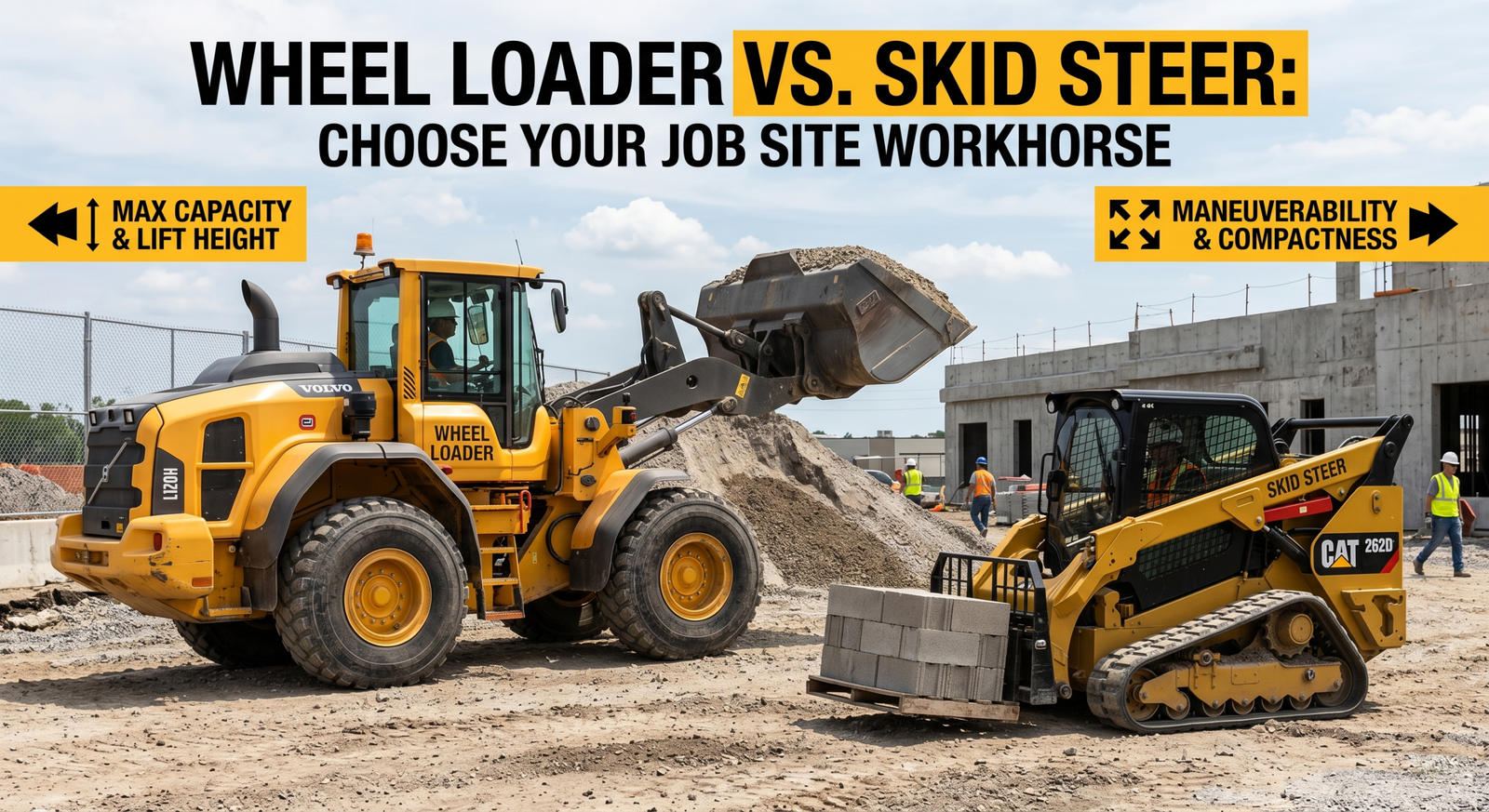
In summary, if your operations involve high-volume material handling, dense materials, large trucks, and continuous heavy-duty work, a full-size loader offers the necessary power and capacity. If your work involves tight spaces, varied tasks, budget sensitivity, and frequent transport, a compact loader provides unmatched versatility and efficiency. The key is to objectively assess your typical workload and site conditions to align with the most advantageous machine.
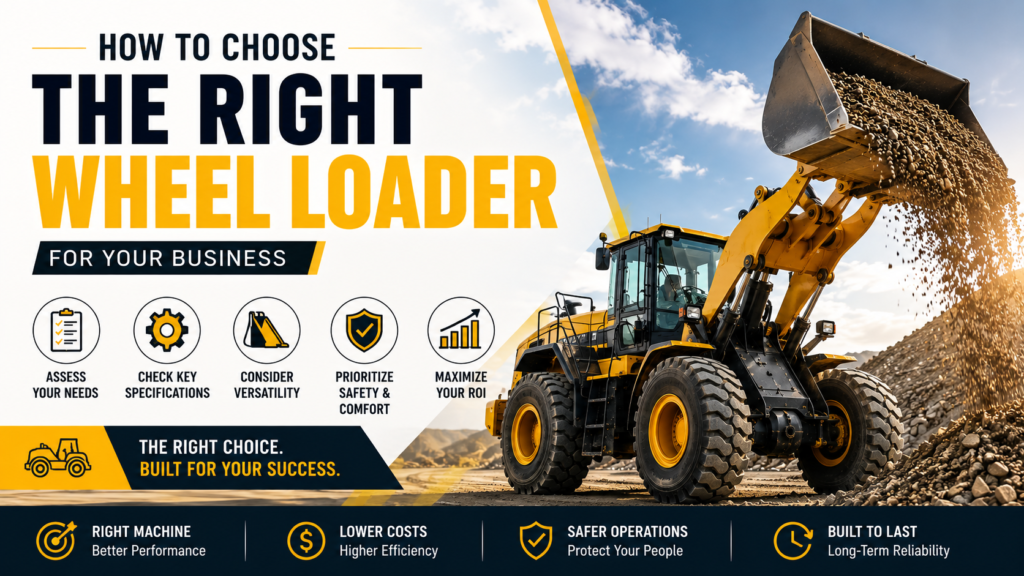
3. How to Get Started with Your Choice
Step 1: Define Your Primary Applications and Material Types
Begin by clearly outlining the core tasks the wheel loader will perform. Are you primarily moving loose soil, sand, and gravel for landscaping? Or are you excavating dense rock, loading massive quantities of aggregates, or handling heavy waste materials?
- Material Density and Volume: This is perhaps the most critical factor.
- Light to Medium Materials (e.g., mulch, topsoil, snow, light aggregates): Compact loaders can often handle these efficiently, especially in smaller volumes.
- Heavy, Dense Materials (e.g., rock, ore, compacted clay, concrete rubble): Full-size loaders with their superior breakout force and lift capacity are essential for these applications.
- Daily/Hourly Volume: Estimate the total volume of material you need to move daily or hourly. High-volume operations (e.g., loading hundreds of tons per hour) unequivocally demand a full-size loader to maintain productivity. Lower volume or intermittent tasks might be better suited for a compact machine.
- Specific Tasks: Will it primarily be loading trucks, feeding hoppers, stockpiling, digging, or a combination of tasks requiring various attachments? If versatility with multiple attachments is key, a compact loader might be more appealing due to its quick-attach systems and broader range of compatible tools.
Real Example: A small landscaping company needs to move mulch, soil, and decorative stones, occasionally load a small dump trailer, and clear snow in winter. A compact wheel loader with a bucket, pallet forks, and a snow pusher attachment would be ideal. Conversely, a quarry operation needs to load 40-ton articulated dump trucks with blasted rock. Only a full-size wheel loader can achieve the necessary cycle times and breakout force.
Step 2: Evaluate Your Job Site Conditions and Space Constraints
The physical environment where the loader will operate significantly influences the optimal choice.
- Space Availability:
- Tight, Confined Spaces: Urban construction sites, residential areas, warehouses, farm buildings, or narrow access points necessitate the agility of a compact wheel loader. Its smaller turning radius and overall footprint are invaluable.
- Open, Expansive Sites: Quarries, large-scale construction projects, mining operations, or vast agricultural fields offer ample space, making a full-size loader’s larger size less of a hindrance and its power more of an asset.
- Ground Conditions:
- Sensitive Surfaces: Paved areas, finished landscapes, turf, or areas prone to compaction benefit from the lighter weight and reduced ground pressure of compact loaders.
- Rough, Uneven Terrain: Full-size loaders, with their robust frames, larger tires, and superior stability, are better equipped to handle challenging, uneven, or unstable ground conditions without compromising safety or performance.
- Transport Requirements: How often will you move the machine between job sites?
- Frequent Transport: Compact loaders are significantly easier and cheaper to transport, often requiring only a standard truck and trailer. This saves time, fuel, and avoids costly heavy haulage permits.
- Infrequent Transport / Dedicated Site: If the loader will primarily stay on one large site, transport logistics become less of a concern, freeing you to consider larger machines.
Step 3: Assess Your Budget and Financial Considerations
The financial implications extend beyond the initial purchase price.
- Purchase Price: Compact loaders typically have a lower upfront cost, making them more accessible. Full-size loaders represent a substantial capital investment.
- Operating Costs:
- Fuel Efficiency: Compact loaders generally consume less fuel.
- Maintenance: Parts and labor for full-size loaders are often more expensive due to their larger, more complex components.
- Tires: The cost of replacing tires on a full-size loader can be a significant expense.
- Resale Value: Both types can hold good resale value, but market demand for each varies.
- Financing Options: Explore various financing, leasing, or rental options. Sometimes, renting a full-size loader for specific large projects and owning a compact one for daily tasks can be a cost-effective hybrid strategy.
- Total Cost of Ownership (TCO): Calculate the TCO over the machine’s expected lifespan, including purchase price, fuel, maintenance, insurance, depreciation, and potential downtime. This holistic view provides a clearer financial picture.
Step 4: Consider Future Growth and Scalability
Think about where your business is headed.
- Current Needs vs. Future Growth: If you anticipate taking on larger projects or expanding your operations, investing in a machine that can scale with you might be wise. A compact loader might meet current needs but could become a bottleneck if your business grows rapidly.
- Fleet Integration: How will this new loader fit into your existing fleet? Can it complement other machines, or will it duplicate capabilities?
Step 5: Demo and Consult
Once you have narrowed down your options, don’t hesitate to:
- Request Demos: Operate both compact and full-size models (or specific models within each category) in conditions similar to your own. Pay attention to operator comfort, visibility, control responsiveness, and overall performance.
- Talk to Dealers and Industry Peers: Leverage the expertise of equipment dealers who can provide detailed specifications, TCO analyses, and financing options. Speak with other professionals in your industry about their experiences and recommendations.
By systematically working through these steps, you can move from a general understanding to a highly informed decision, ensuring your wheel loader investment is a strategic asset for your business in 2026. For more detailed guidance on specific models, consider exploring a “Compact Wheel Loaders vs Full-Size: Which One Should You Choose in 2026? guide.”
4. Best Practices for Choosing and Operating
Selecting the right wheel loader is just the beginning. To maximize your investment and ensure safe, efficient, and productive operations in 2026, it’s crucial to adopt best practices for both the decision-making process and ongoing use. These practices will help you extract the most value from your compact or full-size machine.
Best Practices for Making the Choice
Beyond the initial assessment, several best practices can refine your decision-making process:
- Prioritize Operator Feedback: The people who will be spending hours in the cab are your most valuable resource. Involve your experienced operators in the demo process. Their insights on visibility, control layout, comfort, and machine responsiveness are critical for long-term productivity and job satisfaction. A machine that is uncomfortable or difficult to operate will lead to fatigue, reduced efficiency, and potential safety issues.
- Evaluate Attachment Ecosystem: For compact loaders especially, the availability and ease of use of attachments are paramount.
- Compatibility: Ensure the chosen loader has a robust quick-attach system that is compatible with a wide range of attachments you might need.
- Hydraulic Flow: Check the auxiliary hydraulic flow and pressure to ensure it can power demanding attachments like hydraulic hammers or cold planers effectively.
- Future-Proofing: Consider attachments you might need in the future as your business expands or diversifies.
- Consider Technology and Telematics: Modern wheel loaders, both compact and full-size, come equipped with advanced technology.
- Telematics: Systems that monitor machine location, fuel consumption, idle time, and maintenance alerts are invaluable for fleet management, optimizing schedules, and predictive maintenance. This is crucial for maximizing uptime and reducing operational costs.
- Operator Assist Features: Features like ride control, automatic bucket leveling, and integrated weighing systems can significantly improve efficiency and reduce operator fatigue, especially on full-size loaders performing repetitive tasks.
- Safety Features: Backup cameras, object detection systems, and advanced lighting packages enhance safety on busy job sites.
- Factor in Dealer Support and Service Network: A reliable dealer is an extension of your team.
- Proximity and Responsiveness: How close is the dealer? What is their reputation for parts availability and service response time? Downtime is costly, so quick access to support is vital.
- Technical Expertise: Do their technicians specialize in the brands they sell? Are they equipped to handle complex diagnostics and repairs?
- Training: Do they offer operator training or technical training for your maintenance staff?
- Review Warranty and Service Contracts: Understand the manufacturer’s warranty terms thoroughly. Consider extended warranty options or service contracts, especially for full-size loaders, to protect your investment and budget for maintenance costs.
Best Practices for Operating Your Wheel Loader
Once you’ve made your choice, implementing best operating practices ensures safety, efficiency, and longevity for your machine:
- Comprehensive Operator Training:
- Initial Training: Ensure all operators are thoroughly trained on the specific model of wheel loader they will be using. This includes understanding controls, safety features, load limits, and proper operating techniques.
- Ongoing Training: Regular refreshers and training on new attachments or technologies are beneficial. Proper training reduces accidents, minimizes machine wear and tear, and maximizes productivity.
- Adherence to Load Limits and Safety Protocols:
- Rated Operating Capacity (ROC): Never exceed the manufacturer’s rated operating capacity. Overloading can lead to instability, structural damage, and catastrophic failures.
- Site-Specific Safety: Implement and enforce site-specific safety protocols, including wearing appropriate PPE, maintaining safe distances from other equipment and personnel, and understanding site hazards.
- Visibility: Always maintain clear visibility. Use mirrors, cameras, and spotters when necessary, especially when reversing or operating in congested areas.
- Regular Maintenance and Pre-Operation Checks:
- Daily Inspections: Operators should perform daily pre-operation checks (walk-arounds) before starting the machine. This includes checking fluid levels, tire pressure, lights, brakes, hydraulic lines, and looking for any visible damage or leaks.
- Scheduled Maintenance: Adhere strictly to the manufacturer’s recommended service intervals for oil changes, filter replacements, lubrication, and component inspections. This proactive approach prevents costly breakdowns and extends the machine’s lifespan.
- Greasing: Regular greasing of pivot points and articulation joints is critical for reducing wear and tear, especially on machines with high operating hours.
- Optimized Loading Techniques:
- V-Pattern Loading: For truck loading, using a V-pattern approach (approaching the pile, scooping, reversing, and then turning to approach the truck) minimizes travel distance and cycle time, increasing efficiency.
- Bucket Fill Factor: Train operators to achieve optimal bucket fill factors without overloading, which maximizes productivity per cycle.
- Smooth Operation: Encourage smooth acceleration, deceleration, and steering rather than jerky movements, which reduces stress on the machine’s components and improves fuel efficiency.
- Fuel Management and Idle Reduction:
- Fuel Efficiency Practices: Train operators on techniques that conserve fuel, such as avoiding unnecessary engine revving and using the correct gear for the task.
- Idle Reduction: Excessive idling wastes fuel, increases emissions, and contributes to engine wear. Implement policies to minimize idle time, utilizing auto-shutdown features where available.
- Environmental Considerations:
- Spill Prevention: Implement procedures to prevent fuel or hydraulic fluid spills.
- Emissions Compliance: Ensure your machines meet local emissions standards. Consider newer models with Tier 4 Final or electric powertrains for reduced environmental impact.
By integrating these best practices into your operations, you can ensure that your chosen wheel loader, whether compact or full-size, performs optimally, remains safe, and delivers maximum return on your investment for years to come. For more resources on operational efficiency, refer to our “Compact Wheel Loaders vs Full-Size: Which One Should You Choose in 2026? resources” section.
5. Frequently Asked Questions (FAQ)
Choosing between a compact and full-size wheel loader can raise numerous questions. Here, we address some of the most common inquiries to help clarify your decision-making process for 2026.
Q1: What is the primary difference between a compact and full-size wheel loader?
The primary difference lies in their size, power, and intended application. Compact wheel loaders (also known as small or mini loaders) are smaller, lighter, and less powerful, designed for agility, versatility, and efficiency in confined spaces or on sensitive surfaces. They excel at tasks requiring maneuverability and the use of multiple attachments. Full-size wheel loaders (large or production loaders) are significantly larger, heavier, and more powerful, built for high-volume material handling, heavy digging, and continuous operation in demanding environments like quarries, mines, or large construction sites. They prioritize raw power, breakout force, and capacity.
Q2: How does the cost compare between compact and full-size wheel loaders?
Generally, compact wheel loaders have a significantly lower initial purchase price, making them a more accessible investment. Their operating costs are also typically lower due to better fuel efficiency (smaller engines) and less expensive parts and maintenance. Full-size wheel loaders represent a substantial capital investment, with higher purchase prices and significantly higher operating costs, including greater fuel consumption, more expensive tires, and higher maintenance expenses due to larger, more complex components. However, their higher productivity can often justify the increased cost for large-scale operations.
Q3: What kind of jobs are compact wheel loaders best suited for?
Compact wheel loaders are ideal for a wide array of tasks where space is limited, versatility is key, and material volumes are not extremely high. This includes:
- Landscaping: Moving soil, mulch, rocks, and trees, grading, digging small trenches.
- Agriculture: Feeding livestock, mucking stalls, moving feed and hay bales, light tillage.
- Residential Construction: Site preparation, material handling (bricks, lumber, gravel), backfilling, snow removal.
- Municipal Work: Street sweeping, snow removal, park maintenance, utility work.
- Material Yards: Loading small trucks, organizing inventory.
- Indoor Applications: Due to their size and often lower emissions (or electric options), they can work inside warehouses or industrial buildings.
Q4: When should I definitely choose a full-size wheel loader?
You should choose a full-size wheel loader when your operations demand maximum production, power, and capacity. This is typically for:
- Mining and Quarrying: Loading blasted rock, aggregates, and ore into large haul trucks.
- Large-Scale Construction: Highway projects, commercial developments, dam construction where massive amounts of earth or aggregates need to be moved.
- Waste Management and Recycling: Handling large volumes of waste, sorting materials, feeding shredders or compactors.
- Port Operations: Loading and unloading cargo, moving bulk commodities.
- Large Agricultural Operations: High-volume grain handling, silage packing, large-scale manure management.
- Any application requiring high breakout force, lift capacity, and continuous, heavy-duty operation.
Q5: What are the key benefits of choosing a compact wheel loader?
The key benefits of compact wheel loaders include:
- Superior Maneuverability: Excellent for tight spaces and congested job sites.
- Lower Initial and Operating Costs: More affordable to buy, fuel, and maintain.
- High Versatility: Can perform numerous tasks with a wide range of quick-attach attachments.
- Easier Transport: Simpler and cheaper to move between job sites.
- Reduced Ground Pressure: Less impact on sensitive surfaces.
- Lower Emissions: Often more fuel-efficient and available in electric/hybrid models.
Q6: What are the key benefits of choosing a full-size wheel loader?
The key benefits of full-size wheel loaders include:
- Unmatched Production and Capacity: Moves vast quantities of material quickly.
- Superior Power and Breakout Force: Handles dense, heavy materials with ease.
- Exceptional Durability: Built for continuous, heavy-duty work in harsh environments.
- Greater Reach and Dump Height: Ideal for loading large trucks or feeding tall hoppers.
- Enhanced Operator Comfort and Advanced Technology: Designed for long shifts and integrates sophisticated features for efficiency and safety.
- Greater Stability: Safely handles heavy loads on uneven terrain.
Q7: How important is dealer support when making this decision?
Dealer support is critically important for both types of loaders, but perhaps even more so for full-size machines due to their complexity and the potential cost of downtime. A reliable dealer provides:
- Parts Availability: Quick access to replacement parts minimizes downtime.
- Service Expertise: Skilled technicians for maintenance and repairs.
- Technical Support: Assistance with diagnostics and operational questions.
- Training: Operator and maintenance training.
- Financing Options: Guidance on purchasing or leasing. A strong dealer relationship ensures your equipment remains operational and productive, protecting your investment.
Conclusion
The decision between a compact and a full-size wheel loader in 2026 is a strategic one, deeply intertwined with the specific demands of your operations, your financial capabilities, and your vision for the future. There is no universally “better” option; rather, there is an optimal choice tailored to your unique circumstances.
Compact wheel loaders shine in their agility, versatility, and cost-effectiveness. They are the ideal partners for businesses that navigate tight spaces, perform diverse tasks with various attachments, prioritize fuel efficiency, and frequently transport equipment between sites. From landscaping and small-scale construction to agricultural support and municipal services, their adaptability makes them invaluable workhorses.
Conversely, full-size wheel loaders are the undisputed champions of power, capacity, and sheer productivity. When your projects demand moving massive volumes of dense materials, loading large haul trucks in record time, and enduring the toughest conditions day in and day out, a full-size machine is the only viable option. For mining, quarrying, large infrastructure projects, and heavy waste management, their robust construction and immense capabilities are non-negotiable.
As you look towards 2026, consider the evolving landscape of technology, environmental regulations, and project demands. Both categories of loaders are becoming more sophisticated, offering advanced telematics, improved operator comfort, and more efficient powertrains. By meticulously evaluating your primary applications, job site conditions, budget, and long-term goals, and by leveraging the insights provided in this guide, you can make an informed decision that empowers your operations, enhances your productivity, and secures your competitive edge.
The right wheel loader isn’t just a piece of equipment; it’s a strategic asset that can drive your business forward. Choose wisely, and watch your projects thrive.
Learn more today and explore the best wheel loader solutions for your business!