
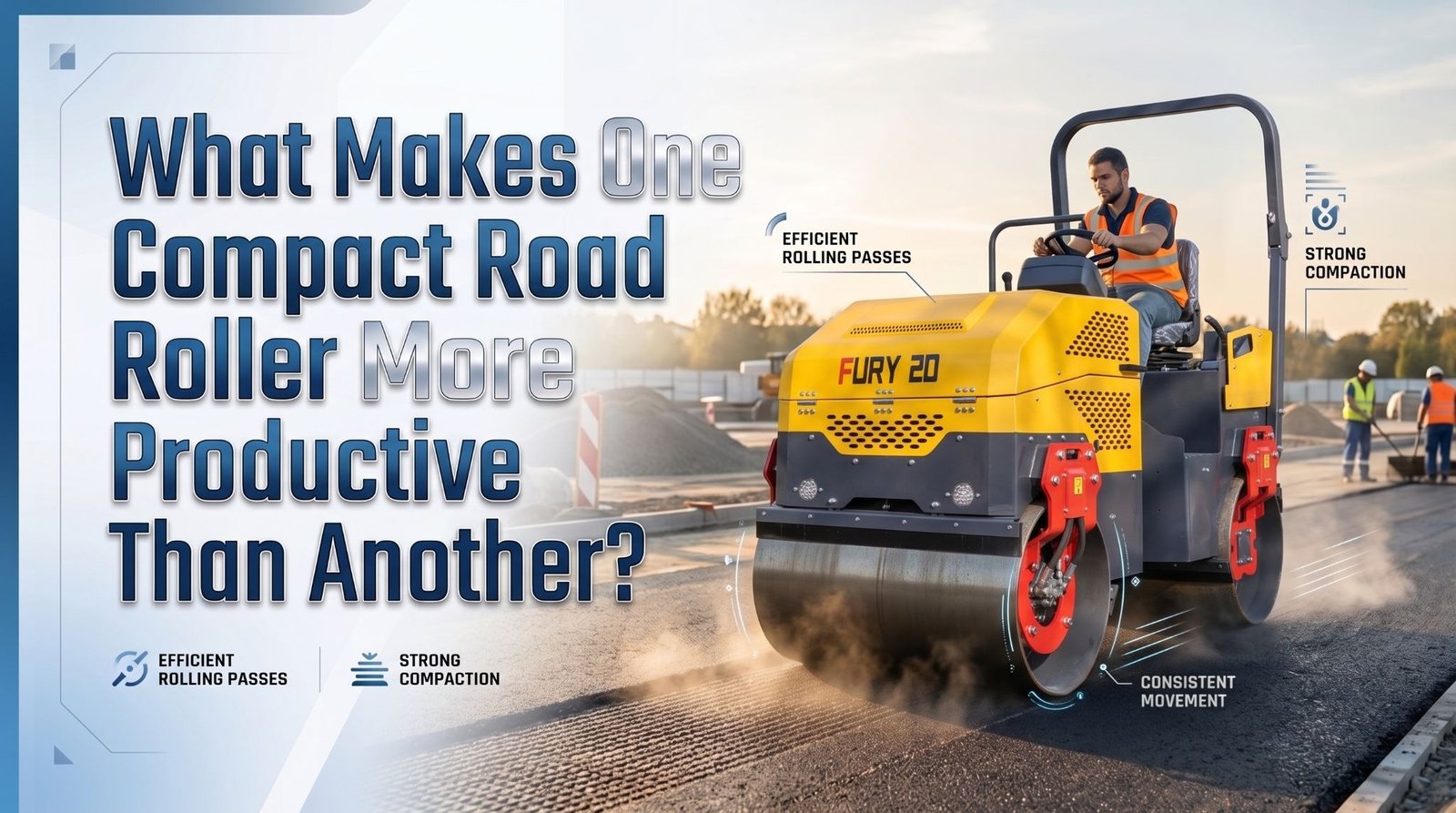
What Makes One Compact Road Roller More Productive Than Another?
You roll onto a fresh strip of asphalt, make your passes, and step off expecting a smooth, tight mat. But the surface still feels soft in places, the edges haven’t sealed, and you already know you’ll be circling back for extra passes to hit density. A block away, another crew wraps a similar job in half the time with a machine that looks nearly identical on paper. Same class, same weight, wildly different output.
That gap isn’t luck, and it isn’t the operator alone. It’s the difference between two compact road rollers that only look the same until you put them to work. If you’re shopping for a machine that pulls its weight, our guide to choosing a road roller makes a useful starting point.
Productivity separates one roller from another in ways the spec sheet rarely spells out. In this guide, you’ll learn how compaction force and drum design drive results, how vibration frequency and amplitude shape the finish, how maneuverability decides output in tight spaces, and how operator controls and visibility keep the machine working efficiently. By the end, you’ll know exactly what to look for when one roller has to outperform the rest.
How Compaction Force and Drum Design Drive Productivity
Before comparing any two rollers, you need to understand what actually does the compacting. Force and drum shape work together to decide how much material a machine densifies per pass, and that ratio is the foundation of real productivity.
Compaction Force and What It Delivers
Compaction force is the total pressure a roller applies to the surface, combining static weight with the dynamic force its vibration adds. A heavier drum presses down harder on its own, while vibration multiplies that effect, driving particles together far more effectively than dead weight alone. The result is deeper, faster density in fewer passes.
The payoff is direct. A roller with strong, well-matched force reaches target density quickly, so you finish sooner with less fuel and fewer machine hours. A machine short on force pushes you into extra passes that stretch every job longer. Matching force to your material is what turns a capable roller into a productive one.
Drum Width, Diameter, and Type
The drum is where force meets the ground, and its dimensions shape output. A wider drum covers more surface per pass, while drum diameter affects how smoothly the machine rolls and how evenly it spreads pressure. Together they set coverage and finish quality in a single stroke.
Drum type matters as much as size. A smooth steel drum suits asphalt and granular material, producing a clean, sealed finish, while a padfoot or textured drum grips and kneads cohesive soils better. A productive roller pairs the right width and design with your material, so every pass counts instead of leaving gaps you circle back to fix.
Takeaway: Compaction force blends static weight and vibration to reach density fast, and drum width and design decide how much ground each pass covers, so matching both to your material is what makes one roller outproduce another.
How Vibration Frequency and Amplitude Shape the Finish
Two rollers can share the same weight yet compact completely differently, and the reason usually lives in their vibration systems. Frequency and amplitude turn raw force into a smooth, dense result, and understanding them separates a good finish from a great one.
Frequency and Surface Smoothness
The number of drum impacts over time plays a major role in achieving consistent surface quality. A higher impact rate allows the drum to work the material more evenly, creating better compaction results and a smoother finish, especially when handling thinner asphalt layers. This balance between impact performance and travel speed helps operators achieve the required density without unnecessary extra passes.
Drum impact performance also influences overall efficiency during operation. When the system maintains effective contact with the material, operators can keep a steady working pace while reducing the risk of weak or uneven areas. Equipment with limited impact capability may require additional passes to reach the same result, increasing time and reducing productivity.
Amplitude and Compaction Depth
Amplitude is how far the drum moves up and down with each vibration, and it controls how deep the compaction reaches. High amplitude drives force deeper, suiting thick lifts and stubborn material, while low amplitude concentrates energy near the surface for thin lifts and finish work. Matching amplitude to lift thickness is central to compacting right the first time.
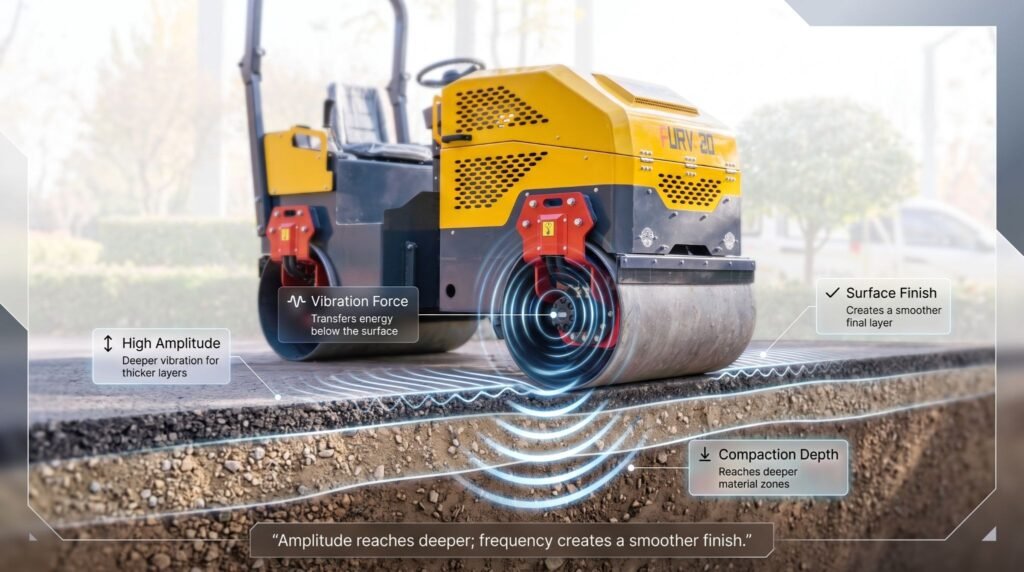
The most productive rollers let you adjust these settings rather than locking you in. Selectable amplitude and frequency mean one machine handles a thick base lift and a thin surface course without compromise, and without over-compacting thin material into damage. That adaptability keeps a single roller productive across varied work. Industry guides on asphalt compaction basics explain how these settings interact with mix temperature.
Takeaway: Frequency drives surface smoothness and travel speed while amplitude sets compaction depth, so a roller with well-matched, adjustable vibration hits density faster and adapts across lifts, outproducing a fixed-setting machine.
How Maneuverability Determines Output in Tight Spaces
Raw compaction means little if the machine can’t reach the whole job. Compact rollers earn their keep in confined, detailed work, and how nimbly a machine moves through those spaces directly decides how much it gets done.
Working Confined and Complex Areas
Compact rollers thrive where full-size machines can’t fit: parking lots, driveways, trench backfill, tight streets, and work around fixed obstacles. A machine that turns tightly and positions precisely covers these awkward areas in fewer moves, while a clumsy one wastes time repositioning and leaves spots that need hand compaction later.
Turning radius and articulation are the details that matter here. An articulated or pivot-steer roller follows curves and edges smoothly, keeping the drum aligned with the work instead of fighting it. That precision translates straight into productivity, because every pass that lands right the first time is a pass you don’t repeat.
Drum Offset and Edge Compaction
Edge and curb work is where many jobs slow down, and drum offset makes the difference. A roller that can shift its drum to compact right against a curb or a previously laid mat seals edges cleanly without leaving an uncompacted strip. That capability removes a whole round of corrective work.
The gain compounds across a site full of edges. A machine that handles edges and joints in stride keeps a steady rhythm, while one that can’t forces the crew to follow up with plate compactors and hand work. For jobs defined by tight tolerances and detailed edges, offset and reach can matter as much as compaction force.
Takeaway: Tight turning, smooth articulation, and drum offset let a compact roller reach and seal the whole job in fewer moves, so maneuverability directly determines how much productive work the machine completes on confined sites.
How Operator Controls and Visibility Sustain Productivity
The most capable roller only performs as well as the operator can run it. Controls and sightlines shape how consistently a machine hits its potential over a full shift, and they often decide the outcome when two rollers are otherwise evenly matched.
Intuitive Controls and Consistent Passes
Productive compaction depends on even overlapping passes at a steady speed, and clear controls make that far easier. Simple speed and vibration controls, smooth acceleration, and responsive steering let an operator focus on pattern and coverage rather than wrestling the machine. Consistency is what delivers uniform density without wasted passes.
Operator comfort feeds directly into that consistency. A well-designed seat, low vibration to the operator, and logical control placement reduce fatigue over long shifts, so the last hour is as precise as the first. A tiring, awkward machine invites small errors, uneven overlap and missed spots, that quietly add passes and drag productivity down.
Visibility of the Drum and Work Area
Seeing the drum edges and the surface clearly is essential to accurate, efficient compaction. Good sightlines to both drum edges let the operator overlap passes precisely and stay aligned with joints and edges, avoiding both gaps and wasteful double coverage. Clear visibility is what makes an efficient rolling pattern possible.
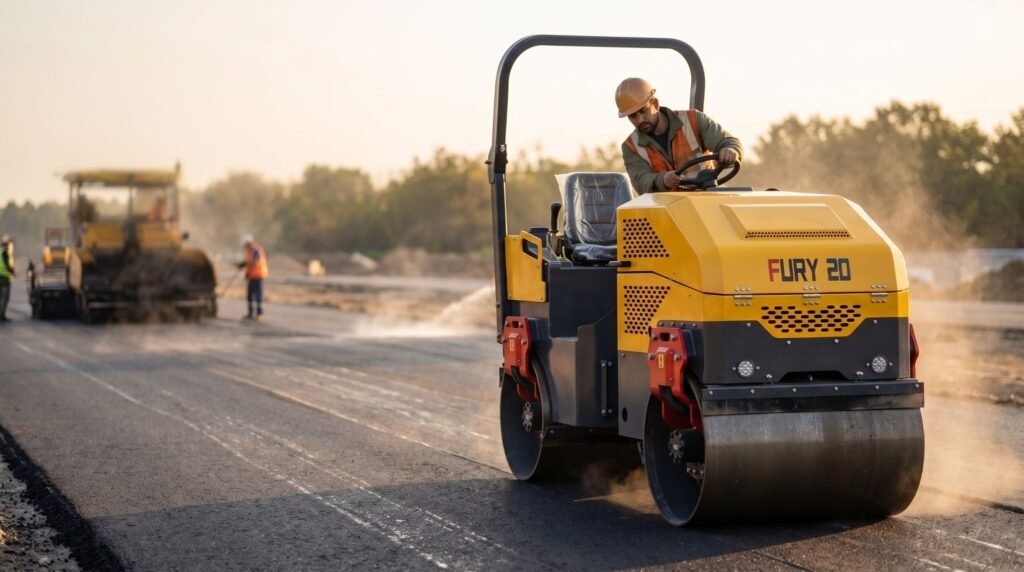
Awareness of the surroundings protects productivity too. Clear views of the work area help the operator move confidently around obstacles, workers, and edges without stopping to check clearance. A machine that gives a full picture keeps the work flowing, while poor visibility forces hesitation that adds up across a shift.
Takeaway: Intuitive controls sustain even, consistent passes while clear drum and area visibility enable precise overlap, so a roller that’s easy to operate accurately keeps productivity high from the first pass to the last.
Frequently Asked Questions
How many passes should a compact roller need to reach compaction?
There’s no fixed number. It depends on your material, lift thickness, target density, and the roller’s force, frequency, and amplitude. The best approach is to set a rolling pattern for each job by testing density after a set number of passes, then locking in the pattern that hits the target efficiently. The real signal isn’t a set count but how quickly a machine reaches density on your material.
Is a heavier compact roller always more productive?
Not necessarily. Weight adds static force, but vibration often matters more, and frequency and amplitude decide how effectively that force densifies the material. A lighter roller with a well-tuned vibration system can outperform a heavier one with poor settings, especially on thin lifts where too much force can damage the mat. Match total capability to your work rather than chasing weight.
Why does one roller leave a smoother finish than another of the same size?
Finish quality usually traces to the vibration system and drum condition, not size. Higher frequency delivers more impacts per distance for a tighter mat, and matched amplitude compacts to the right depth without over-working the surface. Drum diameter and a well-maintained drum surface also shape how evenly pressure spreads. Operator technique and consistent overlap play a role too.
What features should I prioritize for productivity?
Confirm the force, drum width, and drum type suit your material and coverage needs. Favor an adjustable vibration system with selectable frequency and amplitude so one machine adapts across lifts. For tight sites, prioritize tight turning, articulation, and drum offset. Value intuitive controls, comfort, and clear drum visibility, and weigh durability and dependable service support. Match features to your everyday jobs.
Conclusion
What makes one compact road roller more productive than another rarely shows on a quick read of the spec sheet. Compaction force sets how fast the machine reaches density, drum width and design decide how much ground each pass covers, and vibration frequency and amplitude shape both the finish and the depth. Add tight maneuverability, drum offset, intuitive controls, and clear visibility, and you have a machine that reaches target density in fewer passes with less corrective work.
Successful compaction results come from choosing equipment based on actual project requirements rather than relying only on machine size or operating weight. Before selecting a roller for your next project, consider the materials being compacted, the thickness of each layer, and the available working area to determine which features provide the most value. A properly matched drum type and vibration system can improve efficiency, surface quality, and overall performance across different applications. Working with an experienced equipment specialist can also help identify a configuration that fits your specific operating needs.